
Why Garba Has a Kalash at Its Centre: The Hidden Truth
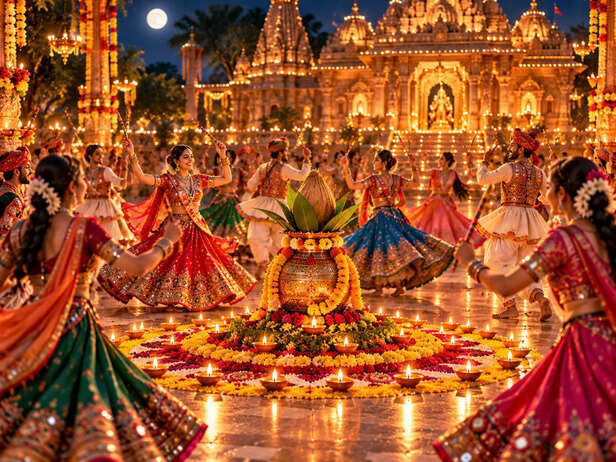
Garba looks like a celebration filled with music, colourful outfits and rhythmic movements. But have you ever wondered why people dance in circles or why a decorated kalash is sometimes placed at the centre? These traditions carry deeper symbolic meanings connected to creation, time and divine feminine energy. During Navratri, Garba becomes more than a festive activity for many devotees. It can also become a way to express devotion to Goddess Durga and feel connected to Shakti.
Garba Begins With a Deeper Symbol
Garba is widely associated with Gujarat and is one of the most recognisable traditions of Navratri. The word is often linked to garbha, a Sanskrit term associated with the womb. This connection gives the dance a symbolic meaning related to life, creation and feminine energy. For many devotees, Garba is not simply a cultural performance. It is also an expression of faith in the divine feminine, worshipped as Shakti. The celebration brings communities together while keeping spiritual ideas alive through music, movement and shared devotion.
The Circle Represents the Cycle of Life
One of the most striking features of Garba is its circular formation. Dancers move together, following a rhythm that continues around the centre. Spiritually, this circle is often interpreted as a symbol of the cycle of birth, death and rebirth. It can also remind devotees that time moves continuously, with every ending making space for a new beginning. This interpretation gives the dance another layer of meaning. The circle becomes more than a formation to follow; it becomes a reminder of life's changing seasons and the continuity of existence.
Why the Kalash Stands at the Centre
In some Garba traditions, a decorated earthen pot or kalash is placed at the centre of the gathering. It may contain a lamp or be decorated with a coconut, cloth and other sacred elements, depending on local custom. The pot is often associated with life, fertility and the womb, making it a powerful symbol during a festival that celebrates Shakti. Its central position can remind dancers that the celebration revolves around the divine. While arrangements vary across communities, the kalash gives the gathering a sacred focus beyond the music and movement.
The Light Within Represents Shakti
When a lamp is placed inside a Garba vessel, its light can symbolise the divine energy present within creation. In Hindu traditions, Shakti represents the dynamic feminine power through which life and the universe are understood to function. The vessel and its light together offer a meaningful image: the womb as a source of life and the flame as a symbol of energy. During Navratri, this symbolism connects the celebration with Goddess Durga and other forms of the divine feminine. It is a reminder that Garba can express devotion through symbols as well as prayers.
Can Music Turn Garba Into Sadhana?
Garba's rhythm can draw people into the present moment. The repeated steps, beats and coordinated movements encourage concentration, while devotional songs keep the Goddess at the heart of the celebration. For some participants, this experience feels like sadhana, or a spiritual practice. Dancing barefoot may also deepen their personal connection with the occasion, depending on their tradition and choice. Not everyone experiences Garba in the same way, but for devotees, the combination of movement, music and prayer can turn a festive night into a meaningful expression of faith.
Why Dancers Surrender to the Rhythm
Have you ever watched people dancing Garba so wholeheartedly that they seem to forget everything around them? For some, this is the most beautiful part of the experience. They are no longer thinking about perfect steps or how they look. Instead, they are immersed in the music, the community and their devotion to the Goddess. This feeling can be understood as a form of spiritual surrender. It does not mean that every dancer has the same experience, but it shows how a cultural tradition can create space for joy, connection and inner reflection.
The Real Meaning of Garba During Navratri
The beauty of Garba lies in how it brings together celebration and symbolism. Its circles can remind people of life's continuous journey, the kalash can represent life and creation, and the light can evoke the presence of divine energy. These interpretations differ across regions and traditions, but they share a connection with the spirit of Navratri and the worship of Shakti. The next time you see a Garba circle, look beyond the colourful outfits and energetic steps. You may discover a tradition that allows people to celebrate, pray and feel connected to something greater than themselves.
Unlock insightful tips and inspiration on personal growth, productivity, and well-being. Stay motivated and updated with the latest at My Life XP