
Why Hindu Gods Carry Weapons and Raise One Hand in Blessing
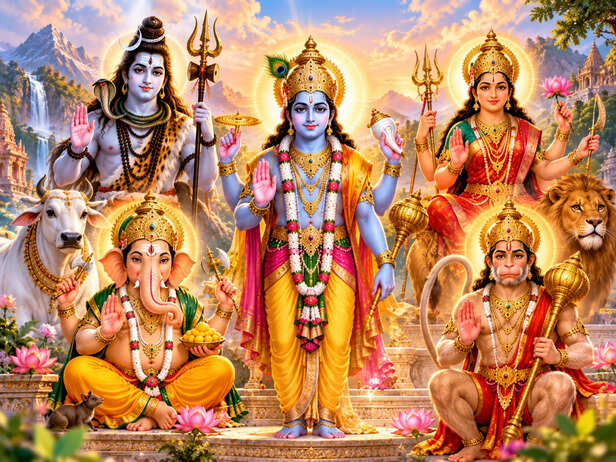
Have you ever noticed that many Hindu deities hold a weapon in one hand while raising the other in a gesture of blessing or protection? This powerful image reflects a deeper idea in Hindu traditions: knowledge guides us, while strength helps us protect what is right. The same principle is reflected in Vijayadashami, when devotees worship weapons, tools and other instruments connected with their work. From traditional warriors to modern professionals, this festival carries a message that goes far beyond battle. It reminds us to respect our abilities, use them responsibly and stand against injustice.
Why Do Hindu Gods Hold Weapons?
Look closely at the images of many Hindu deities, and you will notice a striking combination: one hand offers blessings or reassurance, while another holds a weapon. These gestures express different aspects of divine power. The abhaya mudra is commonly understood as a sign of fearlessness and protection, while weapons can symbolise the ability to confront destructive forces. Their meaning goes beyond physical combat. They also represent the courage to resist injustice, control harmful impulses and protect others. Together, these symbols convey an important lesson: compassion and strength are not opposites; they can work together.
Shastra and Shastra Have Different Roles
In Hindu philosophical and cultural traditions, shastra refers to a body of knowledge, teaching or sacred text, while shastra in the sense of a weapon is more accurately written astra or shastra, depending on the specific Sanskrit term and transliteration. The familiar idea of balancing knowledge with strength captures an important cultural message: wisdom should guide action, and power should be used responsibly. Knowledge without the courage to act may fail to protect what matters, while strength without sound judgement can cause harm. Vijayadashami offers an opportunity to reflect on this balance and the responsibility that comes with both learning and power.
Why Weapons Are Worshipped on Dussehra
Vijayadashami, also known as Dussehra, is associated with the victory of good over evil in Hindu traditions. In many communities, the day is also marked by Shastra Puja, the ritual honouring of weapons. The practice expresses respect for the tools of protection and the duties connected with them. For traditional warriors and members of royal households, weapons could represent defence, honour and responsibility. Today, the ritual is observed in different ways across regions and families. Its central message remains meaningful: strength should not be used carelessly, and those entrusted with power must exercise it with discipline.
Why Indian Army Regiments Honour Their Weapons
In some Indian Army regiments, Vijayadashami is marked by rituals honouring weapons and military equipment. These observances connect military duty with cultural traditions of courage, discipline and protection. The practice should not be understood as worshipping violence. Rather, it reflects the seriousness of the responsibility carried by those who serve in uniform. Weapons are instruments that demand training, restraint and accountability. The broader lesson is that strength matters most when guided by discipline and used to protect others. Customs vary across units and communities, but Vijayadashami remains a meaningful occasion for many to reflect on duty and service.
From Royal Horses to the Sikh Kirpan
The customs surrounding Vijayadashami differ across communities. In some traditional royal and Kshatriya households, the observance has included honouring horses alongside weapons because both played important roles in warfare and travel. Sikh tradition, meanwhile, gives the kirpan a distinct religious meaning as an article of faith associated with courage, dignity and the duty to protect. These practices should not be treated as identical rituals, but they share a broader theme: objects connected with responsibility can carry deep cultural and spiritual significance. Their meaning comes from the values they represent and the conduct expected of those who carry or use them.
Why Books, Tools and Gadgets Are Also Worshipped
In South India, the tradition is widely associated with Ayudha Puja, during which people honour not only weapons but also tools and instruments used in daily work. Students may place their books before the deity, artists may honour their instruments, and workers may clean and decorate their equipment. Some families and workplaces also include vehicles, computers and other technology. The idea is simple: the tools that support our livelihood deserve care and respect. This ritual can also encourage people to maintain their equipment, improve their skills and remember that meaningful work requires both effort and gratitude.
Rama, Arjuna and the Tradition of Seeking Strength
Hindu epics connect major conflicts with questions of duty, justice and the proper use of strength. The Ramayana recounts Rama’s battle against Ravana, while the Mahabharata explores Arjuna’s moral struggle on the battlefield of Kurukshetra. Traditions and later retellings also associate warriors and rulers, including Chhatrapati Shivaji Maharaj, with devotion to the Goddess and the pursuit of courage. The details of particular rituals vary across texts and historical accounts, but the wider theme is clear: strength alone is not enough. It must be guided by purpose, moral judgement and responsibility. Vijayadashami brings these ideas together in a festival celebrating the triumph of righteousness.
The Divine Feminine at the Heart of Shakti
One of the most distinctive features of Shakta Hindu traditions is the central place given to the Divine Feminine. Adi Parashakti is revered as the supreme power from which the universe and its energies arise. During Navratri, devotees honour the Goddess in her different forms, celebrating her strength, wisdom and ability to overcome evil. Vijayadashami follows this period of devotion in many traditions and marks the victory of good over destructive forces. The symbolism of the Goddess carrying weapons while offering protection brings the article’s central idea full circle: power is most meaningful when it serves the protection of life and the restoration of balance.
Unlock insightful tips and inspiration on personal growth, productivity, and well-being. Stay motivated and updated with the latest at My Life XP