
Why Indira Ekadashi Is Special During Pitru Paksha
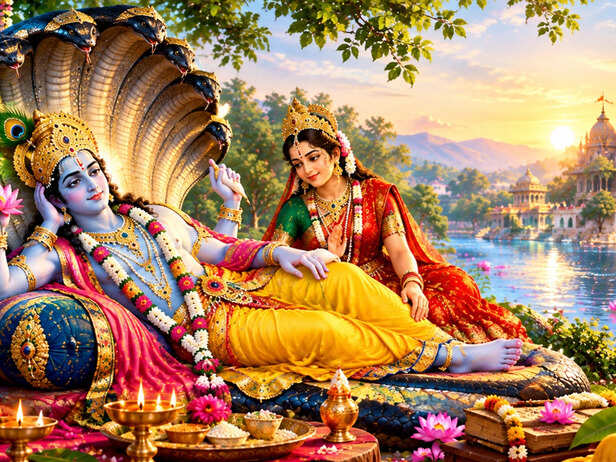
In October comes the highly auspicious Ekadashi vrat.October 2026 will see the first Ekadashi of October which is Indira Ekadashi, falling on Tuesday, October 6, in Krishna Paksha of Ashwin month. Since this falls in Pitru Paksha, this Ekadashi is of immense importance with regard to prayers of ancestors. As per Padma Purana, doing the vrat and donating the merits to deceased ancestors helps in uplifting their souls.
There is yet another reason why this day stands out, and that is the vrat katha which revolves around a king whose father was undergoing difficulties in Yamaloka.
Indira Ekadashi marks the start of October
The first Ekadashi in the month of October 2026 will be Indira Ekadashi, which falls on Tuesday, October 6, 2026. According to Panchang calculations for New Delhi, the tithi of Ekadashi begins at 2:07 AM on October 6, 2026, and concludes at 12:34 AM on October 7, 2026. The next Ekadashi of October will be Pashankusha Ekadashi, which will fall on October 22. Thus, October becomes the month of two Ekadashi observations, but Indira Ekadashi precedes Pashankusha Ekadashi and falls during Pitru Paksha.
Confirm the Parana and Tithi times
According to the calendar of Indira Ekadashi 2026, Ekadashi tithi will start from 2:07 AM on October 6 and end at 12:34 AM on October 7 for the city of New Delhi. Parana, or time of breaking the fast, on October 7 starts at approximately 6:17 AM. According to the Drik Panchang, the timing of parana in the city of New Delhi is from 6:17 AM to 10:12 AM.
Why Today's Ancestors Are Essential
The link between Indira Ekadashi and Pitru Paksha is the reason why this particular vrat stands out. According to the Padma Purana, Indira is said to be the Ekadashi that comes up during the dark fortnight of Ashwin, and is associated with the well-being of the ancestors. It is believed in Hindu religion that the merit of one's vrat can be offered to one’s ancestors. Talk of Pitru Dosha or liberation cannot be proven as a fact but only as an outcome of one’s faith.
The character Narada is where the story starts.
The Indira Ekadashi vrat katha opens in the Satya Yuga when King Indrasena is ruling over Mahishmati and worships Lord Vishnu. Once, Sage Narada comes into the court of King Indrasena and makes a revelation that he saw his father in Yamaloka while going there. As per the Puranic story described in the Padma Purana, the father requests Narada to advise Indrasena to do Indira Ekadashi vrat and donate the punya of it to his father.
How Followers Can See It
The rituals for Indira Ekadashi Puja could include the following: a bath in the morning, sankalp for the vrat, worshipping Lord Vishnu, prayer, lighting of diya and donation of money. There is also a tradition that involves association of this day with the ritual related to forefathers and offering the merit of this fast to one's deceased family members. Fasting itself depends on the individual state of health, as well as traditions of his or her family and religion. People who are unable to keep a fast should not try to do this; piety doesn't have to entail damage to one's health.
Frequently Asked Questions (FAQs)
1. Why is Indira Ekadashi significant in the Pitru Paksha?
Indira Ekadashi comes during the Ashwin Krishna Paksha which coincides with the Pitru Paksha period. This is because of the prayers and rituals offered to their ancestors.
2. What is Deep Daan on Indira Ekadashi?
Deep Daan refers to lighting a diya as a form of worship. Devotees light a lamp during their prayers of Lord Vishnu and their ancestors on Indira Ekadashi.
3. Who is King Indrasena in the Indira Ekadashi legend?
King Indrasena was a just ruler and also a devotee of Lord Vishnu. It is narrated in the vrat katha by Sage Narada who said that his father was suffering in Yamaloka and asked him to observe Indira Ekadashi.
4. What is the significance of observing Indira Ekadashi as per the Puranic belief?
As per the Puranic belief, the virtue of the vrat, worship and charity could be dedicated to one’s ancestors in order to liberate them from their sufferings.