
Why Is Diwali Celebrated for 5 Days? The Hidden Stories
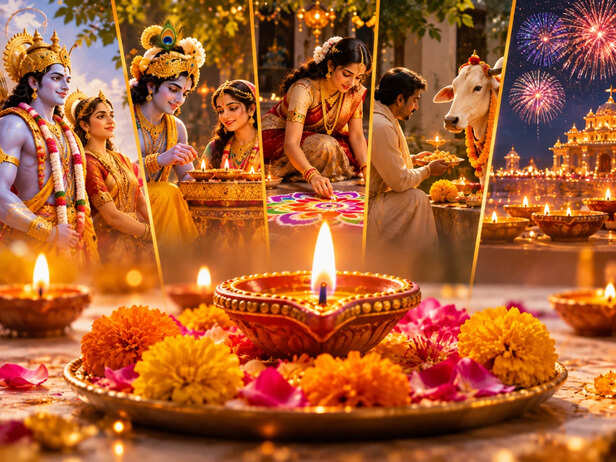
Diwali is not just one night of lighting diyas, exchanging sweets and welcoming Goddess Lakshmi. The festival carries five days of stories, traditions and different forms of devotion. From worshipping Goddess Lakshmi on Dhanteras to celebrating the bond between brothers and sisters on Bhai Dooj, every day has a unique meaning. But did you know that different parts of India celebrate Diwali by remembering different victories of Lord Vishnu's incarnations? Here is the story behind all five days of Diwali 2026.
Dhanteras: The First Day of Diwali
Dhanteras marks the beginning of the five-day Diwali celebration. The word Dhan means wealth, while Teras refers to the thirteenth day of the lunar fortnight. On this day, devotees worship Goddess Lakshmi and Lord Dhanvantari, who is associated with Ayurveda and health. The tradition reminds us that good health is one of life's greatest forms of wealth. People also buy gold, silver, utensils and other items as a symbol of prosperity and good fortune.
Kali Chaudas: The Victory of Goddess Kali
Kali Chaudas is observed on the second day of the Diwali festivities. According to a popular mythological account, Goddess Kali defeated the demon Raktabeej, whose every drop of blood created another demon. To stop him from multiplying, Goddess Kali drank his blood before it could touch the ground. This day is especially significant in Bengal, where Kali Puja is performed during the night of Amavasya, also known as Mahanisha. Devotees worship Goddess Kali and seek protection from negativity and evil forces.
Lakshmi Puja: The Main Day of Diwali
The third day is the main Diwali celebration, observed on Kartik Amavasya. In North India, Diwali is traditionally associated with Lord Rama's return to Ayodhya after 14 years of exile and his victory over Ravana. According to the Ramayana tradition, people welcomed him by lighting rows of diyas. In South India, Diwali is closely associated with Lord Krishna's victory over the demon Narakasura. On this day, families also perform Lakshmi-Ganesh Puja and pray for happiness, prosperity and new beginnings.
Govardhan Puja: Lord Krishna Lifts a Mountain
The fourth day is celebrated as Govardhan Puja, also known as Annakut in many regions. According to the Bhagavata Purana, Lord Krishna lifted Govardhan Hill on his little finger to protect the people of Vrindavan from torrential rain sent by Lord Indra. This event teaches the importance of nature, gratitude and humility. Devotees prepare a variety of food offerings known as Annakut and offer prayers to Lord Krishna. The festival also celebrates the connection between people, animals and nature.
Bhai Dooj: Celebrating the Bond of Siblings
The fifth and final day of Diwali is Bhai Dooj, a festival dedicated to the bond between brothers and sisters. According to Hindu mythology, Goddess Yamuna welcomed her brother, Lord Yama, into her home and applied a tilak on his forehead. Touched by her affection, Yama blessed her and promised that brothers visiting their sisters on this day would receive his blessings. Today, sisters perform aarti and apply tilak to their brothers, praying for their long life, happiness and well-being.
Unlock insightful tips and inspiration on personal growth, productivity, and well-being. Stay motivated and updated with the latest at My Life XP.