
Why Is Karwa Chauth Water Not Meant for Mothers Alone?
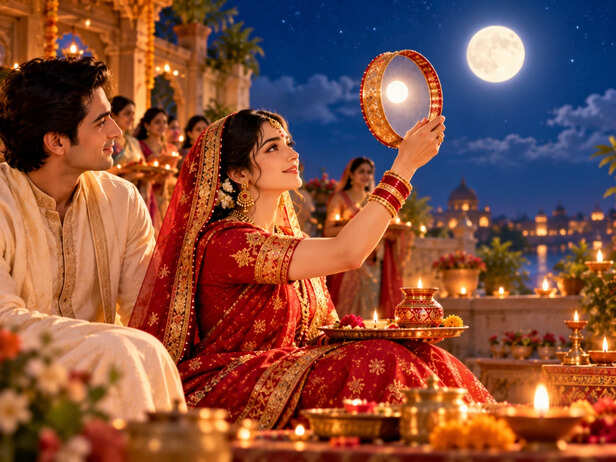
Why do some mothers share the water they drink after breaking their Karwa Chauth fast with their children? Behind this touching ritual lies a traditional story involving Goddess Parvati and Lord Ganesha. The story connects a mother's devotion, a child's well-being, and a belief passed down through generations. But what exactly happened in this tale, and why is the remaining water considered meaningful by some families? The answer reveals the emotional meaning that devotees associate with Karwa Chauth and a mother's prayers for her child's long life.
The Story Begins With a Pregnant Woman
According to the traditional story, Goddess Parvati and Lord Ganesha once saw a pregnant woman observing the Karwa Chauth fast. She had gone without food and water as part of her religious observance. The story then draws attention to the child growing inside her womb, who depends on the mother for nourishment. As the tale unfolds, the situation becomes a moment of concern for Lord Ganesha. It introduces a question at the heart of the story: how can a mother's devotion and a child's well-being exist together during a demanding fast?
Ganesha Sees the Child's Suffering
In the story, the unborn child is described as suffering because the mother has gone without food and water. The tale takes a tragic turn when the child is said to lose its life in the womb. Witnessing this, Lord Ganesha becomes deeply distressed. The moment shifts the focus from the mother's religious observance to the child's well-being. It is a dramatic part of the traditional narrative, intended to express concern for children and the responsibilities associated with motherhood. It should be understood as a religious tale, not a medical explanation of pregnancy or fasting.
Lord Ganesha Makes a Promise
Moved by what he has witnessed, Lord Ganesha promises to bless mothers who observe Karwa Chauth. According to this story, mothers who break their fast after seeing the moon and then drink water can share some of that water with their children. This act becomes associated with a mother's prayer for her child's long life and protection. The promise forms the central message of the tale. However, this specific account should be presented as a traditional belief rather than a verified episode from a widely established Hindu scripture.
Why Mothers Share the Remaining Water
Some families follow the custom of sharing a little of the water used to break the Karwa Chauth fast with their children. Within the story, this act is linked to Lord Ganesha's blessing and the hope that children will enjoy a long life. For devotees who observe the tradition, the gesture can carry emotional meaning beyond the water itself. It represents a mother's affection, prayers, and wish to see her child safe and happy. Customs vary among families and regions, so not every household follows this particular ritual.
The Meaning Behind the Karwa Chauth Ritual
Karwa Chauth is traditionally observed by many married Hindu women who pray for their husbands' well-being and long life. In some families, the observance also becomes an occasion to express prayers for children's happiness and safety. The story of Parvati and Ganesha adds a maternal dimension to this custom. Sharing water can be understood as a symbolic gesture of care and blessing. Still, the specific story about the unborn child and Ganesha's promise should not be treated as a universal Karwa Chauth rule or a practice required of every devotee.
What Should Mothers Remember?
Mothers who follow this custom can observe it according to their family traditions and personal beliefs. There is no need to feel guilty if the ritual is not part of their household practice. The story offers a devotional message about love and concern for children, but sharing water does not medically prevent illness or untimely death. Pregnant women, in particular, should seek medical advice before fasting because going without food or water may carry health risks. Religious observances should never take priority over essential health needs.
A Story About a Mother's Love
The story of Parvati, Ganesha, and the pregnant woman connects Karwa Chauth with a mother's deepest wish: to see her child live a healthy, happy life. For families who follow the water-sharing custom, the gesture offers a way to express that wish through faith and tradition. Its emotional meaning lies in the love behind the act, rather than a guarantee of protection. Whether a family observes this ritual or not, the story invites a simple reflection: devotion is most meaningful when it goes hand in hand with compassion, care, and concern for the people we love.
Unlock insightful tips and inspiration on personal growth, productivity, and well-being. Stay motivated and updated with the latest at My Life XP.