
Why Is Lord Murugan’s Idol Made From Nine Poisons?
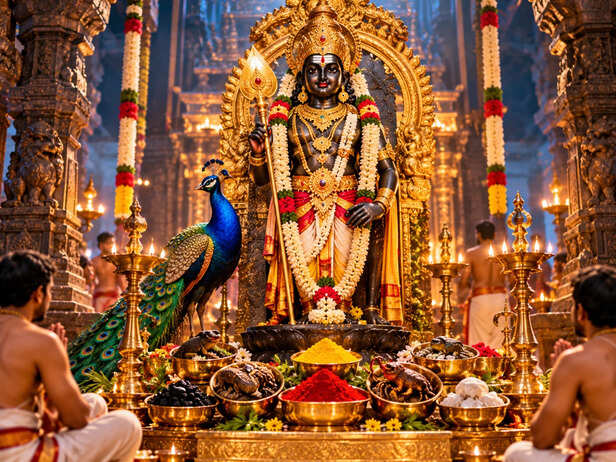
What if a sacred temple idol were believed to be made not from stone or metal, but from a combination of nine poisonous substances? This fascinating belief surrounds the famous Palani Murugan Temple in Tamil Nadu, where Lord Murugan is worshipped in an idol associated with an ancient tradition known as Navapashanam. The story connects devotion, traditional Siddha knowledge and the legendary sage Bogar. But what exactly is Navapashanam, and why do devotees consider the idol so special?
The Ancient Mystery of Palani Temple
The Palani Murugan Temple, located in Tamil Nadu, is one of the most important pilgrimage sites dedicated to Lord Murugan. Its presiding deity is worshipped in the form of Dhandayuthapani Swamy, depicted holding a staff. What makes the idol especially intriguing is the traditional belief that it was created using Navapashanam, a special composition associated with nine poisonous substances. Unlike an ordinary temple sculpture, its origins are linked to stories of ancient spiritual knowledge, making it a subject of deep devotion and curiosity.
What Is Navapashanam?
The word Navapashanam is traditionally understood as referring to nine poisonous substances or minerals. According to popular accounts, these materials were carefully combined to create a solid substance used for the Palani Murugan idol. Some stories also connect the preparation to traditional Siddha practices, which explored minerals, metals and medicinal preparations. However, the exact composition of the idol has not been independently established through publicly verified scientific evidence. The legend remains an important part of the temple’s cultural and religious identity.
The Legend of Sage Bogar
According to temple traditions and popular legends, Sage Bogar, one of the revered Siddhars in Tamil Siddha tradition, created the idol of Lord Murugan at Palani. Stories portray him as a spiritual master with deep knowledge of herbs, minerals and alchemy. Some accounts place his work thousands of years in the past, although the precise date of the idol’s creation has not been conclusively established. For devotees, the story reflects the connection between spiritual discipline, traditional knowledge and the worship of Lord Murugan.
Why Do People Call It a Poison Idol?
The phrase “poison idol” can sound alarming, but it refers to the traditional Navapashanam story rather than a scientifically confirmed analysis of the idol. Certain minerals and chemical compounds can be toxic, depending on their composition and exposure. However, there is no reliable basis for claiming that the idol contains a verified formula of nine deadly poisons or that it is stronger than iron and stone. The mystery continues to attract attention because it combines an unusual origin story with the deep reverence people have for the deity.
The Belief Behind Sacred Abhishekam
Abhishekam, the ritual bathing of a deity, is an important part of worship at many Hindu temples, including Palani. Devotees traditionally believe that offerings made during sacred rituals carry spiritual significance and blessings. Popular stories about the Navapashanam idol also suggest that substances used in its abhishekam acquire medicinal properties. However, such healing claims have not been established by strong scientific evidence. Ritual offerings should not be treated as medicines or used as a substitute for appropriate medical care.
The Temple’s History and Heritage
Beyond the mystery surrounding its idol, Palani Temple has a rich religious and cultural history. It is one of the six sacred abodes of Lord Murugan, known as the Arupadai Veedu. The temple’s history is connected with Tamil devotional traditions and generations of worshippers. Popular accounts also associate its development with Chera rulers, including Cheraman Perumal, though specific claims about the temple’s original construction should be treated carefully because its history developed over time. Its enduring importance comes from both its sacred traditions and its place in Tamil culture.
Why the Navapashanam Legend Still Fascinates Devotees
The story of the Navapashanam idol remains compelling because it brings together faith, ancient legends and questions about traditional knowledge. For devotees, the idol is a sacred form of Lord Murugan, not merely an object with an unusual origin story. For curious visitors, it offers a glimpse into the beliefs and traditions that have shaped temple worship for generations. The most meaningful way to explore this mystery is to respect its religious significance while distinguishing traditional claims from facts that have been scientifically verified.
Unlock insightful tips and inspiration on personal growth, productivity, and well-being. Stay motivated and updated with the latest at My Life XP