
Why Is Lord Ram Worshipped as a King in Orchha?
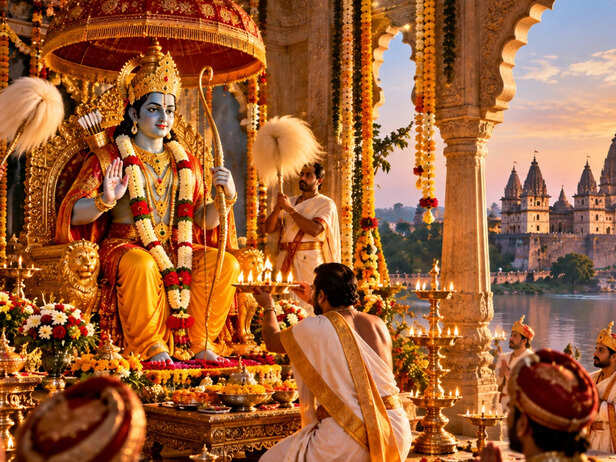
Imagine entering a temple where Lord Ram is not treated only as a deity, but is traditionally regarded as the king of Orchha. Here, the royal connection is so strong that the temple follows traditions associated with a ruler, including ceremonial honours. This extraordinary tradition belongs to Ram Raja Temple in Orchha, Madhya Pradesh, and its story begins with a queen, a difficult vow and a remarkable journey to Ayodhya. According to local tradition, what happened next changed the religious identity of Orchha forever and gave the town a unique place in India’s devotional landscape.
Orchha Has Its Own Ram Raja
Orchha is known for its palaces, temples and connection with Bundelkhand’s royal history, but one tradition makes it especially unusual. At the Ram Raja Temple, Lord Ram is traditionally worshipped as the king of Orchha. Devotees approach the deity with the respect associated with a ruler, and the temple has ceremonial practices that reflect this belief. The story is closely connected with Orchha’s royal family and the devotion of its queen. Over generations, the tradition has become an important part of the town’s religious identity. It is this unusual combination of devotion, royalty and local history that makes the temple so fascinating to visitors.
The Queen’s Devotion Started It All
According to popular tradition, Orchha’s ruler was devoted to Krishna, while his queen had deep faith in Lord Ram. When the king suggested visiting Vrindavan, the queen reportedly expressed her desire to travel to Ayodhya instead. The king then challenged her devotion, telling her to bring Lord Ram back with her if her faith was genuine. The queen accepted the challenge and left for Ayodhya. What sounds like a simple royal disagreement soon became a remarkable devotional story. The queen’s journey eventually became the beginning of Orchha’s extraordinary connection with Lord Ram, according to the local tradition preserved around the temple.
Her Ayodhya Journey Took a Dramatic Turn
According to the traditional account, the queen reached Ayodhya and began performing intense devotion on the banks of the Sarayu River, hoping that Lord Ram would appear. Days passed, but she received no sign that her prayer had been answered. In deep disappointment, the story says that she entered the river. Villagers who witnessed the incident rushed to help her. But when she emerged, the story took an unexpected turn. She was said to be carrying a child-form image of Lord Ram. This moment is traditionally regarded as the divine answer to her devotion and the beginning of Ram Raja’s journey toward Orchha.
Lord Ram Had Three Conditions
The most intriguing part of the story comes when Lord Ram is said to have given the queen three conditions before travelling to Orchha. According to the popular tradition, the first was that he would travel from Ayodhya to Orchha on foot. The second was that after reaching Orchha, he would be regarded as the king and rule from there. The third condition was the most important for the temple’s history: wherever he was first installed, he would remain there permanently. These conditions are central to the local explanation of why Lord Ram eventually became known as Ram Raja, the king of Orchha.
A Kitchen Became the Permanent Shrine
When the queen returned to Orchha with the image, arrangements for a grand temple were reportedly still incomplete. According to local tradition, she temporarily placed the idol in the palace kitchen. She believed it could later be moved to the newly prepared temple. But the third condition changed everything. Since Lord Ram had been installed there first, tradition holds that he could not be moved afterward. The image therefore remained in that location, which eventually became the Ram Raja Temple. Whether viewed through faith, folklore or local history, this detail is central to understanding why Orchha’s Ram Raja tradition is so different from conventional temple practices.
Why Does Ram Receive Royal Honours?
The temple’s royal identity is not limited to its name. Lord Ram is traditionally treated as the ruler of Orchha, and ceremonial practices reflect that belief. Security and official honours associated with the temple have become one of the most talked-about aspects of the tradition. Reports about police personnel presenting ceremonial salutes have added to the temple’s unusual reputation. For devotees, these rituals are not simply performances. They represent the belief that Ram Raja is the town’s sovereign. This makes the temple feel different from many other sacred spaces, where the deity is primarily approached as a divine figure rather than as a reigning king.
The King of Orchha Still Inspires Devotion
The story of Ram Raja is ultimately about more than an unusual temple ritual. It is a story of faith, devotion and the way traditions can become deeply connected with a place’s identity. The queen’s journey, the three conditions and the permanent installation of the deity form the heart of Orchha’s popular religious narrative. Today, the Ram Raja Temple remains one of Orchha’s most distinctive attractions, drawing devotees and curious travellers alike. Whether you encounter the story through devotion, folklore or history, its central idea remains powerful: in Orchha, Lord Ram is traditionally not only worshipped as God, but revered as the town’s beloved king.
Unlock insightful tips and inspiration on personal growth, productivity, and well-being. Stay motivated and updated with the latest at My Life XP