
Why Is Lord Vishnu Worshipped on Dev Uthani Ekadashi?
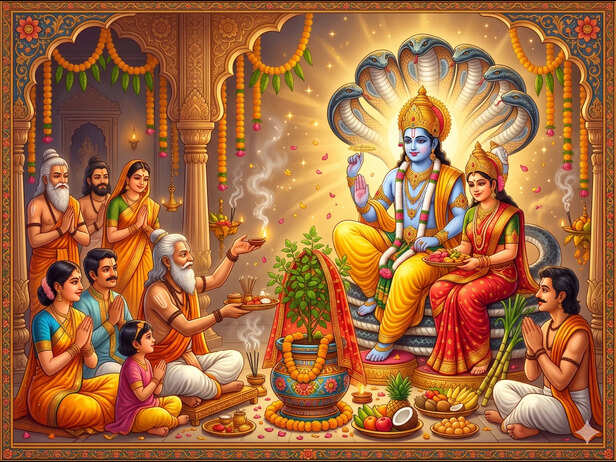
Have you ever wondered why many Hindu families avoid weddings and other auspicious ceremonies for four months, only to resume them after Dev Uthani Ekadashi? The reason lies in an ancient belief about Lord Vishnu's divine sleep. According to Hindu tradition, the preserver of the universe enters Yoga Nidra during Devshayani Ekadashi and awakens on Kartik Shukla Ekadashi. But his awakening is connected to more than the end of a religious observance. It also marks the return of auspicious ceremonies and the celebration of Tulsi Vivah.
What Does Dev Uthani Ekadashi Mean?
The name Dev Uthani comes from two words: Dev, meaning God, and Uthani, meaning awakening. Ekadashi refers to the eleventh lunar day of the Hindu calendar. This festival falls on the eleventh day of the Shukla Paksha, or waxing moon phase, in the month of Kartik. It is also called Devutthana Ekadashi and Prabodhini Ekadashi. The word Prabodhini means awakening, referring to the belief that Lord Vishnu rises from his divine sleep on this day.
Why Does Lord Vishnu Enter Yoga Nidra?
According to Hindu scriptures and traditional beliefs, Lord Vishnu enters Yoga Nidra on Devshayani Ekadashi, which falls in the month of Ashadha. This divine rest continues for four months, a period known as Chaturmas. Unlike ordinary sleep, Yoga Nidra represents a divine state of rest. During this time, devotees follow spiritual practices, prayers and dietary discipline. Many Hindu traditions also consider this period unsuitable for weddings and certain other auspicious ceremonies.
How Does Lord Vishnu Awaken?
On Kartik Shukla Ekadashi, devotees believe Lord Vishnu awakens from Yoga Nidra. To welcome him, people decorate temples and homes, light diyas, ring bells, blow conch shells and sing devotional songs. Some families perform a special puja and symbolically invite the deity to rise. The ritual is performed with the belief that the divine preserver has returned to his active role in the universe. His awakening also marks the beginning of a period considered favourable for auspicious ceremonies.
Why Does Chaturmas End on This Day?
Chaturmas refers to the four-month period associated with Lord Vishnu's divine rest. During these months, many devotees focus on prayer, fasting, charity and self-discipline. Certain foods and everyday habits may also be avoided according to family and regional customs. Dev Uthani Ekadashi marks the end of this observance. For many Hindu families, it is also the time when weddings, housewarming ceremonies and other auspicious events can begin again according to their traditions and local Panchang.
The Connection Between Dev Uthani Ekadashi and Tulsi Vivah
One of the most loved traditions associated with Dev Uthani Ekadashi is Tulsi Vivah. During this ceremony, the Tulsi plant is worshipped as a bride and symbolically married to Lord Vishnu, often represented by the Shaligram stone. Depending on regional and family traditions, Tulsi Vivah is performed on Dev Uthani Ekadashi or during the following days. The ceremony is associated with the return of auspicious celebrations and is often observed with wedding-style rituals, devotional songs and offerings.
The Story of Vrinda and Jalandhar
A popular story behind Tulsi Vivah involves Vrinda, the devoted wife of the demon king Jalandhar. According to one version, her devotion protected her husband, making him difficult to defeat. Lord Vishnu took Jalandhar's form and broke Vrinda's trust. Heartbroken, she cursed Vishnu to become stone, which is linked in tradition to the Shaligram form. Vrinda was later associated with the sacred Tulsi plant. Different Puranic and regional versions tell this story with variations, but it remains an important part of Tulsi Vivah traditions.
How Tulsi and Shaligram Are Worshipped Together
During Tulsi Vivah, devotees decorate the Tulsi plant with flowers, red cloth, ornaments and traditional wedding decorations. Shaligram, regarded as a sacred representation of Lord Vishnu, is placed beside the plant as the groom. The two are symbolically joined with a sacred thread, and devotees offer flowers, sweets, fruits and prayers. Tulsi leaves are also used in Vishnu worship. For many families, this ceremony is a joyful way to welcome the return of auspicious occasions after Chaturmas.
A Divine Awakening That Begins a New Chapter
Dev Uthani Ekadashi carries a special place in Hindu tradition because it connects Lord Vishnu's awakening with the end of Chaturmas and the return of auspicious ceremonies. Its story also leads to Tulsi Vivah, where devotion, marriage rituals and the story of Vrinda come together.
For devotees, the day is a reminder that every period of waiting can lead to a fresh beginning. The lighting of diyas, the sound of conch shells and prayers offered to Lord Vishnu express the hope of welcoming peace, happiness and new beginnings into family life.
Unlock insightful tips and inspiration on personal growth, productivity, and well-being. Stay motivated and updated with the latest at My Life XP.