
Why Is Maa Chandraghanta Worshipped on Day 3 of Navratri?
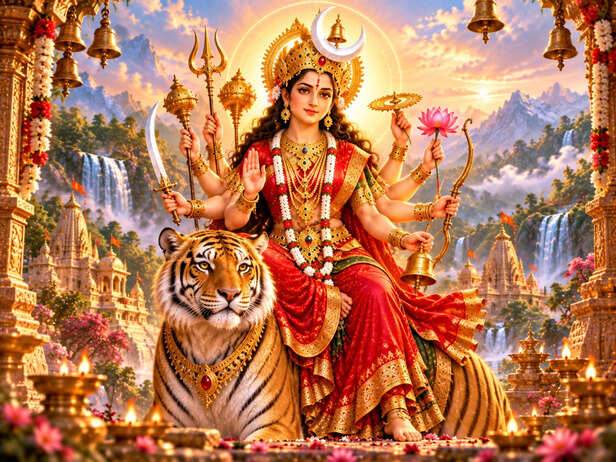
Why does Navratri move from Maa Shailputri to Maa Brahmacharini and then to Maa Chandraghanta on the third day? This sequence is not just a list of goddesses. In the tradition of Navadurga, each form carries a distinct spiritual meaning. Maa Chandraghanta represents the moment when devotion and discipline become courage. Her crescent moon, shaped like a bell, and her warrior-like appearance tell a story of strength that remains calm even when faced with challenges. But there is a deeper reason her worship holds such an important place in the nine-day journey of Navratri.
Why the Third Day Belongs to Her
During Navratri, devotees worship nine forms of Maa Durga across nine days. Maa Shailputri is worshipped on the first day, Maa Brahmacharini on the second and Maa Chandraghanta on the third. This order is significant in the traditional understanding of Navadurga. The first form represents a beginning, the second highlights devotion and discipline, and the third brings the qualities of courage and protection into focus. Maa Chandraghanta is therefore not worshipped on the third day by coincidence; her place in the sequence gives devotees an opportunity to reflect on how faith can develop into inner strength.
The Story Behind Her Name
The name Chandraghanta comes from two Sanskrit words: Chandra, meaning moon, and Ghanta, meaning bell. According to a widely followed tradition, after Goddess Parvati married Lord Shiva, she adorned her forehead with a crescent moon that resembled a bell. This gave her the name Chandraghanta. Her identity connects the beauty of the moon with the strength of the Divine Mother. The symbol also helps explain why her appearance feels both graceful and powerful. It is a small detail in her image, but it gives this form of Maa Durga a distinctive spiritual identity.
From Devotion to Courage
The order of the first three Navadurga forms offers a meaningful way to understand spiritual growth. Maa Shailputri represents the beginning, while Maa Brahmacharini is associated with penance, dedication and self-discipline. Maa Chandraghanta follows with the qualities of courage and readiness to protect. The message is simple: faith is not only about prayer or patience. It can also mean finding the strength to make a difficult decision, stand up for what is right or face uncertainty. This interpretation makes the third day of Navratri especially relevant to people seeking confidence and clarity in their everyday lives.
Why Does She Look Like a Warrior?
Maa Chandraghanta is commonly depicted with ten hands, carrying different objects and weapons, and riding a tiger or lion. Her form represents readiness to protect and confront challenges, while her face is often shown as calm and composed. This contrast is central to her symbolism. Strength does not always require anger, and courage does not mean acting without thought. Through her image, devotees can reflect on the importance of standing firm while remaining balanced. Her worship on Navratri's third day brings attention to this combination of inner calm and outward courage.
The Hidden Lesson of Her Worship
Maa Chandraghanta is traditionally worshipped for courage, protection and peace of mind. Beyond religious rituals, her symbolism offers a practical lesson: facing a challenge does not mean allowing fear or anger to control every response. A student preparing for an important examination, a person making a difficult career decision or someone dealing with uncertainty can draw inspiration from this idea. Prayer can become a moment to pause, reflect and gather confidence before taking action. This is a personal and spiritual interpretation of the tradition, not a promise that worship will automatically remove every difficulty.
How to Observe the Third Day
On the third day of Navratri, devotees may worship Maa Chandraghanta with flowers, a diya, incense and traditional offerings according to their family customs. One commonly recited mantra is “Om Devi Chandraghantayai Namah.” Some traditions also offer milk-based sweets such as kheer. Practices can vary by region and household, so there is no need to treat one particular offering as compulsory for everyone. The heart of the observance is devotion and reflection. Along with prayer, devotees can use the day to set an intention to act with greater courage, patience and awareness in the days ahead.
Unlock insightful tips and inspiration on personal growth, productivity, and well-being. Stay motivated and updated with the latest at My Life XP.