
Why Is Maa Kalaratri So Fierce? The Hidden Meaning
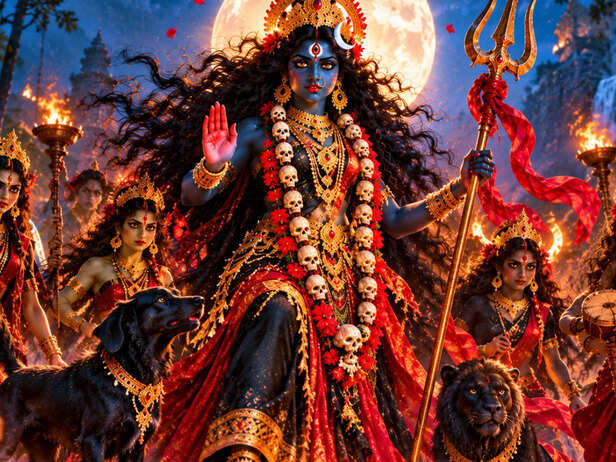
Why does Maa Kalaratri look so fierce when she is worshipped as a protector of her devotees? Her dark complexion, flowing hair and powerful appearance can seem intimidating, but there is a deeper meaning behind this form. Worshipped on the seventh day of Navratri, Maa Kalaratri represents the strength to face fear and overcome darkness. The surprising truth is that the Goddess who appears most terrifying is also remembered for bringing protection, blessings and auspiciousness to those who seek her grace.
Why Does Maa Kalaratri Look So Fierce?
Among the nine forms of Goddess Durga, Maa Kalaratri has one of the most striking appearances. Traditional descriptions portray her with a dark complexion, dishevelled hair and a powerful expression. At first glance, her form may appear frightening, but her appearance carries a deeper spiritual meaning. She represents the force that confronts darkness and destroys fear. Her fierce image reminds devotees that protection does not always appear gentle. Sometimes, divine strength is represented through a form that refuses to surrender to evil.
Why Is She Worshipped on Day Seven?
Maa Kalaratri is worshipped on the seventh day of Navratri as the seventh form of Navadurga. Devotees pray to her for courage, protection and the strength to face difficult situations. Her worship comes during the festival's journey through the nine forms of the Goddess, each associated with different qualities and aspects of divine power. For many devotees, this day is a reminder that fear should not control their decisions. Instead, faith and courage can help them face challenges with greater determination.
The Meaning Behind Her Dark Form
The name Kalaratri is often understood through its association with kala, meaning time or darkness, and ratri, meaning night. Her dark form is therefore linked in devotional interpretations with the night and the forces that overcome darkness. Rather than suggesting that darkness itself is evil, her image can be understood as a symbol of confronting what frightens us. She represents a power that can face the unknown without hesitation. This is one reason her fierce appearance holds such significance in Hindu religious traditions.
Why Is Maa Kalaratri Called Shubhankari?
Despite her fearsome appearance, Maa Kalaratri is also known as Shubhankari, a name associated with bringing auspiciousness. This contrast is central to understanding her form. The Goddess may look fierce, but devotees approach her with faith and the hope of receiving protection and blessings. Her image teaches that appearances do not always reveal the nature of something. A powerful force can be frightening to behold while still representing safety, compassion and support for those who worship it.
What Do Her Four Arms Represent?
Maa Kalaratri is commonly depicted with four arms. Traditional images show her carrying weapons, while her other hands make the abhaya mudra and varada mudra. The abhaya mudra represents fearlessness and reassurance, while the varada mudra symbolises generosity and blessings. These gestures create an important contrast with her fierce expression. The Goddess is shown as powerful enough to confront danger while remaining a source of comfort for her devotees. Her form combines strength, protection and compassion in a single image.
Why Does She Ride a Donkey?
One of the most unusual details in Maa Kalaratri's traditional appearance is her mount: a donkey, known in Sanskrit as gardabha. Unlike the lion or tiger associated with some other forms of the Goddess, this animal gives her depiction a distinctive character. The mount is part of the traditional description of her form and helps devotees recognise her in religious images. Although symbolic interpretations may vary, the donkey remains an important identifying feature of Maa Kalaratri in the worship of Navadurga.
The Powerful Lesson Behind Her Form
Maa Kalaratri's form offers a lesson that extends beyond religious imagery. Fear often becomes stronger when we avoid difficult situations, while facing a challenge can help us discover our inner strength. Her fierce appearance symbolises the courage to confront what seems overwhelming rather than run from it. For devotees, worshipping her can become a reminder to approach hardship with faith and determination. Her message is not that life will never bring darkness, but that darkness need not have the final word.
The Goddess Who Turns Fear Into Strength
Maa Kalaratri's fierce appearance tells only one part of her story. Behind her dark form, weapons and powerful expression lies the devotional image of a Goddess who protects her followers and represents auspiciousness. Her name Shubhankari captures this contrast beautifully: the form that appears fearsome is also worshipped for blessings and protection.
As Navratri continues, the next form of the Goddess brings a striking change in appearance and symbolism. After Maa Kalaratri, devotees worship Maa Mahagauri, whose radiant form is associated with purity, peace and serenity.
Unlock insightful tips and inspiration on personal growth, productivity, and well-being. Stay motivated and updated with the latest at My Life XP.