
Why Is Maa Skandamata Also Called Padmasana Devi? The Hidden Meaning of the Lotus Explained
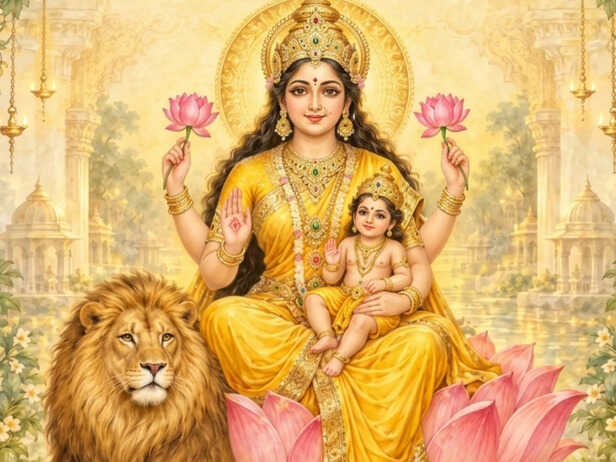
On the fifth day of Navratri, devotees worship Maa Skandamata, the mother of Lord Kartikeya. In many traditional depictions, she sits on a lotus while holding her divine son in her lap. This beautiful image has given her the name Padmasana Devi, meaning the goddess seated on a lotus.
But what makes this lotus so special? Is it simply a seat for the goddess, or does it carry a deeper spiritual message? The answer lies in understanding her divine form, the symbolism of the lotus and the quiet lesson her image offers devotees.
Why Is Maa Skandamata Called Padmasana Devi?
The name Padmasana Devi comes from two Sanskrit words: “Padma”, meaning lotus, and “Asana”, meaning seat or posture. Together, they refer to the goddess seated on a lotus.
Maa Skandamata is the fifth form of Goddess Durga among the nine forms worshipped during Navratri. She is also known as the mother of Skanda, another name for Lord Kartikeya. Her traditional form shows her with four arms, holding lotus flowers and her young son, with one hand raised in a gesture of blessing.
The lotus is not merely a decorative part of this image. It adds another layer of meaning to the goddess's appearance, connecting her maternal nature with the ideas of purity, calmness and spiritual awareness.
What Does the Lotus Symbolise in Maa Skandamata's Form?
The lotus has a special place in Hindu religious imagery. Its beauty is often used to express qualities that go beyond what we see on the surface.
Here are three ways to understand its significance in Maa Skandamata's form.
1. Staying Pure Even When Life Gets Difficult
A lotus grows in muddy water, yet its flower rises above the surface with remarkable beauty. This has made it a powerful symbol of remaining pure and steady despite difficult surroundings.
Maa Skandamata's lotus seat can be understood as a reminder that the challenges around us do not have to define who we become. Life may bring disappointments, responsibilities and uncertainty, but we can still choose kindness, honesty and patience.
For devotees, this symbolism offers a simple lesson: a peaceful heart is not one that has never faced difficulties, but one that learns not to be controlled by them.
2. Finding Peace Amid the Noise of Everyday Life
The lotus also represents calmness and spiritual growth. Its open petals can remind us of a mind that is ready to learn, understand and grow.
Maa Skandamata is portrayed with a gentle and compassionate expression as she holds Lord Kartikeya. Her image brings together the calmness of the lotus and the warmth of a mother's love.
In today's busy world, this image feels especially meaningful. Between work, family responsibilities and constant distractions, finding a moment of peace can be difficult.
The lotus offers a gentle reminder to pause, reflect and respond to situations with patience rather than allowing every difficulty to disturb our inner balance.
3. Growing Spiritually Without Losing Touch With the World
The lotus is often associated with spiritual awakening in Hindu traditions. Its upward growth is a fitting image for a person who continues to learn and become wiser through life's experiences.
Maa Skandamata's lotus seat can therefore be understood as a symbol of moving towards a more thoughtful and balanced life.
Spiritual growth does not always mean stepping away from everyday responsibilities. Sometimes, it means becoming more patient with family, more understanding towards others and more honest with ourselves.
This is one of the most relatable lessons people can draw from the goddess's form: we can continue to grow while remaining connected to the people and responsibilities that matter to us.
Why Does Maa Skandamata Hold Lord Kartikeya Along With the Lotus?
One of the most beautiful aspects of Maa Skandamata's image is the presence of her son, Lord Kartikeya, in her lap.
Her name itself reflects this relationship. Skanda refers to Kartikeya, while Mata means mother. In Hindu tradition, Kartikeya grows up to
The image of the goddess holding her child reflects the nurturing side of divine power. The lotus beneath her adds a sense of serenity, while the child in her lap brings the idea of love and protection to the forefront.
Together, these elements create an image that is both powerful and comforting.
It reminds devotees that strength does not always have to appear fierce. Sometimes, strength is the ability to protect, nurture and guide others with love.
What Makes the Fifth Day of Navratri Special?
The fifth day of Navratri is dedicated to Maa Skandamata, the fifth form of Goddess Durga. Devotees worship her with prayers, flowers, offerings and traditional rituals, seeking blessings for wisdom, peace and family well-being.
Her form is particularly meaningful because it brings together two qualities that are often seen as different: a mother's tenderness and the power of the divine.
The lotus adds another dimension to this worship. It encourages devotees to look beyond outward appearances and reflect on the qualities they wish to develop within themselves.
Navratri is not only a time for rituals and celebration. For many people, it is also an opportunity to reflect on their actions, strengthen their faith and make room for positive changes in daily life.
Through Maa Skandamata, these ideas take the form of a mother who protects her child while remaining seated on a flower associated with purity and spiritual growth.
What Can We Learn From Maa Skandamata's Lotus?
The story of Padmasana Devi offers a lesson that extends beyond the festival.
The lotus does not wait for perfect surroundings before it blooms. In the same way, we do not have to wait for every problem to disappear before we begin working towards a calmer and more meaningful life.
We can practise patience even when things are uncertain. We can remain kind when others are difficult. And we can continue learning even when life does not unfold as planned.
Maa Skandamata's image also reminds us that caring for others and growing as individuals can go hand in hand. Love does not have to make us weak, and strength does not require us to become distant or unkind.
These are spiritual interpretations of her traditional imagery, offering a way for devotees to connect the goddess's form with their own experiences.
The Lotus Is More Than a Seat for the Goddess
Maa Skandamata is called Padmasana Devi because she is traditionally depicted seated on a lotus. But the meaning of this image reaches beyond the name itself.
The lotus represents purity, calmness and spiritual growth, while the goddess holding Lord Kartikeya reflects the warmth and protective strength of motherhood. Together, they create a powerful image of love, wisdom and inner balance.
On Navratri Day 5, her story invites devotees to look beyond the flower and understand the values it represents.
Perhaps the most beautiful lesson is also the simplest: even when life feels difficult, we can choose to grow with grace, treat others with compassion and keep moving towards a more peaceful version of ourselves.
That is the deeper message many devotees find in Maa Skandamata's lotus - a reminder that true beauty begins within.
Unlock insightful tips and inspiration on personal growth, productivity, and well-being. Stay motivated and updated with the latest at My Life XP