
Why Is Navratri Celebrated for Exactly 9 Days?
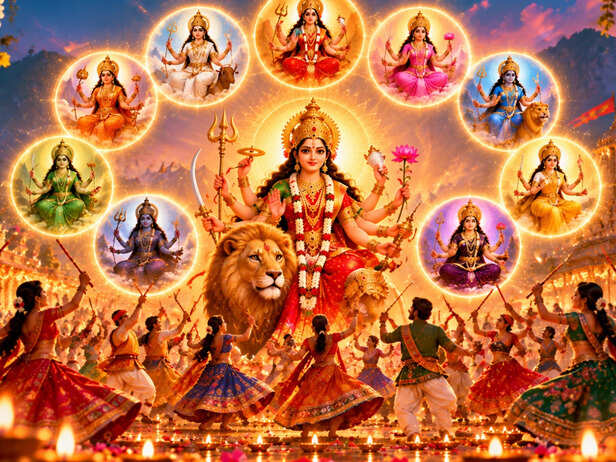
Every year, devotees celebrate Navratri for nine days, worshipping a different form of Maa Durga each day. But have you ever wondered why this festival lasts exactly nine days? Why not five, seven or ten? The answer lies in the spiritual significance of the number nine, the nine forms of Goddess Durga, and the traditions associated with Hinduism. This sacred number connects Navratri with devotion, cosmic beliefs and the victory of good over evil.
The Number 9 Represents Completion
In Hindu traditions, the number nine is often associated with completeness and spiritual fulfilment. This belief gives the nine days of Navratri a deeper meaning beyond the festival calendar. Each day offers devotees an opportunity to reflect, pray and strengthen their connection with the divine. The nine-day celebration is seen as a spiritual journey, with every day carrying its own significance. Rather than being an arbitrary number, nine connects the festival with a wider pattern of sacred numbers and symbolism found in Hindu beliefs.
Maa Durga Has Nine Forms
One of the clearest reasons for the nine-day celebration is the worship of Navdurga, the nine forms of Maa Durga. These are Shailputri, Brahmacharini, Chandraghanta, Kushmanda, Skandamata, Katyayani, Kalaratri, Mahagauri and Siddhidatri. During Navratri, devotees traditionally worship one form of the Goddess each day. Every form represents a different quality, from strength and courage to wisdom and compassion. This daily worship gives the festival its structure and allows devotees to reflect on the many aspects of divine feminine energy.
The Story of Mahishasura
The nine days of Navratri are also connected with the story of Maa Durga’s battle against the buffalo demon Mahishasura. According to Hindu mythology, the Goddess fought the powerful demon before defeating him, symbolising the triumph of good over evil. This story is central to the spiritual meaning of Navratri and the devotion surrounding it. The festival reminds devotees that courage, faith and righteousness can overcome even the strongest challenges. The battle is traditionally associated with the nine-day period, followed by Vijayadashami, which celebrates the victory.
The Connection With Navagraha
The number nine also appears in the concept of Navagraha, which refers to nine celestial influences in Hindu astrology. These include the Sun, Moon, Mars, Mercury, Jupiter, Venus, Saturn, Rahu and Ketu. The Navagraha are associated with different aspects of life and are worshipped in various Hindu traditions. Their connection with the number nine adds another layer of spiritual symbolism to Navratri. However, the nine-day duration of the festival is not simply determined by the Navagraha; this is one of several ways the number nine holds significance in Hindu beliefs.
Nine Types of Devotion
Hindu scriptures also describe Navadha Bhakti, or nine forms of devotion. These include listening to stories of the divine, singing praises, remembering God, serving the divine, offering prayers and surrendering with faith. The nine forms show that devotion can be expressed in many ways, not only through rituals. During Navratri, devotees may pray, chant mantras, observe fasts or listen to stories of Maa Durga. The festival becomes an opportunity to deepen faith through different practices, making the number nine meaningful in both worship and spiritual life.
The Nine Gates of the Human Body
The human body is traditionally described in Hindu philosophy as having nine gates, referring to its natural bodily openings. This concept appears in the Bhagavad Gita, where the body is described as a city with nine gates. The idea encourages reflection on the relationship between the body, the self and spiritual awareness. Although this teaching does not directly explain why Navratri lasts nine days, it shows how the number nine appears in different areas of Hindu thought. Together, these associations deepen the festival’s spiritual symbolism.
Why Navratri Ends on the Ninth Day
The traditional calculation of Shardiya Navratri follows the Hindu lunar calendar, beginning on Ashwin Shukla Pratipada and progressing through the lunar dates associated with the festival. Navami, the ninth lunar day, holds special importance and is observed with prayers and rituals dedicated to Maa Durga. The festival’s exact calendar dates can vary because Hindu observances follow lunar calculations, and some years include adjustments to the schedule. Vijayadashami follows Navratri and celebrates the victory of good over evil. Together, these observances give the festival its spiritual and cultural rhythm.
Unlock insightful tips and inspiration on personal growth, productivity, and well-being. Stay motivated and updated with the latest at My Life XP.