
Why Is Ravana Worshipped in Madhya Pradesh? The Hidden Story
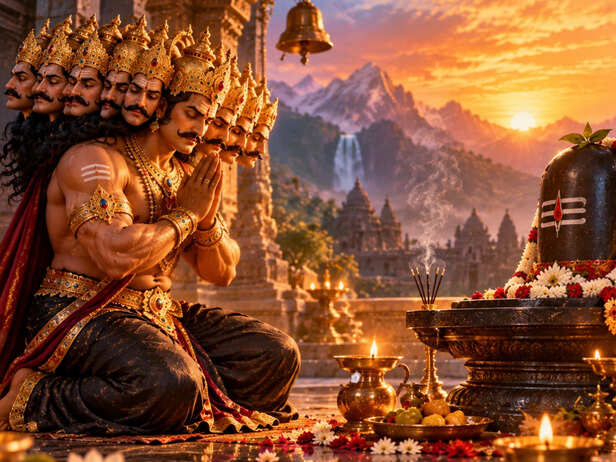
What if the person you call a villain is someone else's son-in-law?
In Madhya Pradesh's Mandsaur, a local tradition gives Ravana a completely different identity. Instead of being remembered only as the antagonist of the Ramayana, he is honoured as a jamai, or son-in-law, because of the local belief that his wife Mandodari belonged to Mandsaur. At a Ravana shrine in the Khanpura area, some local women have traditionally covered their faces with a ghoonghat while passing before his idol as a mark of respect.
The Place Where Ravana Is Honoured
Imagine reaching a place where Ravana worship is not unusual, and where his statue is treated with respect instead of being burned on Dussehra. This is the unusual tradition associated with Mandsaur in Madhya Pradesh, particularly the Khanpura area. Local tradition connects the place with Mandodari, Ravana's wife, and therefore regards Ravana as the area's son-in-law. The tradition has continued among sections of the local community for generations. It does not erase Ravana's role in the Ramayana, but it shows how the same figure can carry very different meanings in different cultural settings.
Why Ravana Is Called Jamai
The heart of the story is Mandodari. According to a local belief, she belonged to Mandsaur and was considered a daughter of the community. Since Ravana was her husband, people began treating him as their jamai, or son-in-law. This belief is cultural and traditional rather than an established historical fact. Some historians and religious scholars have questioned whether there is textual evidence connecting Mandodari's birthplace with Mandsaur. Yet the belief remains an important part of the area's cultural identity and explains why Ravana worship in Mandsaur looks so different from the familiar Dussehra tradition.
The Ghoonghat Tradition
Perhaps the most striking part of the Mandsaur Ravana temple tradition is the practice associated with women. Reports about the local custom say that women from the community, particularly older women, have traditionally taken a ghoonghat when passing in front of Ravana's statue. The gesture is linked to the belief that Ravana is the community's son-in-law and is therefore shown the kind of respect traditionally offered to a respected male relative. It is a small gesture, but it reveals how family relationships can completely change the way a cultural figure is remembered.
The Same Ravana, A Different Story
This is where the story becomes bigger than a Ravana temple in Madhya Pradesh. In the Ramayana, Ravana is remembered for the abduction of Sita and his conflict with Rama. Yet he is also traditionally described as highly learned, devoted to Shiva and knowledgeable about sacred texts. In Mandsaur, his identity gains another layer: son-in-law. These perspectives do not have to erase one another. They simply show that human beings are often remembered through different parts of their stories. Someone can be deeply flawed and still possess qualities that others recognise and respect.
When One Label Becomes the Whole Story
We often do something similar in everyday life. Someone makes one mistake, loses their temper once, fails at something or disagrees with us, and suddenly we create an entire story around them. We stop seeing the person and start seeing only the label. The Ravana story of Mandsaur offers an interesting reminder to pause before doing that. Understanding another side of someone does not mean approving everything they have done. It simply means accepting that people, relationships and stories can contain more than one dimension. That difference can completely change how we understand them.
A Lesson For Your Own Life
The next time someone calls you a failure, difficult, selfish or even a villain, pause before accepting that identity. Ask yourself three simple questions: What actually happened? What part of the story is missing? And who is telling the story? You do not have to fight every opinion or prove yourself to everyone. Instead, understand your own actions, correct genuine mistakes and keep moving. The deeper lesson behind this Ravana worship tradition is not that every criticism is wrong. It is that one person's version of you should never automatically become your entire identity.
Your Story Is Bigger Than Their Label
Perhaps that is the most powerful takeaway from the Ravana temple of Mandsaur. The same figure can be called a villain in one story, a son-in-law in another and a learned devotee in yet another. Perspective changes what we notice, but it does not mean we should ignore truth or wrongdoing. So when someone reduces you to a single mistake, remember this story. Their version of you may be part of your story, but it does not have to be the whole story. Before believing their label, ask one thing: Is this really my story, or simply their version of it?
Unlock insightful tips and inspiration on personal growth, productivity, and well-being. Stay motivated and updated with the latest at My Life XP.