
Why Is Rice Forbidden on Ekadashi? The Hidden Story
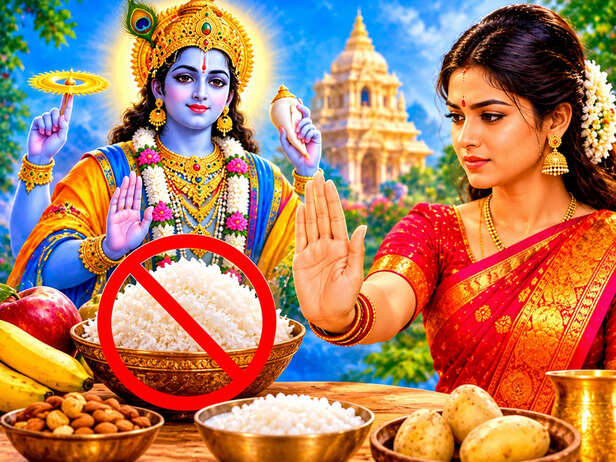
Why do millions of devotees avoid eating rice on Ekadashi, even when they consume other fasting foods? Behind this familiar Hindu fasting practice are two fascinating traditional stories involving a great sage and a mysterious figure known as Papa Purusha. One legend connects rice and barley to the body of Maharishi Medha, while another explains how sins supposedly found shelter in food grains. These stories offer a glimpse into the religious beliefs behind Ekadashi fasting and explain why avoiding grains, especially rice, became an important part of the tradition.
The Story of Maharishi Medha
According to a traditional Ekadashi legend, there once lived a great sage named Maharishi Medha, who was deeply devoted to spiritual practices. His intense penance and devotion made him highly respected. One day, when he encountered the fierce anger of Goddess Shakti, he decided to leave his physical body through his yogic powers. His body and spiritual essence were believed to merge with the earth. This unusual event is said to have taken place on Ekadashi, giving rise to a fascinating story about the origin of certain food grains.
How Rice and Barley Came From the Sage
The legend says that after Maharishi Medha's body merged with the earth, his essence gradually emerged in the form of plants. Two important food grains, rice and barley, are believed to have grown from this sacred earth. Since these grains were associated with the sage's body, they came to be regarded as living forms in this traditional account. This is why devotees are often told to avoid eating rice and barley on Ekadashi. Consuming them on this sacred day is symbolically compared to consuming a part of Maharishi Medha's body.
The Mysterious Story of Papa Purusha
There is another fascinating story associated with the Ekadashi food tradition. According to a popular Puranic account, Lord Vishnu created a figure called Papa Purusha, representing the sins committed by living beings. When Ekadashi fasting began helping devotees overcome their sins, Papa Purusha became worried about finding a place to hide. He approached Lord Vishnu and asked where he could take shelter on this sacred day. He feared that Ekadashi would leave him with nowhere to exist.
Why Lord Vishnu Gave Him Shelter in Grains
In the popular version of this story, Lord Vishnu listened to Papa Purusha and gave him a place to take shelter in food grains on Ekadashi. This is why devotees began avoiding grains during the fast, with rice receiving particular attention in many households. The story is often shared to explain the spiritual reasoning behind the practice. It also connects Ekadashi fasting with the belief that devotees should keep their bodies and minds focused on prayer rather than ordinary food.
Why Rice Is Especially Avoided
Rice is a staple food in many Indian households, which makes its absence from Ekadashi meals especially noticeable. However, the traditional fasting restriction generally applies to grains rather than rice alone. Wheat, rice, barley and other grains are avoided by devotees who follow a strict Ekadashi vrat. The popular stories of Maharishi Medha and Papa Purusha provide religious explanations for this practice. Different families and Vaishnava traditions may follow slightly different fasting rules, but avoiding grains remains a common feature.
What Can You Eat on Ekadashi?
Those observing Ekadashi can choose from several fasting foods instead of regular grains. Common options include fresh fruits, milk, makhana, sabudana, buckwheat flour (kuttu), nuts and certain fasting preparations. Some devotees observe a strict fast with only water, while others follow a fruit-based or one-meal vrat. The rules depend on family traditions and personal health. People with medical conditions, those taking medication, pregnant women and older adults should avoid extreme fasting and choose a suitable approach with medical guidance.
When Is Utpanna Ekadashi in 2026?
Utpanna Ekadashi will be observed on Friday, December 4, 2026. According to the New Delhi Panchang, the Ekadashi tithi begins at 11:03 PM on December 3 and ends at 11:44 PM on December 4. Devotees will observe the fast on December 4 and perform Parana on Saturday, December 5. The listed Parana window for New Delhi is 6:59 AM to 9:04 AM. Exact timings can vary by location, so devotees should check their local Panchang before breaking the fast.
Unlock insightful tips and inspiration on personal growth, productivity, and well-being. Stay motivated and updated with the latest at My Life XP.