
Why Is Tulsi Never Offered to Lord Shiva? The Hidden Story
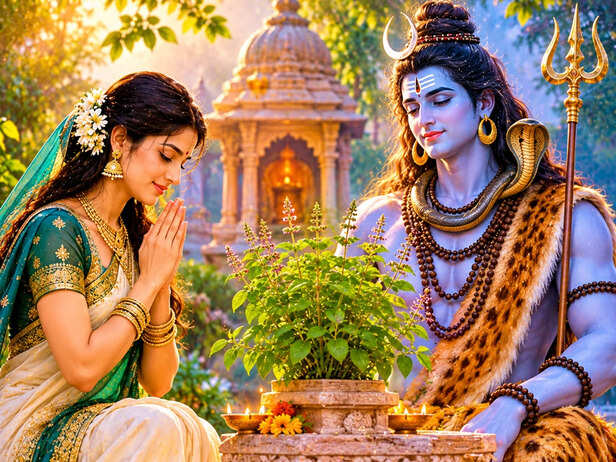
Tulsi is considered one of the most sacred plants in Hinduism. Offering its leaves to Lord Vishnu is believed to be especially auspicious, and Tulsi Vivah celebrates the divine marriage of Tulsi and Vishnu in the form of Shaligram. But have you ever wondered why the same Tulsi leaves are generally not offered to Lord Shiva? The answer lies in a fascinating mythological story involving a devoted woman named Vrinda, the demon king Jalandhar and a curse that changed the lives of Vishnu and Vrinda forever. The story also explains the unusual connection between Tulsi, Shaligram and Mahadev.
Who Was Vrinda, the Woman Behind Tulsi?
According to a popular Hindu legend, Tulsi was Vrinda in her previous birth, the devoted wife of demon king Jalandhar. She was known for her extraordinary loyalty and spiritual discipline. Her unwavering pativrata dharma became the source of Jalandhar's protection. As long as Vrinda's devotion remained unbroken, Jalandhar could not be defeated, even by powerful gods. This made her devotion central to the battle between Jalandhar and the divine forces.
Why Even Lord Shiva Could Not Defeat Jalandhar
Jalandhar became so powerful that he challenged the gods and threatened the balance of the universe. Lord Shiva himself entered the battlefield to defeat him, but Jalandhar remained protected by Vrinda's unwavering devotion. According to the legend, no divine weapon could destroy him while her pativrata dharma remained intact. The gods realised that defeating Jalandhar would be impossible without breaking the spiritual protection surrounding him. This led them to seek Lord Vishnu's help.
The Deception That Changed Everything
To stop Jalandhar, Lord Vishnu took a difficult decision. According to the popular legend, he assumed Jalandhar's appearance and approached Vrinda while her husband was away fighting Lord Shiva. Believing that the person before her was Jalandhar, Vrinda's spiritual vow was broken. At that very moment, Jalandhar lost the divine protection that had made him invincible. Lord Shiva then defeated and killed him in the battlefield. When Vrinda discovered the truth, she was devastated by Vishnu's deception.
Why Did Vrinda Curse Lord Vishnu?
When Vrinda discovered what had happened, her grief turned into anger. She realised that Lord Vishnu had deceived her and broken the very devotion that protected her husband. In her sorrow, she cursed Vishnu to turn into a lifeless stone. According to the legend, this curse led to the appearance of the sacred Shaligram stone, which is worshipped as a form of Lord Vishnu. Vrinda's curse became an important part of the tradition connecting Tulsi with Vishnu worship.
How Vrinda Became the Sacred Tulsi Plant
After Vrinda's death, her purity and devotion were honoured through her transformation into the sacred Tulsi plant. Lord Vishnu blessed her with a special place in his worship and declared that he would not accept offerings without Tulsi. This is why Tulsi leaves hold such importance in Vishnu and Krishna worship. The tradition also connects Tulsi with the Shaligram stone, and their symbolic marriage is celebrated as Tulsi Vivah every year during the Kartik month.
But Why Is Tulsi Not Offered to Lord Shiva?
Here lies the interesting connection. According to the popular legend, Vrinda's husband Jalandhar was killed by Lord Shiva after Vishnu broke the protection created by her devotion. Her story therefore remains associated with sorrow, betrayal and the destruction of her married life. In traditional worship, Tulsi is consequently associated with Lord Vishnu rather than Lord Shiva. This is why devotees generally avoid offering Tulsi leaves to Mahadev and instead offer Bel Patra, Dhatura, flowers and water. However, the custom can vary across regional traditions.
Why Tulsi and Shaligram Are Worshipped Together
The story of Vrinda does not end with her transformation into Tulsi. Her connection with Lord Vishnu continues through the worship of Tulsi and Shaligram together. Every year, Tulsi Vivah symbolically celebrates their divine marriage, usually during the Kartik month. For devotees, this ceremony represents the sacred bond between devotion and divinity. It also explains why Tulsi leaves are considered especially auspicious in Vishnu worship, while Bel Patra remains one of the most beloved offerings to Lord Shiva.