
Why Lord Ganesh Rode a Peacock in This Ancient Battle
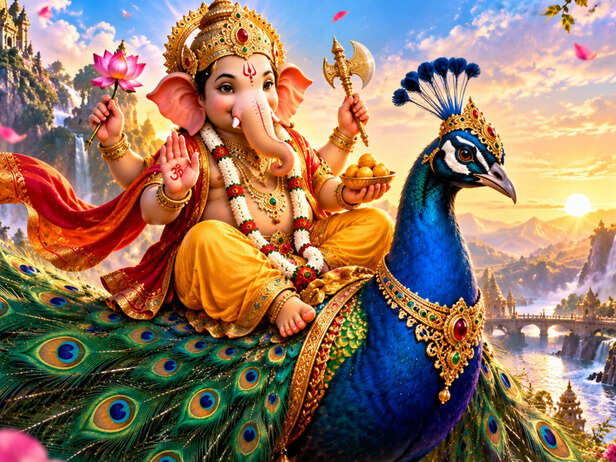
What if the divine form of FF that you know today had another mysterious name and an entirely different story? In a lesser-known devotional tradition connected with the Ashtavinayak pilgrimage, Lord Ganesh appears as a powerful divine child born for a very specific purpose. His story begins with Sindhu, a demon protected by a powerful boon that made him almost impossible to defeat. Even the gods could not stop him. But after years of intense tapasya by Goddess Parvati, a divine answer appeared. Lord Ganesh was born, and his journey eventually led to the extraordinary form of Mayureshwar.Lord Ganesh
The Demon Who Could Not Be Defeated
According to the devotional tradition, Sindhu was born with extraordinary energy and later performed intense worship of the Sun God. Pleased with his devotion, Surya granted him a powerful boon. An immortal nectar vessel was placed within his body, making him extremely difficult to kill. The boon also protected him from the existing gods and divine forms. With this power, Sindhu became increasingly arrogant and attacked the three worlds. The gods struggled to stop him and eventually sought help from Narayana. The situation had reached a point where ordinary divine powers seemed unable to overcome Sindhu.
Even Vishnu Could Not End the Threat
When Narayana confronted Sindhu, something unexpected happened. Rather than simply defeating him, Narayana was impressed by the demon’s courage and strength. He offered Sindhu a boon. Sindhu asked Narayana to remain with him in Gandaki Nagar. Narayana accepted his request, according to the traditional story. This added another layer of protection around Sindhu. The gods were now facing an enemy who had powerful blessings and divine connections. The question became difficult: Who could defeat someone protected from the gods and their known forms? The answer would require a divine form beyond the usual three gunas and familiar identities.
Parvati’s Twelve-Year Tapasya
Shiva then suggested that Parvati seek the power beyond the three gunas, the formless divine reality described in the tradition as Lord Ganesh. Parvati undertook intense tapasya at the Lenyadri mountain range for around twelve years. Her devotion eventually received a divine response. The formless power promised to take birth as her son. On the fourth day of the bright fortnight of Bhadrapada, Parvati established a sacred image. Through her divine power, the image came alive, and she named the child Lord Ganesh. The story presents a striking idea: when familiar solutions fail, transformation may come through something completely unexpected.
The Child Who Chose a Peacock
Lord Ganesh soon became known for his extraordinary nature. One episode in the tradition tells how he accidentally broke an egg belonging to Vinata, the mother associated with birds. A peacock emerged from it, and Lord Ganesh made the bird his vehicle. This detail later became central to his divine identity. The peacock was not an ordinary choice. In Indian symbolism, different creatures can represent contrasting qualities such as pride, instinct, power and awareness. Lord Ganesh’s association with the peacock prepared the way for his final transformation into Mayureshwar, the magnificent form remembered at Morgaon.
Mayureshwar Revealed His True Form
As Lord Ganesh’s fame spread, Sindhu challenged him to battle. What followed became the defining moment of the story. During the final confrontation, Lord Ganesh revealed a spectacular form with three eyes, six arms and extraordinary radiance. Riding his peacock, he appeared as Mayureshwar. According to the devotional account, Mayureshwar used a divine weapon to strike Sindhu at the point where the nectar vessel was hidden within his body. Once the vessel was removed, Sindhu could finally be defeated. The victory restored peace and established Mayureshwar as a powerful manifestation of divine protection and courage.
Why the Peacock and Serpent Matter
The traditional image of Mayureshwar carries a fascinating symbolic detail. A serpent appears on his head, while the peacock serves as his vehicle. These creatures are natural opposites, yet they appear together in the same divine form. That contrast gives the story a powerful message. Human life also contains opposing qualities: fear and courage, weakness and strength, anger and patience, doubt and confidence. We do not always need to destroy our weaknesses. Sometimes we need to understand them and bring them into balance. The image of Mayureshwar suggests that harmony between opposing forces can create extraordinary inner strength.
The Real Demon May Be Within Us
The story of Lord Ganesh and Sindhu is more than a battle between a divine child and a powerful demon. Its deeper message can be applied to everyday life. Sindhu represents the problems that appear impossible to overcome, while Lord Ganesh represents the strength that emerges when we discover a new way forward. The Mayureshwar tradition reminds us that our limitations do not have to define us. When our strengths and weaknesses are understood and aligned, even difficult challenges can become manageable. Mayureshwar’s form, traditionally worshipped at Morgaon as part of the Ashtavinayak pilgrimage, turns this ancient story into a timeless lesson in courage.
Unlock insightful tips and inspiration on personal growth, productivity, and well-being. Stay motivated and updated with the latest at My Life XP.