
Why Mithila Never Saw Sita as a Helpless Woman
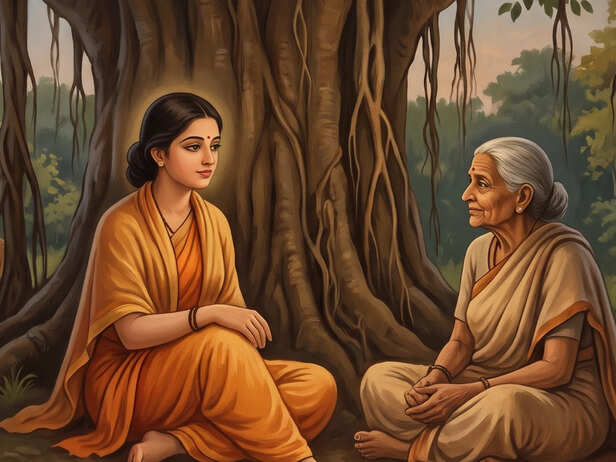
Was Maa Sita only a princess who needed protection, or was she also a manifestation of divine power capable of defeating powerful demons? This question has gained attention after a film depicted her fighting rakshasas, leading to debate among viewers. However, the answer becomes much more interesting when we look beyond the popular version of the Ramayana and explore the traditions of Mithila. While Valmiki's Ramayana describes Rama sending Sita to safety before a major battle, other sacred texts present her as an embodiment of Adi Shakti, with the power to destroy even the most terrifying demons.
Why Is Sita's Warrior Image Being Discussed?
A recent cinematic portrayal of Maa Sita fighting rakshasas has raised an interesting question: should she be shown as a warrior? Some viewers believe this differs from the familiar account of the Ramayana, where Rama protects her during battles. However, the discussion changes when we explore other versions of the epic. Not every Ramayana presents Sita's identity in exactly the same way. Some traditions focus on her role as Rama's wife, while others celebrate her as a manifestation of the supreme feminine power.
What Does Valmiki Ramayana Actually Say?
The Aranya Kanda of Valmiki Ramayana describes how Khara and Dushana march towards Janasthana with an army of 14,000 rakshasas. Before the battle begins, Rama asks Lakshmana to take Sita to a mountain cave and protect her. He then faces the entire army himself and eventually defeats the demons. This passage establishes that Sita does not participate in this particular battle. However, it does not establish that she lacked courage, strength or knowledge of warfare. Rama's decision can also be understood as an effort to protect her during a dangerous confrontation.
Mithila Sees Sita as Adi Shakti
To understand why the warrior image of Sita feels natural to many people in Mithila, we must understand the region's Shakta traditions. Shaktism places the Divine Mother at the centre of worship, celebrating feminine energy as the source of creation and power. Sita holds a special place in Mithila because she is believed to have been born there and raised as King Janaka's daughter. For devotees who see her as Adi Shakti, imagining her with the strength to defeat evil is not a departure from devotion but an expression of her divine identity.
Adbhuta Ramayana Reveals a Different Sita
One of the most fascinating accounts appears in the Adbhuta Ramayana. Unlike the familiar story of the ten-headed Ravana, this text introduces his thousand-headed brother, Sahasramukha Ravana. When Rama and his army face this formidable enemy, Rama eventually becomes unconscious. At that moment, Sita reveals her fierce divine form and takes on the appearance of Goddess Kali. She then confronts and destroys the thousand-headed Ravana. This episode presents Sita not merely as someone protected by Rama, but as a divine force capable of defeating an extraordinary evil.
When Sita Takes the Form of Goddess Kali
The Adbhuta Ramayana describes Sita displaying immense power after Rama falls unconscious during the battle. She transforms into a terrifying form of Shakti and destroys Sahasramukha Ravana and his forces. The episode is especially significant because it shifts the focus from Rama's warrior abilities to Sita's divine strength. This is one reason the text holds an important place in discussions of Sita's Shakta identity. However, this episode belongs to a different Ramayana tradition and should not be confused with the corresponding events in Valmiki's version.
Sita's Strength Was Not Limited to Warfare
Even in Valmiki's Ramayana, Sita is far from a silent or helpless character. In the Aranya Kanda, she questions Rama about the use of weapons and warns him against unnecessary violence. During her captivity in Lanka, she repeatedly refuses Ravana's demands despite threats and pressure. Her courage is also evident in her decision to stand by her principles in the most difficult circumstances. Therefore, Sita's strength cannot be measured only by whether she holds a weapon. Her character represents moral courage, conviction and, in other traditions, the supreme power of the Divine Mother.
Unlock insightful tips and inspiration on personal growth, productivity, and well-being. Stay motivated and updated with the latest at My Life XP.