
Why Modak Became Ganesha’s Favourite Sweet
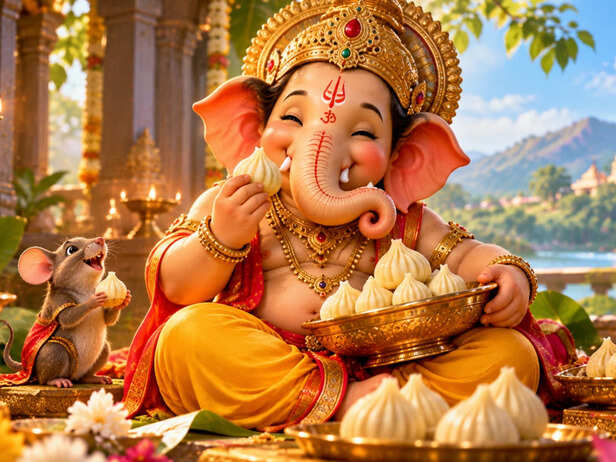
What if a small modak sitting on your plate carries a story much older than the festival itself? For generations, modak has been closely associated with Lord Ganesha, especially during Ganesh Chaturthi. It is often described as his favourite offering, but traditional stories give this simple sweet a much deeper meaning. From ancient kings and royal celebrations to Lord Rama's story and the legend of Ganesha, modak repeatedly appears alongside ideas of happiness, fulfilment and worldly joy. And the most interesting part is this: the story of modak does not begin with Ganesha.
The Sweet That Appears Across Stories
Modak is strongly associated with Ganesha worship today, but traditional storytelling gives this sweet a much longer cultural journey. In the stories narrated in the source tradition, it appears in different settings connected with celebration, pleasure and satisfaction. That is what makes the story fascinating. The same simple food is placed beside powerful kings, royal families, sages and finally Lord Ganesha. Rather than being only a festive dessert, it becomes a symbol of a feeling people across generations have understood: the happiness that comes when something deeply desired finally feels complete.
King Ambarisha and the Joy of Celebration
Traditional accounts describe King Ambarisha as a powerful ruler who was also deeply committed to dharma and ritual practices. The story presented in the source narration says that he would organise grand yajnas around important occasions, connecting celebration with gratitude and fulfilment. Food naturally became part of such moments of collective joy. The larger idea is what makes the story memorable. Celebration was not simply about luxury or excess. It was about recognising what life had given you and sharing that happiness with others. In that sense, the modak becomes connected with an emotion that feels surprisingly modern: the joy of having something worth celebrating.
Kaushalya's Dream Was on That Table
The Ramayana tradition gives the story an emotional turn. Before Rama's exile, Kaushalya had spent years dreaming of the day her son would become king. Traditional retellings describe the preparations surrounding that expected royal celebration. Then Rama arrives to tell her that he must leave for the forest. The contrast is heartbreaking. The celebration she had imagined for years was suddenly replaced by separation and uncertainty. In the storytelling tradition, the festive food becomes more than something to eat. It represents the happiness Kaushalya had been waiting for, making its presence in that moment feel almost like a reminder of a joy that was about to disappear.
Rishyashringa Meets the World Outside
Another fascinating traditional story takes us to the tale of Sage Rishyashringa. According to the Ramayana tradition, women were sent to bring the forest-dwelling sage into contact with the outside world. They introduced him to things he had never experienced during his secluded life. Food and worldly comforts became part of that introduction. The important idea is not simply the sweet itself. It is the contrast between two worlds. For someone who had known almost nothing beyond forest life, an unfamiliar delicacy could represent an entirely new experience of worldly pleasure. That makes food a powerful storytelling device for describing curiosity, attraction and the discovery of another way of life.
Ganesha's Hunger Needed Something Else
Now comes the story most closely associated with the modak. In a popular traditional legend, Lord Shiva, Goddess Parvati and Ganesha visit Sage Atri and Anasuya. When Ganesha is served food, he keeps eating but his hunger does not seem to end. Anasuya understands that the problem is not simply hunger. What Ganesha needs is satisfaction. She prepares a special sweet with love and offers it to him. After eating it, Ganesha is finally content. The legend gives the modak a beautiful symbolic meaning: food can fill the stomach, but love, care and satisfaction can fill something deeper.
Why Ganesha Became Modakpriya
This is why Ganesha is popularly called Modakpriya, meaning one who loves modak. The association became deeply rooted in Hindu festive traditions, especially during Ganesh Chaturthi. The sweet itself also carries layers of symbolism in popular interpretation. Its outer covering holds a sweet filling inside, making it easy to connect with the idea that the most valuable things may be hidden within. More importantly, the stories surrounding it repeatedly return to joy, fulfilment and celebration. So when a modak is offered to Ganesha, the tradition can be understood as more than simply offering his favourite sweet. It is also an expression of love, gratitude and happiness.
The Small Sweet With a Bigger Meaning
A modak may be small, but the emotions attached to it are anything but small. Across these traditional stories, it appears around moments of celebration, desire, discovery, fulfilment and devotion. That is perhaps why its place in Ganesh Chaturthi feels so natural even today. We prepare it with our families, offer it during worship and share it with others. The deeper lesson is beautifully simple: happiness becomes more meaningful when it is shared. The next time you see a modak beside Ganesha, it may be worth looking beyond its sweetness. For millions of devotees, it represents something even sweeter: the feeling of being truly satisfied and grateful.
Unlock insightful tips and inspiration on personal growth, productivity, and well-being. Stay motivated and updated with the latest at My Life XP