
Why Navratri Worships a Mother, Not a Warrior
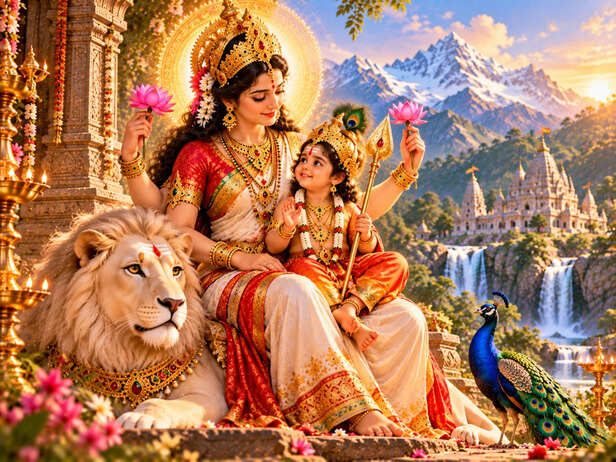
We love heroes. We clap for the one who wins, but we rarely ask who stood behind them before the victory. During Navratri, devotees do not worship the famous young commander of the gods. They worship his mother, Skandamata. That choice carries a quiet lesson about courage, comfort, and the people who make bravery possible. This article looks at an old story through a modern lens and shows how emotional security can shape confidence, in children and in adults.
When the World Needed a Hero
Long ago, a powerful demon named Tarakasura brought chaos to the world. He had received a boon that only a son of Shiva could bring him down. The gods grew tired and worried, and nobody knew what to do next. The world waited for someone who did not yet exist. Then Kartikeya was born, and in time he grew up and ended Tarakasura’s rule. Most tellings stop here and praise the young hero. But the story has another layer, and it begins with the question of who raised him.
The Goddess Behind the Commander
Look closely at the ninth day of Navratri’s fifth form. The devotees are not praying to the commander. They are praying to Skandamata, the mother who held him. The name explains it all. Skanda is another name for Kartikeya, the chief of the gods’ army. Mata simply means mother. She is shown with her child in her lap, calm and steady. The festival quietly tells us that before anyone becomes a leader, someone made them feel safe. Great strength rarely appears from nowhere. It usually grows in a lap, a home, or a kind voice.
What Psychology Calls a Secure Base
Psychologists studying child development noticed something remarkable. Children who feel safe and comfortable at home explore the world with far more courage. They try new things, ask questions, and recover quickly from mistakes. Researchers call this the secure base. It works like a harbour: the ship can sail far because it knows it can return. This idea, linked to attachment theory, applies to adults too. Whenever someone believes “I have a place to come back to,” their fear shrinks and their curiosity grows. Skandamata is the oldest picture of this idea.
Comfort Does Not Make You Weak
Many of us were taught the opposite. We heard that too much comfort spoils people, and that hardship alone builds character. But research and this ancient story point the other way. Feeling emotionally secure does not make a person fragile. It gives them roots. Kartikeya stepped forward with confidence because he knew his parents stood behind him. He did not carry the fear of being alone. A person who feels supported can take risks, face difficult conversations, and begin again after failure. Safety is not the opposite of strength. It is where strength begins.
A Small Story From Everyday Life
Think of a girl named Meera preparing for a big interview. She was nervous and almost cancelled. Her father did not give a long lecture. He made her tea, sat beside her, and said, “Whatever happens, dinner at home is ready.” That single sentence changed her mood. She walked in calmer, answered honestly, and even when one question went badly, she stayed steady. The result mattered less than what she felt inside. She knew that failure would not cost her the love at home. That quiet certainty is a secure base at work.
Five Steps to Be Someone’s Safe Place
You do not need to be a parent to offer this. First, listen fully before you advise. Second, show up consistently, because trust grows from repeated small acts. Third, accept feelings without judging them, even the messy ones. Fourth, encourage their goals and let them try, even if they stumble. Fifth, stay available, so they know they can return at any time without shame. These steps sound simple, yet they are rare. Practise them with a child, a partner, a friend, or a younger colleague, and watch how their confidence slowly changes.
The Strength You Give Without Noticing
Next time you see a confident person, remember that someone once made them feel safe. Their courage did not appear alone. It was lent to them, gently and often silently, by people who stayed. Skandamata teaches that supporting someone is not a smaller role than leading. It may be the greater one. So ask yourself today: who is relying on you to be their harbour? Be patient, be warm, and be present. You may never hear the applause, but a stronger, braver person will carry your quiet gift into the world.
Unlock insightful tips and inspiration on personal growth, productivity, and well-being. Stay motivated and updated with the latest at My Life XP.