
Why Sangam Snan Feels Incomplete Without Hanuman Darshan
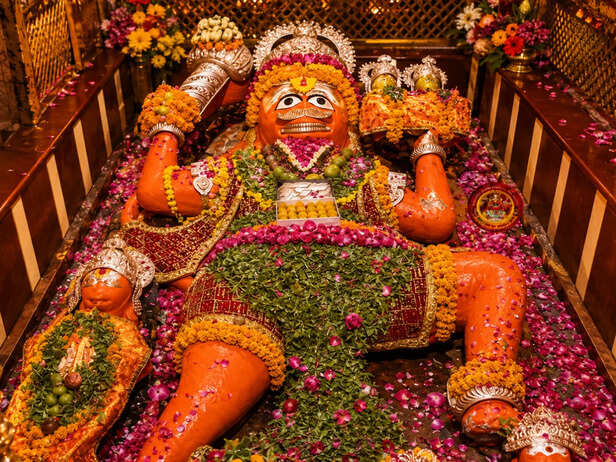
What if the river you came to Prayagraj to worship comes to the temple on its own? Near the sacred Sangam stands the famous Bade Hanuman Ji Temple, where devotees worship a unique reclining form of Lord Hanuman. The temple is especially associated with a striking monsoon phenomenon: devotees believe that when the Ganga rises, her waters reach the idol and perform a natural abhishek. Behind this unusual tradition lies an equally fascinating story connected with Hanuman Ji’s rest after the Lanka battle. Here is why this temple holds such a special place in Prayagraj’s spiritual landscape.
The Hanuman Idol That Lies Down
Unlike the standing or seated forms commonly seen in temples, Bade Hanuman Ji is worshipped in a reclining posture. This unusual form immediately catches the attention of visitors. The idol is traditionally described as being around 20 feet long, with much of its form positioned below the surrounding ground level. Devotees believe this posture represents Hanuman Ji resting after his immense efforts in Lanka. The sight creates a different kind of spiritual atmosphere. Instead of seeing the powerful warrior in an active pose, visitors encounter Hanuman Ji in a peaceful state of rest, adding another layer to the story associated with this ancient pilgrimage site.
Why Hanuman Ji Rested Here
According to the traditional story associated with the temple, Hanuman Ji became extremely tired after his efforts during the Lanka episode. It is believed that, following Maa Sita’s suggestion, he stopped at this sacred place to rest. The story gives meaning to the reclining posture of the idol. Whether viewed as mythology, faith or sacred tradition, it creates a powerful image: even the mighty Hanuman, known for extraordinary strength and devotion, is shown taking rest. For devotees, this can carry a simple human message too. Strength does not mean never stopping. Even the strongest need moments of rest.
The Ganga Connection
The most fascinating part of the temple appears during the monsoon season, when water levels in the Ganga rise. Devotees traditionally believe that Maa Ganga comes to perform the abhishek of the reclining Hanuman Ji. When the water reaches the idol, the moment is regarded as deeply sacred. From a physical perspective, the phenomenon is connected with seasonal changes in river levels and the temple’s location close to the river. From a devotional perspective, however, devotees see something more: the sacred river itself coming to honour Hanuman Ji. This meeting of nature, geography and faith makes the temple especially memorable.
A Powerful Symbol of Devotion
The temple’s idol is surrounded by powerful religious symbolism. Traditional descriptions associate different elements of the idol with Hanuman Ji’s divine story, including figures beneath his feet and sacred objects held in his hands. These details encourage devotees to look closely rather than simply pass through the temple. Every feature contributes to the larger image of Hanuman Ji as a devoted servant of Lord Rama and a protector against difficulties. The reclining posture adds another dimension. It shows that devotion is not only about heroic action. It can also be about surrender, humility, peace and complete trust in the Divine.
Why Sangam Pilgrims Seek His Darshan
Prayagraj is famous for the sacred Triveni Sangam, where devotees gather for ritual bathing and prayer. Bade Hanuman Ji Temple is located close to this important pilgrimage area, making it a natural stop for many visitors. Among devotees, there is a popular belief that a Sangam pilgrimage feels incomplete without Hanuman Ji’s darshan. This is a matter of religious tradition and personal faith rather than a universal requirement. Still, the connection is meaningful. Pilgrims can experience two powerful aspects of Prayagraj together: the sacred waters of the Sangam and the deeply revered presence of Bade Hanuman Ji.
The Monsoon Makes the Temple Special
If you visit Prayagraj during the monsoon, the surroundings of Bade Hanuman Ji Temple can take on a completely different character. As river levels rise, devotees closely watch the water and wait for the moment it reaches the temple. The event is emotionally powerful because it appears to connect two sacred elements: Ganga and Hanuman Ji. Visitors often gather to witness the sight and offer prayers. For believers, it is a divine abhishek. For others, it is a remarkable example of how seasonal changes have become woven into the religious identity of a historic pilgrimage place.
What to Remember Before You Visit
If Bade Hanuman Ji Temple is on your Prayagraj itinerary, take a moment to understand the tradition before entering. The temple is a place of worship, so dress respectfully and follow the instructions given by temple authorities. During the monsoon, river conditions and access can change, so visitors should follow local safety guidance rather than approaching rising water. Most importantly, experience the temple with patience. Look at the reclining idol, understand the story behind it and observe the devotion of the pilgrims around you. The real beauty of the visit lies not just in seeing the idol, but in understanding why generations have revered it.
Unlock insightful tips and inspiration on personal growth, productivity, and well-being. Stay motivated and updated with the latest at My Life XP.