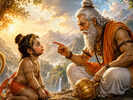
Why Shiva and Vishnu Became One? The Shocking Story
Noopur Kumari | Aug 09, 2026, 14:00 IST
The Harihara form carries a powerful message of unity.One side is traditionally shown as Vishnu, while the other represents Shiva. The imagery itself seems to say that the divine cannot be separated into the small divisions created by human minds.Traditional accounts connect Harihara with the idea of resolving disputes between devotees of Shiva and Vishnu. The form therefore becomes more than an image.It becomes a spiritual lesson:Do not let devotion become division.And there is an even more fascinating connection with Chaturmasya, a sacred four-month period associated strongly with spiritual discipline and devotion to Hari.

Lord Shiva and Lord Vishnu
Image credit : ChatGPT(ai)
What if Lord Shiva and Lord Vishnu appeared as one divine form? Not as two separate gods standing beside each other, but as a single form with one side representing Hari, Vishnu, and the other representing Hara, Shiva This powerful form is known as Harihara, and in different traditions it is also called Shankaranarayana or associated with forms such as Keshavardhamurti. But why did this extraordinary form appear? The story becomes even more fascinating because it is connected with a question that devotees have argued about for centuries: Who is greater Shiva or Vishnu? The answer given through Harihara is far deeper than simply choosing one.
![Lord Harihara – Shiva and Vishnu as One]()
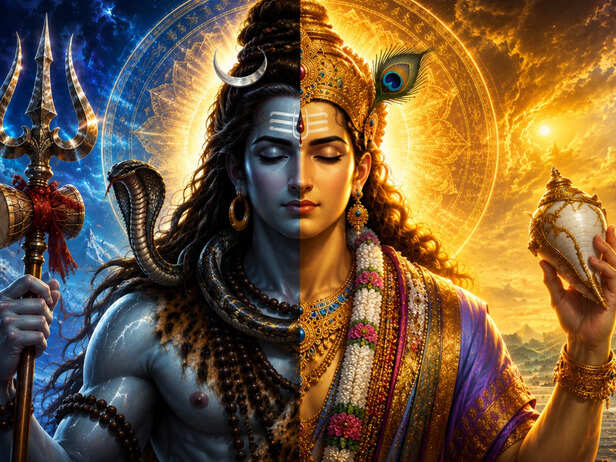
Harihara is one of the most fascinating combined forms in Hindu sacred art. The name itself joins Hari, a name associated with Vishnu, and Hara, a name associated with Shiva. In traditional depictions, one half resembles Vishnu while the other resembles Shiva. The Vishnu side may carry features such as the crown and Vaishnava symbols, while the Shiva side may show matted hair and Shaiva symbols. The image creates a striking visual message: two forms, one divine presence. Harihara is also known as Shankaranarayana, expressing the same unity between Shankara and Narayana.
![Shiva and Vishnu Devotees in a Debate]()
According to traditional narratives, disagreements arose between devotees about whether Shiva or Vishnu should be considered supreme. It is easy to understand how such arguments could become emotional. When someone deeply loves their chosen deity, they may naturally feel that their form of worship is the highest. But the Harihara idea offers a different way of looking at the question. Instead of choosing sides, it presents Shiva and Vishnu together. The message is strikingly simple: the divine does not become smaller because another form is worshipped. Harihara turns a debate into a lesson about unity, respect and spiritual understanding.
The beauty of Harihara becomes clear when you look at the image carefully. One half carries the identity of Vishnu, while the other carries the identity of Shiva. This is not meant to erase their individual traditions. Instead, it creates a powerful image of harmony. Different Hindu traditions have developed many ways of understanding the relationship between Shiva, Vishnu and the ultimate divine reality. Harihara is one especially memorable expression of that idea. In philosophical interpretations, the form can point toward the oneness of ultimate reality, rather than encouraging devotees to fight over names and forms.
Why is the Harihara form so powerful?
Because the real conflict is not between Shiva and Vishnu. It is between the human habit of creating divisions.
The form invites devotees to look beyond labels. Shiva is Shiva. Vishnu is Vishnu. Yet Harihara reminds us that different forms can point toward a deeper spiritual truth. This idea becomes especially meaningful in traditions influenced by Advaita, where ultimate reality is understood as non-dual. The message is not that every tradition must look identical. It is that different forms of devotion need not become reasons for hatred or disrespect.
Chaturmasya, the four-month sacred period, has an important place in Hindu devotional traditions. Texts describing Chaturmasya emphasise worship, self-control, discipline and spiritual practice. The Skanda Purana contains passages describing special benefits associated with devotion and meditation during this period.
This makes the Harihara message especially meaningful during Chaturmasya. Instead of spending these sacred months arguing about which deity is greater, devotees can use the period to become calmer, more disciplined and more devoted. The focus shifts from winning a religious argument to deepening one’s own spiritual practice.
Traditional sources preserve hymns that praise Hari and Hara together. One well-known Skanda Purana passage contains a combined Hari-Hara hymn, presenting names and praises associated with both Vishnu and Shiva. A traditional account associated with the hymn also speaks of freedom from the fear of Yama’s attendants for one who sees no difference between Hari and Hara.
The spiritual message is beautiful: devotion should not create hatred. Whether someone says “Om Namah Shivaya” or lovingly remembers “Narayana,” sincere devotion can become a path toward humility, faith and inner transformation.
Perhaps the most powerful lesson of Harihara is also the simplest. Do not turn devotion into a competition. You can love Shiva deeply and still respect Vishnu. You can worship Vishnu with complete faith and still honour Shiva. The Harihara form places both together so beautifully that the argument itself begins to look unnecessary. During Chaturmasya, devotees can take this message into practice through prayer, reading sacred texts, meditation, charity and self-control. The goal is not merely to know the story of Harihara. It is to understand what the story asks us to change within ourselves.
Unlock insightful tips and inspiration on personal growth, productivity, and well-being. Stay motivated and updated with the latest at My Life XP
The Form With Two Divine Identities
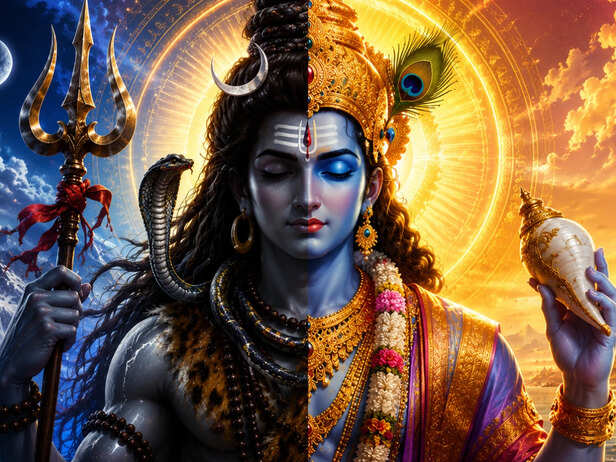
Lord Harihara – Shiva and Vishnu as One
Image credit : ChatGPT (ai)
Harihara is one of the most fascinating combined forms in Hindu sacred art. The name itself joins Hari, a name associated with Vishnu, and Hara, a name associated with Shiva. In traditional depictions, one half resembles Vishnu while the other resembles Shiva. The Vishnu side may carry features such as the crown and Vaishnava symbols, while the Shiva side may show matted hair and Shaiva symbols. The image creates a striking visual message: two forms, one divine presence. Harihara is also known as Shankaranarayana, expressing the same unity between Shankara and Narayana.
When Devotees Started Arguing
Shiva and Vishnu Devotees in a Debate
Image credit : ChatGPT(ai)
According to traditional narratives, disagreements arose between devotees about whether Shiva or Vishnu should be considered supreme. It is easy to understand how such arguments could become emotional. When someone deeply loves their chosen deity, they may naturally feel that their form of worship is the highest. But the Harihara idea offers a different way of looking at the question. Instead of choosing sides, it presents Shiva and Vishnu together. The message is strikingly simple: the divine does not become smaller because another form is worshipped. Harihara turns a debate into a lesson about unity, respect and spiritual understanding.
Shiva and Vishnu Share One Form
The Deeper Message Is Non-Division
Because the real conflict is not between Shiva and Vishnu. It is between the human habit of creating divisions.
The form invites devotees to look beyond labels. Shiva is Shiva. Vishnu is Vishnu. Yet Harihara reminds us that different forms can point toward a deeper spiritual truth. This idea becomes especially meaningful in traditions influenced by Advaita, where ultimate reality is understood as non-dual. The message is not that every tradition must look identical. It is that different forms of devotion need not become reasons for hatred or disrespect.
Chaturmasya Makes This Even More Meaningful
This makes the Harihara message especially meaningful during Chaturmasya. Instead of spending these sacred months arguing about which deity is greater, devotees can use the period to become calmer, more disciplined and more devoted. The focus shifts from winning a religious argument to deepening one’s own spiritual practice.
The Harihara Stotra Carries This Message
The spiritual message is beautiful: devotion should not create hatred. Whether someone says “Om Namah Shivaya” or lovingly remembers “Narayana,” sincere devotion can become a path toward humility, faith and inner transformation.
The Real Lesson of Harihara
Unlock insightful tips and inspiration on personal growth, productivity, and well-being. Stay motivated and updated with the latest at My Life XP