
Why Shiva Has Shivratri and Devi Has Navratri: The Truth
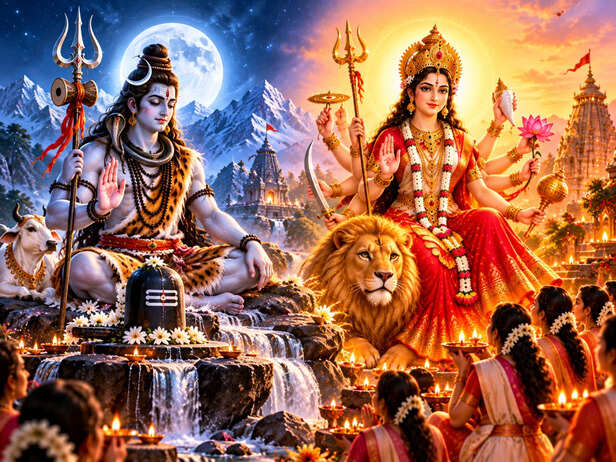
Why do some of Hinduism's most important spiritual observances happen at night? Shivratri honours Lord Shiva, while Navratri dedicates nine nights to the worship of Goddess Durga and her forms. Night may seem like a time for darkness and sleep, but many spiritual traditions treat it as an opportunity for silence, reflection and prayer. The deeper meaning lies in how devotees understand stillness: when the noise of everyday life fades, attention can turn inward. This connection between night, Shakti worship and spiritual renewal offers a different way to understand the nine nights of Navratri.
1. Why Do Sacred Hindu Rituals Begin at Night?
Think about the difference between daytime and nighttime. During the day, our attention is pulled in different directions by work, responsibilities and constant noise. At night, the world often becomes quieter, giving us more room to reflect. Hindu traditions draw on this sense of stillness during observances such as Maha Shivratri and Navratri. Night worship is not simply about darkness; it can also represent a chance to turn inward. For devotees, this quiet time offers an opportunity to focus on prayer, discipline and a deeper connection with the divine.
2. What Does Night Symbolise in Hindu Philosophy?
In spiritual interpretations, night can represent a pause from the demands of everyday life. Darkness does not always have to mean fear or negativity; it can also remind us that not everything needs to remain visible or busy. The Sanskrit word ratri means night, and its deeper symbolic meanings depend on the text and tradition in which it appears. It would be inaccurate to assign one universal philosophical definition to the word. Yet the broader idea of using silence for reflection fits naturally with many Hindu practices of meditation, prayer and self-discipline.
3. Why Is Navratri Celebrated for Nine Nights?
The word Navratri combines nava, meaning nine, and ratri, meaning night. During Sharad Navratri and Chaitra Navratri, devotees worship different forms of the Goddess over nine nights, followed by the celebration of Vijayadashami in the Sharad festival tradition. Each day is associated with a particular form of the Goddess in the widely followed Navadurga tradition. The nine-night structure gives devotees time to focus on different qualities associated with divine feminine power, including courage, wisdom, compassion and determination. The festival is therefore both a religious observance and a period of personal reflection.
4. The Connection Between Shakti and Stillness
In Shakta traditions, the Goddess is worshipped as Shakti, the divine power associated with creation, preservation and transformation. The night can serve as a symbolic setting for this worship because stillness encourages devotees to look beyond everyday distractions. This does not mean that spiritual awakening can happen only at night. Rather, the contrast between silence and activity offers a useful way to think about inner change. During Navratri, prayers and rituals create a dedicated period for devotion, helping worshippers give their attention to the Goddess and the qualities they hope to cultivate in their own lives.
5. Why Navratri Comes During Seasonal Change
Sharad Navratri takes place around the transition from the monsoon season to autumn, while Chaitra Navratri falls in spring. These seasonal changes give both festivals a natural connection with renewal and fresh beginnings. In traditional Hindu culture, seasonal transitions also have a place in religious calendars and observances. Some modern spiritual interpretations connect these changes with the idea of restoring inner balance. However, the festival's timing should not be reduced to a single explanation about nature or nighttime. Its dates and rituals come from established Hindu calendar and devotional traditions.
6. Why Does Navratri Begin With Maa Shailputri?
The first day of Navratri is dedicated to Maa Shailputri, traditionally depicted riding a bull and holding a trident and lotus. Her name means daughter of the mountain, linking her with the strength and steadiness associated with mountains. Beginning the festival with her worship offers devotees an opportunity to set an intention for the days ahead. Someone struggling with uncertainty might use the occasion to pray for clarity, while another person may focus on patience or courage. These personal reflections are ways of engaging with the festival's symbolism, not promises that a ritual will guarantee a particular result.
7. What the Nine Nights Can Teach Us Today
You do not have to understand every ancient text to find meaning in Navratri. You can begin with a few minutes of prayer, read about the form of the Goddess worshipped that day, or reflect on one quality you want to develop. Maa Shailputri may inspire steadiness, while other forms of Durga are associated with courage, knowledge and compassion. The purpose is not to make life perfect in nine nights. It is to create space for devotion and more thoughtful choices. In this sense, Navratri turns a familiar period of the religious calendar into a personal practice of reflection.
Unlock insightful tips and inspiration on personal growth, productivity, and well-being. Stay motivated and updated with the latest at My Life XP