
Why These 5 Indian Temples Refuse to Treat Ravana as a Villain
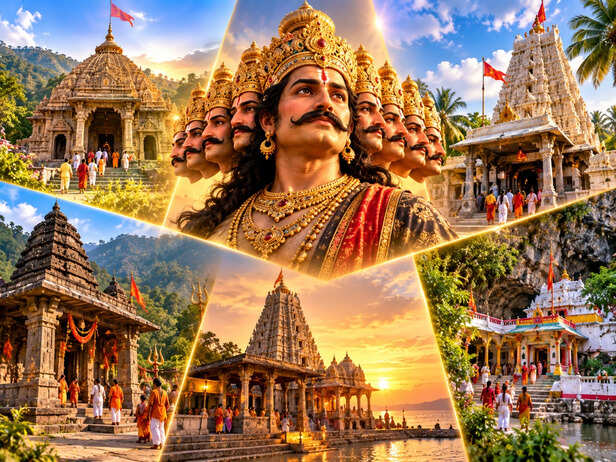
Every Dussehra, towering effigies of Ravana go up in flames as people celebrate Lord Rama's victory over him. But did you know that in some parts of India, people worship Ravana instead of burning his effigy? For these communities, Ravana is remembered not only as the antagonist of the Ramayana but also as a learned king, a devotee of Lord Shiva, and a figure connected with local traditions. From a temple in Kanpur that opens on Dussehra to a village in Greater Noida associated with his birth, these five places reveal a lesser-known side of Ravana's story.
Dashanan Temple, Kanpur
While Ravana's effigies burn across India on Dussehra, the Dashanan Temple in Kanpur follows a different tradition. The shrine, located within the Kailash Temple complex, is known for opening its doors on Dussehra, when devotees offer flowers, perform rituals, and seek blessings. Ravana is respected here for his knowledge, intelligence, and devotion to Lord Shiva. The temple's unusual schedule makes it especially intriguing for visitors exploring India's diverse Dussehra traditions. However, details about the shrine's age and exact opening practices should be confirmed locally before planning a visit.
Bisrakh Ravana Temple, Greater Noida
In Bisrakh, near Greater Noida in Uttar Pradesh, local tradition connects Ravana's birth to the village. Its name is associated with his father, Sage Vishrava, and residents preserve stories that differ from the more familiar Dussehra narrative. Rather than treating Ravana only as a villain, some locals remember him through his family background and devotion to Lord Shiva. The village is also associated with a Shiva lingam and religious practices linked to these beliefs. Dussehra observances here are often described as distinct from the widespread custom of burning Ravana's effigy, although practices may vary among residents.
Ravana Shrine, Mandsaur
Mandsaur in Madhya Pradesh has a distinctive connection with Ravana through local beliefs about his wife, Mandodari. According to a popular tradition, Mandodari belonged to the region, leading some residents to regard Ravana as a respected son-in-law. A statue associated with Ravana in the Khanpur area is another feature of this local heritage. The tradition offers a different perspective from the familiar story of his defeat by Lord Rama. Here, family ties and regional identity shape how Ravana is remembered. These beliefs are part of local tradition and are not universally accepted historical claims.
Ravana Gram, Vidisha
Ravana Gram in the Vidisha district of Madhya Pradesh is known for a shrine featuring a reclining stone idol of Ravana. Local accounts describe the idol as being around 10 feet long. Some residents regard Ravana as a figure from whom they can seek blessings before important events, such as starting a business, purchasing a vehicle, or beginning a new phase of life. This practice may surprise people accustomed to seeing Ravana represented mainly through Dussehra effigies. Yet the shrine reflects how local communities can preserve their own religious customs and interpretations of figures from the Ramayana.
Baijnath Temple, Himachal Pradesh
Baijnath Temple in Kangra, Himachal Pradesh, is primarily dedicated to Lord Shiva, but its religious traditions also include a story about Ravana. According to mythology, Ravana performed intense penance to please Shiva, offering his heads as part of his devotion. Impressed by his dedication, Shiva granted him boons. This story has helped create a local association between Ravana and the sacred landscape of Baijnath. The claim that the entire region avoids burning Ravana's effigy because of this legend should be treated as a local tradition rather than a universal practice. The temple's central focus remains worship of Lord Shiva.
Why These Places Remember Ravana Differently
Ravana's story is often told through his conflict with Lord Rama, which forms the centre of Dussehra celebrations. But these five places show that local religious traditions can preserve other aspects of his identity, including his learning, family connections, and devotion to Shiva. Worshipping Ravana does not necessarily mean rejecting the Ramayana's moral lessons. Instead, these customs reflect how communities interpret the same figure through different regional histories and beliefs. From a temple that opens on Dussehra to shrines connected with Shiva's devotee, these traditions remind us that India's religious landscape is far more varied than a single festival can show.
Unlock insightful tips and inspiration on personal growth, productivity, and well-being. Stay motivated and updated with the latest at My Life XP.