
Why This Goddess Is Often Mistaken for Ganesha
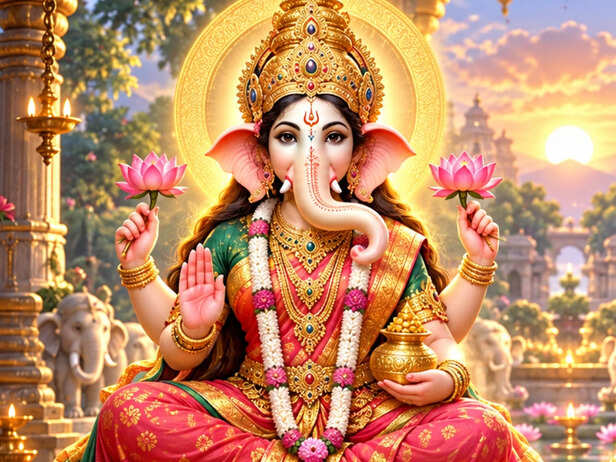
Look at this figure carefully. At first glance, you might assume it is Lord Ganesha. The elephant head, familiar form and powerful presence can easily lead you to that conclusion. But this is Mahavinayaki, a fascinating goddess whose identity changes across different Hindu traditions. In some traditions, she is connected with Ganesha as his Shakti, while in others, she appears as an independent goddess. Her story becomes even more intriguing when we look at traditions surrounding the Matrikas and Yoginis.
She Is Not Ganesha
The first surprise is her appearance. Mahavinayaki is depicted with an elephant head and a form that can immediately remind devotees of Ganesha. But the name itself gives us a clue. Mahavinayaki is a feminine form associated with the name Vinayaka, one of Ganesha's well-known names. Her depiction and identity, however, are not identical to the familiar Ganesha worshipped in homes and temples. This distinction is important because Hindu traditions often preserve multiple forms and interpretations of the divine. Mahavinayaki represents one of those lesser-known traditions that many people may never encounter during everyday Ganesha worship.
Her Connection With Ganesha
One fascinating tradition connects Mahavinayaki directly with Ganesha as his Shakti, or divine feminine power. In this understanding, she represents a feminine expression of the same sacred energy associated with Vinayaka. But that is not the only way she has been understood. Other traditions treat Mahavinayaki as a distinct goddess rather than simply a female counterpart of Ganesha. This difference shows how Hindu religious traditions can preserve several interpretations of the same divine figure. Instead of one fixed identity, Mahavinayaki appears through different layers of mythology, worship and symbolism that developed across different traditions.
The Andhaka Connection
The story takes another turn in traditions associated with the Matsya Purana. Mahavinayaki is connected with the group of divine Matrikas, powerful mother goddesses who appear in accounts surrounding the battle against the demon Andhaka. In this tradition, Shiva creates divine powers to confront the demon, and the Matrikas become part of that cosmic struggle. Mahavinayaki's association with this group gives her an identity that goes beyond simply being linked to Ganesha. She becomes part of a much larger story about divine feminine power, protection and the forces summoned to confront a dangerous adversary.
She Belongs to More Than One Tradition
What makes Mahavinayaki especially interesting is that her identity appears across different streams of Hindu tradition. She has been associated with Shakti, Matrikas and Yogini traditions, creating a picture that is much more complex than the simple label of “female Ganesha.” These traditions developed in different religious and cultural settings, so their descriptions do not always match perfectly. That is why Mahavinayaki can appear differently depending on the source or temple tradition being discussed. Rather than seeing these differences as contradictions, they can be understood as evidence of how Hindu sacred traditions evolved and preserved multiple forms of divine expression.
Hirapur Preserves a Rare Tradition
One of the most intriguing places connected with this tradition is the Chausath Yogini Temple at Hirapur in Odisha. The temple is associated with the worship of the 64 Yoginis and is known for its distinctive circular layout and powerful goddess imagery. Mahavinayaki's connection with this Yogini tradition makes the site especially significant for anyone interested in lesser-known forms of Shakti worship. It also shows why her story cannot be understood only through modern images of Ganesha. Her presence belongs to a much wider religious landscape where goddesses could take forms that were both independent and connected with other divine powers.
Why People Mistake Her for Ganesha
The confusion is completely understandable. Both figures can have an elephant head, divine ornaments and a powerful seated form. If you have grown up seeing Ganesha represented in familiar ways, the image of Mahavinayaki may immediately register as another form of him. But the details surrounding the deity matter. The name, textual tradition, iconography and context of worship can reveal a different identity. This is why looking beyond the surface can change what you think you are seeing. Sometimes, an image that seems familiar is actually carrying a story that very few people have heard.
A Goddess Worth Remembering
Mahavinayaki's story reminds us that Hindu mythology cannot always be placed into neat categories. She appears through different traditions as a goddess connected with Ganesha's Shakti, while other accounts place her within the worlds of Matrikas and Yoginis. Her connection with Hirapur makes the story even more fascinating. The safest way to understand these accounts is to recognise them as belonging to different religious traditions and textual interpretations rather than forcing them into one fixed version. That complexity is precisely what makes Mahavinayaki worth discovering. Behind a familiar elephant-headed image may be a goddess with a story of her own.
Unlock insightful tips and inspiration on personal growth, productivity, and well-being. Stay motivated and updated with the latest at My Life XP.