
Why Tulsi Is Never Offered to Lord Ganesha
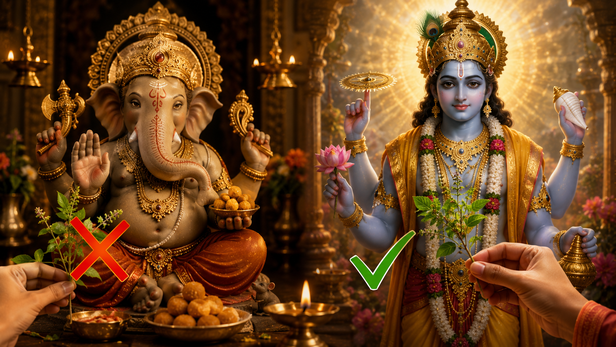
Tulsi is one of the holiest plants in Sanatan Dharma. It is considered the favorite of Lord Vishnu and is offered in almost every Vishnu and Krishna worship. But have you ever noticed that the same sacred Tulsi leaves are never offered to Lord Ganesha?
This tradition has puzzled devotees for generations. Is it simply a ritual, or is there a deeper spiritual story hidden in the scriptures? The answer lies in an ancient legend that explains how a single conversation between Lord Ganesha and Goddess Tulsi shaped a tradition followed even today.
The Sacred Leaf Missing From Ganesh Puja
Many devotees are surprised to learn that although Tulsi is considered extremely sacred, it is intentionally excluded from Ganesh worship. Instead, Lord Ganesha is traditionally offered Durva grass, red flowers, and modaks. This difference is not accidental. Hindu scriptures connect this practice to an ancient story that carries a deeper message about devotion, self-control, and spiritual purpose.
The Legend of Tulsi and Lord Ganesha
According to the Brahma Vaivarta Purana, Lord Ganesha was deeply absorbed in meditation when Goddess Tulsi saw him and wished to marry him. She approached him with her proposal, but Ganesha politely declined because he had dedicated himself to spiritual discipline. Feeling hurt, Tulsi became angry and cursed him to marry. In return, Lord Ganesha declared that Tulsi would be married to a demon and would never be accepted in his worship.
Why Tulsi Became Sacred to Lord Vishnu
Although Tulsi received Lord Ganesha's curse, she later performed intense penance and earned the blessings of Lord Vishnu. She became revered as Vrinda, whose devotion symbolizes purity, surrender, and unwavering faith. Since then, Tulsi has been considered essential in the worship of Lord Vishnu and Lord Krishna. This explains why the same sacred leaf is welcomed in one form of worship but traditionally avoided in another.
The Spiritual Meaning Behind the Tradition
The story is not simply about a curse. It highlights the importance of respecting spiritual paths and individual vows. Lord Ganesha represents wisdom, discipline, and focus, while Tulsi symbolizes devotion and divine love. The tradition reminds devotees that every deity has unique forms of worship prescribed by scripture. Following these customs with understanding deepens both faith and reverence.
What Should You Offer Lord Ganesha Instead?
If you are performing Ganesh Puja, scriptures recommend offering Durva grass, fresh red flowers, sandalwood paste, modaks, fruits, and sincere prayers. These offerings are believed to please Lord Ganesha and symbolize purity, simplicity, and gratitude. The most important offering, however, is a heart filled with devotion, humility, and faith.
Unlock insightful tips and inspiration on personal growth, productivity, and well-being. Stay motivated and updated with the latest at My Life XP.