
Why Was Dandakaranya Called the Forest of Punishment?
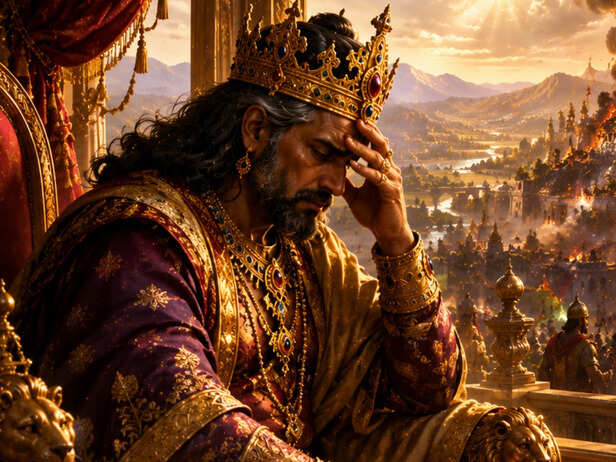
What if one of the most famous forests connected with the Ramayana began with the downfall of a king? Traditional accounts tell a dramatic story involving King Danda, the youngest son of King Ikshvaku, a prosperous kingdom called Madhumanta and the powerful sage Shukracharya. A serious wrongdoing by the king eventually brought a devastating curse upon his kingdom. Within seven days, the once prosperous land was destined to become a wilderness. This story gives a deeper meaning to the name Dandakaranya, traditionally explained as the forest associated with Danda and his punishment. But the story becomes even more striking when Lord Rama later enters this very region.
The Youngest Son Was Different
The story begins with King Ikshvaku, traditionally regarded as an early ruler of the Solar dynasty, the lineage later associated with Lord Rama. According to the traditional account, Ikshvaku had a hundred sons, and his youngest son was named Danda. Unlike his brothers, Danda was described as unruly and inclined towards pleasure rather than disciplined conduct. His father recognised this behaviour early and gave him a kingdom called Madhumanta. The intention was not simply to give him power. It was also an opportunity for the young prince to mature, govern responsibly and learn the duties expected of a king.
Madhumanta Was Once Prosperous
Under Danda’s rule, Madhumanta was described as a prosperous and flourishing kingdom. An important figure in the kingdom was Shukracharya, who served as the royal priest and adviser in the traditional account. His knowledge and guidance helped establish principles of governance and conduct. But prosperity alone cannot guarantee the lasting strength of a kingdom. A ruler must also follow the principles expected of a king. Danda’s personal choices eventually became the turning point. His position gave him immense authority, but his inability to control his desires would have consequences far beyond his own life.
One Encounter Changed Everything
One day, Danda went into the forest and came across a small hermitage. There he saw Arja, the daughter of Shukracharya. Traditional versions of the story describe Danda becoming attracted to her and behaving improperly despite her resistance. Arja warned him and reminded him of her father’s power and anger. But Danda ignored her plea. This moment is the central wrongdoing in the story. It shows how a king’s failure to control his impulses can become more than a personal mistake. His actions would soon bring devastation upon his kingdom and everyone connected to it.
Shukracharya’s Terrible Curse
When Shukracharya returned and discovered what had happened to his daughter, he was enraged. According to the traditional narrative, he cursed Danda and his entire kingdom. The prosperous land would be destroyed within seven days and transformed into a desolate forest. The curse was not limited to the king himself. It extended to the kingdom and its people, showing the devastating consequences traditionally associated with a ruler’s wrongdoing. Those who wanted to escape the curse were given an opportunity to leave Madhumanta. The once flourishing kingdom was now facing complete destruction, and its fate had already been sealed.
A Kingdom Became a Wilderness
The seven-day period brought the fulfilment of the curse in the traditional story. Madhumanta, once described as prosperous, was transformed into a vast wilderness. The region came to be associated with Dandakaranya, often understood through the name Danda and the idea of punishment. Those who escaped the cursed kingdom settled elsewhere, with the tradition connecting that settlement to Janasthana. The story gives the forest a meaning far beyond geography. It becomes a reminder of how the actions of a powerful ruler can affect an entire society. A kingdom created for Danda became a lasting symbol of the consequences of his choices.
Then Rama Entered the Same Forest
This is where the story takes an unexpected turn. Dandakaranya later becomes closely associated with Lord Rama’s exile in the Ramayana tradition. Rama, the prince of the same Solar dynasty associated with Ikshvaku, entered the forest not to enjoy power but to uphold his father’s promise and follow his understanding of dharma. The contrast is striking. Danda is remembered in this tradition for allowing desire to overpower responsibility, while Rama is celebrated for placing duty above personal comfort. The same lineage is therefore connected to two dramatically different examples of kingship, making Dandakaranya an especially meaningful setting in the epic tradition.
The Forest Became a Deeper Symbol
The story of Dandakaranya becomes especially powerful when viewed through this contrast. One ruler’s actions are traditionally associated with the destruction of a prosperous kingdom, while Rama’s journey through the forest represents sacrifice, duty and adherence to dharma. The forest therefore becomes more than a setting in the Ramayana. It can be read as a reminder that power alone does not make a ruler great. Character determines how power is used. In this traditional telling, Dandakaranya carries the memory of punishment, but Rama’s presence gives the forest another dimension: a place where duty, courage and righteousness are tested.
Unlock insightful tips and inspiration on personal growth, productivity, and well-being. Stay motivated and updated with the latest at My Life XP.