
Why We Say Baba Bholenath But Never Baba Krishna
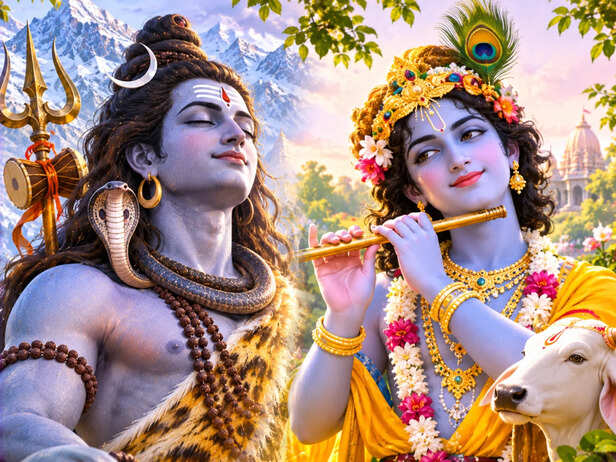
We have grown up calling Lord Shiva Baba Bholenath. But have you ever wondered why we use the word Baba for Shiva and not for Lord Vishnu, Lord Rama or Lord Krishna? After all, Krishna himself describes himself as the father of the universe in the Bhagavad Gita. So, what makes Shiva different? The answer takes us beyond Hindu mythology and into the history of the Persian language, Sufi traditions and India's spiritual culture. And the most interesting part is how the meaning of this simple word connects with Shiva's unique personality.
The Word Baba Has Persian Roots
The word Baba has an interesting history that goes beyond Indian religious traditions. In Persian, Baba means father or grandfather and is also used as a respectful form of address for an elder. Over time, the word became associated with spiritual teachers and Sufi saints, who were respected for their wisdom and guidance. In Sufi traditions, Baba was used as an honorific for spiritual elders. Historical references also show its use among dervishes and Sufi teachers in Central Asia.
How Baba Became Part of Indian Spiritual Culture
As Persian and Sufi cultural traditions became part of the Indian subcontinent, the word Baba gained wider use. People began using it for respected spiritual figures, saints, fakirs and ascetics. The word was no longer limited to its meaning of father or grandfather. It also expressed affection, respect and spiritual reverence. This is why the title became familiar across different religious communities in India. It was a cultural development over time rather than a word that belonged exclusively to one religious tradition.
Why Guru Nanak Was Called Baba Nanak
One interesting example is Guru Nanak Dev Ji, the founder of Sikhism. He is widely remembered as Baba Nanak, and the title became an expression of affection and respect for his spiritual teachings. The word Baba was used for him in Sikh traditions and early biographical accounts. It was not simply a reference to his age or family position. It reflected the respect people had for his wisdom, humility and spiritual guidance. This shows how the meaning of Baba gradually expanded in Indian culture to include revered spiritual personalities.
Krishna Is Also the Father of the Universe
Now comes the interesting question: if Baba means a loving father and spiritual guide, why is Lord Krishna not commonly called Baba Krishna? After all, in the Bhagavad Gita (Chapter 9, Verse 17), Krishna describes himself as the father, mother, supporter and grandfather of the universe. Lord Rama is also worshipped as a loving and protective father figure. So, being a father cannot be the only reason Shiva is called Baba. The answer lies in how devotees understand Shiva's personality and the way his name became part of everyday worship.
Shiva Is Both a Father and an Ascetic
Look at the way Lord Shiva is traditionally depicted. He has matted hair, wears a tiger skin, covers his body with sacred ash and meditates away from worldly comforts. He is worshipped as a supreme yogi who has renounced material attachments. At the same time, devotees see him as a compassionate protector who accepts everyone without discrimination. In the Rigveda, Rudra is also addressed as the father of the Maruts in Hymn 2.33. This combination of fatherly affection and ascetic life offers a meaningful way to understand why devotees lovingly call him Baba.
Why Shiva Became Baba Bholenath
There is a beautiful devotional interpretation behind the name Baba Bholenath. Shiva is seen as a father who does not judge people by their wealth, status or background. He is also the ascetic who owns almost nothing and remains detached from worldly possessions. Unlike a king surrounded by luxury, he is worshipped in the simplest form, often through a Shivling and a little water. For devotees, this makes him both a caring father and a spiritual guide. The title Baba Bholenath expresses this emotional connection, although its exact historical origin cannot be traced to one definitive event.
The Name Carries a Special Meaning
So, the next time you call Lord Shiva Baba Bholenath, remember that the word carries more than one layer of meaning. Its linguistic history connects with Persian and Sufi traditions, while its devotional meaning in Shiva worship comes from the way devotees see him as a loving father and a detached yogi. There is no established historical rule that explains why Shiva alone received this title, but his unique image makes the name feel especially natural. Perhaps that is why millions of devotees do not just worship Shiva as Mahadev. They lovingly call him their Baba.
Unlock insightful tips and inspiration on personal growth, productivity, and well-being. Stay motivated and updated with the latest at My Life XP.