
You Think Rama’s Lineage Began With Dasharatha? Think Again
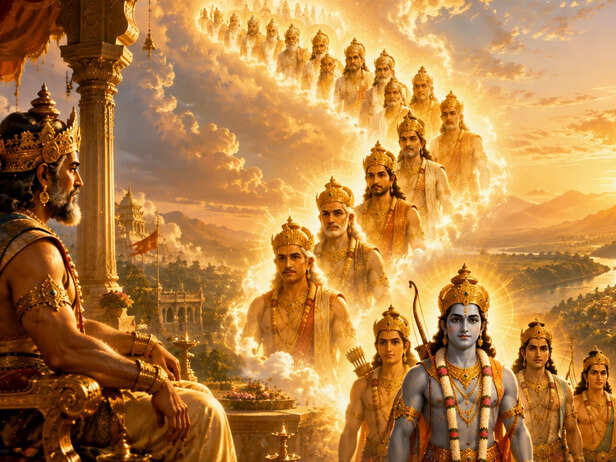
When people think about Lord Rama’s family, they often begin with King Dasharatha, the ruler of Ayodhya and father of Rama. But according to Hindu traditions and texts such as the Ramayana, Puranas and Raghuvamsha, Lord Rama belonged to a much older and illustrious royal lineage that stretched back through many generations. This was not merely a family tree of kings. It was a lineage associated with duty, sacrifice, wisdom and righteous governance. From Vaivasvata Manu and King Ikshvaku to Sagara, Bhagiratha and Raghu, each ruler added a chapter to a tradition that ultimately led to the birth of Lord Rama.
The Lineage Begins With Vaivasvata Manu
According to Hindu traditions, the story of Lord Rama’s ancestry begins with Vaivasvata Manu, who is described as the Manu of the present seventh Manvantara. Manu is remembered as a lawgiver and an important progenitor figure in ancient texts. The traditions state that Vaivasvata Manu’s descendants played a significant role in shaping royal lineages across Bharat. Among his sons was King Ikshvaku, whose name became closely associated with one of the most celebrated dynasties in Indian tradition. This connection gives Lord Rama’s ancestry a history extending far beyond the time of Ayodhya’s later kings.
King Ikshvaku Founded a Great Dynasty
King Ikshvaku is remembered as the founder of the Ikshvaku dynasty, often identified with the Suryavansha, or Solar Dynasty. This royal line became associated with ideals of righteous rule and responsibility toward the kingdom. After Ikshvaku, several rulers carried the lineage forward, including kings such as Kukshi, Vikukshi and Puranjaya. Their stories appear in various traditional texts, contributing to the dynasty’s reputation over many generations. By the time Lord Rama was born, he inherited not only a throne but also centuries of expectations connected with this distinguished royal tradition.
The Legacy of King Sagara
Many generations after Ikshvaku came King Sagara, one of the most celebrated rulers of the dynasty. His story is closely linked with important events that later shaped the destiny of the family line. King Sagara’s descendants included Anshuman and Dilip, who carried forward the royal tradition. The stories associated with these rulers emphasise patience, duty and continuity across generations. Rather than being remembered only for political power, these kings are often described in terms of their commitment to dharma, preparing the way for later figures who would become central to India’s sacred narratives.
Bhagiratha Brought the Ganga to Earth
Among the most famous ancestors of Lord Rama was King Bhagiratha, whose name remains connected with determination and spiritual effort. Traditional narratives describe how Bhagiratha performed intense penance so that the sacred River Ganga could descend from the heavens to earth. The story symbolises perseverance, devotion and the desire to benefit future generations. Even today, the phrase “Bhagirath effort” is used to describe an extraordinary undertaking. Bhagiratha’s place in Lord Rama’s lineage highlights how this royal family was remembered not only for rulership but also for acts believed to have lasting spiritual significance.
Why It Is Called the Raghu Dynasty
Many generations after Bhagiratha came King Raghu, another celebrated ruler whose reputation became so influential that the dynasty itself came to be known as the Raghuvansha, or the lineage of Raghu. The classical work Raghuvamsha by the poet Kalidasa celebrates this royal tradition and its ideals. Raghu became associated with generosity, courage and righteous kingship. His descendants included King Aja, whose son was King Dasharatha. Through this connection, Lord Rama inherited not only the Solar Dynasty and the Ikshvaku lineage but also the honour attached to the name of Raghu.
Dasharatha and the Birth of Lord Rama
King Dasharatha ruled Ayodhya and became one of the best-known kings of the dynasty because he was the father of Lord Rama, Bharata, Lakshmana and Shatrughna. While Dasharatha occupies an important place in the Ramayana, he was also part of a much older lineage stretching back through many generations. Lord Rama’s birth therefore represented the continuation of a tradition associated with duty, sacrifice and moral leadership. This broader context helps explain why Rama is remembered not only as a divine figure but also as an ideal king shaped by a long ancestral legacy.
Why Lord Rama Has Three Lineage Names
Lord Rama is known by three important lineage names. He is called Suryavanshi because he belongs to the Solar Dynasty. He is known as Ikshvakuvanshi because his royal line traces back to King Ikshvaku. He is also called Raghuvanshi because King Raghu’s fame became central to the dynasty’s identity. These names are not contradictions; rather, they describe different layers of the same royal tradition. Together, they reflect an ancestry associated with kingship, spiritual effort and the ideals of dharma that are closely linked with Lord Rama’s life and legacy.
The Legacy Behind Lord Rama
The story of Lord Rama’s ancestry is more than a list of kings. It is a narrative of generations connected through values such as duty, sacrifice, perseverance and righteous leadership.
From Vaivasvata Manu to Ikshvaku, from Sagara and Bhagiratha to Raghu and Dasharatha, every generation contributed to a tradition that culminated in the birth of Lord Rama.
That is why Lord Rama is remembered as:
Suryavanshi – Descendant of the Solar Dynasty
Ikshvakuvanshi – Descendant of King Ikshvaku
Raghuvanshi – Descendant of King Raghu
And perhaps that is the deeper message of this lineage: greatness is not created in a single generation. It is built through the values carried forward across many lives.
Unlock insightful tips and inspiration on personal growth, productivity, and well-being. Stay motivated and updated with the latest at My Life XP.