
Why Has Apple Finally Put a Touchscreen on the MacBook Pro?
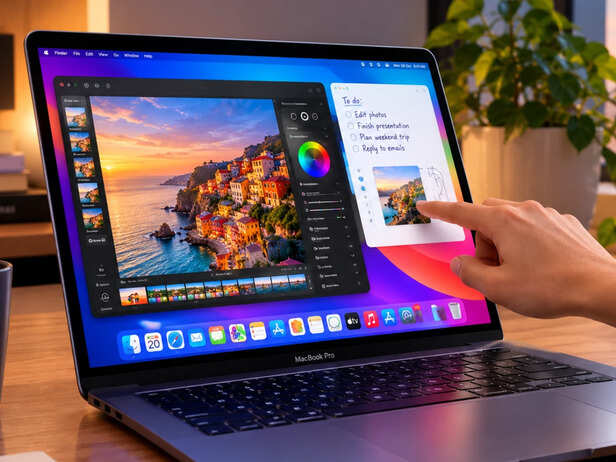
The big question is not simply why Apple is considering a touchscreen. It is why the company may be ready to change a position it maintained for so long, and whether touching a laptop screen will genuinely improve the experience for users.
What Has Apple Actually Changed?
Apple announced its first touchscreen MacBook Pro on October 28, 2026, marking a significant shift in the company's laptop design. The new models come with a tandem OLED display, M5 Pro or M5 Max chips, and touch controls designed to work alongside the keyboard and trackpad.
Here are the biggest changes:
- Touchscreen controls: Users can scroll, zoom into photos, drag content and interact directly with compatible apps.
- A new OLED display: The display promises deeper blacks, vivid colours and high contrast, which could benefit photographers, video editors and designers.
- A redesigned interface: Touch-friendly controls make selected actions easier to perform directly on the screen.
- Dynamic Island on Mac: Apple is bringing its Dynamic Island concept to the MacBook Pro for quick access to search, notifications and live activities. Apple (IN)+1
These changes suggest that Apple wants to make the MacBook more flexible without abandoning the traditional laptop experience.
Why Has Apple Changed Its Mind About Touchscreens?
For years, Apple maintained a clear distinction between the Mac and the iPad. The Mac was built around a keyboard, pointer and trackpad, while the iPad focused on direct touch interaction.
That distinction is now becoming less rigid.
1. Users Are Already Comfortable With Touch
People regularly use touchscreens on smartphones, tablets and other laptops. Pinching to zoom, swiping through content and tapping controls have become familiar actions.Apple's move allows MacBook users to apply some of those habits to their laptops. Instead of reaching for the trackpad for every small action, users can touch the display when it feels more convenient.
However, the touchscreen does not mean every task will become easier. Typing long documents, navigating complex spreadsheets and working with multiple windows may still be more comfortable with a keyboard and trackpad.
2. Creative Professionals Could Benefit the Most
The touchscreen may be particularly useful for people who work with visual content.A photographer could zoom into an image with a pinch gesture. A video editor could select or adjust clips directly on the screen. Designers could interact more naturally with artwork and 3D models.
Apple says the new MacBook Pro supports touch-based interactions in creative applications, including tools for image editing, video production and 3D design. The actual benefit will depend on how well developers adapt their software. A touchscreen is most useful when the application has controls designed for fingers, rather than simply allowing users to tap existing buttons.
3. The OLED Display Makes the Upgrade More Significant
The touchscreen is only one part of the update. Apple has also introduced its tandem OLED technology under the name PROLED XDR.
According to Apple, the display offers up to 2,000 nits of peak brightness and a 10,000,000:1 contrast ratio, alongside a 120Hz variable refresh rate. These features could make images, videos and other visual content appear more detailed and vibrant. For professionals who depend on accurate visuals, display quality may prove just as important as touch input.
4. Apple Wants the Mac to Work With More Types of Apps
Touch interaction could also make it easier for developers to bring certain mobile-style experiences to the Mac.
Apple says many existing applications will support touch immediately, while developers can use updated system tools to create more specific touch features. This could be useful for people who switch between a Mac, iPhone and iPad throughout the day. However, it does not mean the MacBook Pro has become an iPad or that every iPad application will automatically work perfectly on macOS.
Does the Touchscreen Replace the Trackpad?
No. Apple is presenting touch as an additional way to interact with the MacBook Pro, rather than a replacement for its existing controls.The keyboard and trackpad remain important for everyday productivity. Touch adds another option for tasks that benefit from direct interaction, such as zooming into photographs, selecting visual elements or moving content around a workspace.
This approach could help Apple avoid forcing users to change how they work. People who prefer the traditional Mac experience can continue using it, while others can explore the new controls.The MacBook Pro also remains a conventional laptop rather than a convertible device that folds into a tablet.
Is the New Touchscreen MacBook Pro Worth the Hype?
The new model could be appealing to creative professionals, developers and existing Mac users who regularly work with visual content. Its OLED display and touch controls may offer practical benefits, particularly in compatible creative applications.But there are reasons to be cautious.
The starting price is high. Reuters reports that the 14-inch model starts at $2,899 in the United States, while the 16-inch model starts at $3,399. It is also too early to know how comfortable the touchscreen will feel during long work sessions or how extensively third-party applications will support it in everyday use.For people who mainly write emails, browse the internet and work with documents, an older MacBook may remain perfectly adequate. Those who edit photos, produce videos or manipulate visual content may have more reasons to consider the upgrade.
A New Chapter for the MacBook Pro
Apple's touchscreen MacBook Pro represents more than the addition of a new feature. It signals a shift in how the company thinks about the relationship between laptops, tablets and the ways people interact with digital content.The move could make creative work more intuitive and give users greater flexibility. At the same time, the touchscreen will need to prove its value beyond the initial excitement surrounding the launch.
Ultimately, Apple's decision may be less about abandoning its old philosophy and more about adapting it. The keyboard and trackpad are still central to the MacBook experience, but users now have another way to work when touching the screen makes more sense.
Unlock insightful tips and inspiration on personal growth, productivity, and well-being. Stay motivated and updated with the latest at My Life XP.