
How a Kumartuli Idol Takes Shape from River Clay and Straw
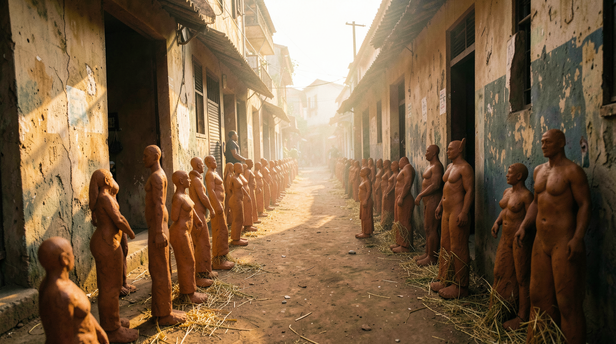
The Hooghly moves slowly past Kumartuli, and for most of the year the neighbourhood moves slowly too. Workshops the width of a doorway open onto lanes where finished limbs dry in rows and half-built torsos lean against walls still dark with last season's paint. The craft here is not decorative. It is structural, and understanding the structure changes what you see when you watch a procession pass.
Why Straw Comes Before Clay
A Kumartuli idol is not carved. It is built up from the inside out, and the inside is almost weightless. Artisans begin with a skeleton of bamboo lashed together at the joints, then pack it densely with straw, paddy straw, twisted and tied until the rough volume of the figure is there. The straw does two things at once: it gives the clay something to grip, and it keeps the finished idol light enough to carry in procession and to immerse without leaving a mass of solid earth in the riverbed. The logic is ecological as much as practical. A solid clay idol of that size would take weeks to dissolve. The straw core means the structure opens quickly in water.
What the Hooghly Clay Actually Is
The clay used in Kumartuli is not taken from just anywhere along the bank. By long tradition it includes a portion collected from the soil outside a particular kind of establishment in Sonagachi, the reasoning being that the earth there has absorbed the touch of many people and therefore carries something of collective humanity into the image of the divine. Whether a given artisan follows this practice exactly or works with Hooghly alluvial clay more broadly, the material is the same in composition: fine-grained, plastic when wet, slow to crack as it dries, and pale enough when fired or air-dried to take pigment cleanly. It is applied in stages. The first coat is rough, pressed hard into the straw to lock it. Subsequent coats refine the form. The face comes last, shaped by hand and sometimes with simple tools, smoothed with a wet cloth.
The Sequence of Building
Feet are made first, then the lower body, then the torso, then the arms, often cast separately and attached once dry enough to hold their shape. The sequence follows structural logic: lower sections bear the weight of what is added above them and must be firm before the next stage begins. In a large workshop during the months before a major festival, different artisans work on different stages simultaneously, one finishing feet while another refines a face across the room. The division is not assembly-line indifference. Each artisan knows the whole form; they work a stage because that is where their particular skill is sharpest. Face-making is the most specialised work in the lane and the most closely watched.
Colour, Eyes, and the Moment the Idol Becomes Itself
Once the clay is dry, the surface is primed and painted in layers. The palette follows iconographic convention: a specific skin tone for each deity, specific colours for garments and ornaments, specific expressions coded into the angle of the eyes and the set of the mouth. The eyes are painted last, and in the older tradition they are not painted at all until the idol reaches the pandal, the final opening of the eyes is a ritual act, not a workshop one. What the artisan delivers is a face with the eyes present but not yet activated. The distinction matters to the people who commission the work. Until the eyes are opened in the correct ceremony, the clay figure is craft. After, it is presence.
What the Lane Looks Like When You Walk It
Kumartuli is a working neighbourhood, not a museum, and it receives visitors with neither fanfare nor obstruction. The lanes are narrow enough that two people walking side by side fill them. Workshops open directly onto the street, so the work is visible from outside without entering. Artisans are generally willing to explain what they are doing if asked simply and without interrupting a critical stage. The best time to see the full sequence, straw armatures being packed, wet clay being applied, finished figures drying in the light, is in the months when a major festival commission is underway. Outside those periods, the lane is quieter but still active: repair work, smaller commissions, and the ongoing preparation of components that will be assembled later. The Hooghly is a short walk from the main lane, and the relationship between the river and the workshop is not metaphorical. The clay comes from there. The idols return there. The cycle is the craft.
Unlock insightful tips and inspiration on personal growth, productivity, and well-being. Stay motivated and updated with the latest at My Life XP.