Chandra Grahan 2026: Timing, Significance and Remedies
Noopur Kumari | Aug 26, 2026, 08:00 IST
The August 28 eclipse will last about 5 hours and 38 minutes from the beginning of the penumbral phase to its end. Yet the visually dramatic partial phase lasts only about 3 hours and 18 minutes. At its peak, the Earth's dark shadow will cover approximately 96.2% of the Moon, creating an unusual near-total appearance. So when exactly does Chandra Grahan begin and end? Where can it actually be seen? And what do traditional Hindu beliefs say about this celestial event? Here is everything you need to know.

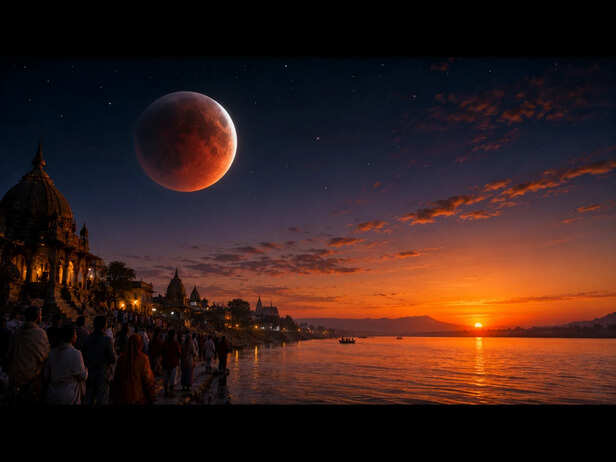
August 2026 partial lunar eclipse
Image credit : ChatGPT(ai)
Look up at the Moon on August 28, 2026, and you may be witnessing one of the year's most striking celestial events. A deep partial lunar eclipse will take place as the Moon moves through Earth's shadow. At maximum eclipse, about 96% of the Moon's disc will be covered by the Earth's umbra, making the event appear remarkably close to a total lunar eclipse. But there is an important detail many people may miss. The eclipse will not be visible from most of India because the Moon will be below the horizon during the main stages of the event. Its astronomical timing in India is still important, however, especially for those following the event from other parts of the world.
![August 2026 partial lunar eclipse]()
The August 28 eclipse begins with the Moon entering Earth's penumbra, the lighter outer part of its shadow.
According to the timings provided, the penumbral phase begins at 6:53 AM IST.
The more noticeable partial eclipse begins at 8:03 AM IST, when the Moon starts entering the Earth's darker umbral shadow.
The eclipse reaches maximum at 9:42 AM IST before the partial phase ends at 11:21 AM IST.
Finally, the Moon leaves the penumbra at 12:31 PM IST.
For Indian observers, however, these timings do not mean the eclipse will be visible from the country.
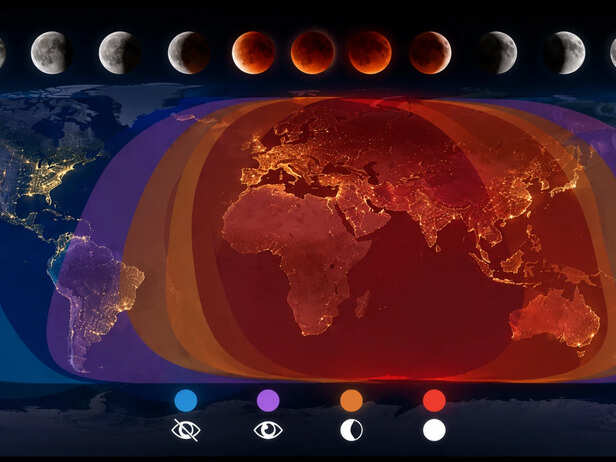
![Lunar eclipse visibility around the world]()
Here comes the surprising part.
Although the eclipse has specific timings in Indian Standard Time, most of India will not be able to watch the event directly because the Moon will be below the horizon during the relevant stages.
The best views are expected across North America and South America, with parts of Europe, Africa and western Asia also having some visibility depending on local conditions.
For any lunar eclipse, visibility depends on one simple factor: is the Moon above your horizon when that phase occurs?
So the same eclipse can be spectacular in one country and completely invisible in another.
The most fascinating feature of this eclipse is its 96.2% umbral coverage.
That is an enormous portion of the Moon.
Yet the event remains officially a partial lunar eclipse, not a total lunar eclipse.
Why?
Because a small portion of the Moon remains outside the Earth's darkest shadow, the umbra.
This tiny difference matters scientifically. A total lunar eclipse requires the entire lunar disc to pass into the umbra.
So despite its dramatic appearance, August 28 will not produce totality.
The most dramatic point arrives at approximately 9:42 AM IST.
At this moment, the Earth's umbral shadow will cover around 96.2% of the Moon's surface, according to the supplied eclipse data.
The eclipse magnitude is given as approximately 0.930.
For viewers in regions where the Moon is above the horizon, this is the phase to watch most closely.
The event is especially interesting because it comes very close to totality without actually reaching it.
That narrow difference is exactly what makes this partial eclipse so unusual.
How Long Will Chandra Grahan Last?
The complete astronomical event lasts approximately 5 hours and 38 minutes.
Here is the timeline in IST:
Penumbral eclipse begins: 6:53 AM
Partial eclipse begins: 8:03 AM
Maximum eclipse: 9:42 AM
Partial eclipse ends: 11:21 AM
Penumbral eclipse ends: 12:31 PM
The key point is that not all five hours will look equally dramatic.
The penumbral phase is subtle and can be difficult to notice.
The most visually striking period is the approximately 3-hour-18-minute partial phase.
In Hindu tradition, Chandra Grahan has a deep cultural and spiritual significance.
Traditional beliefs often associate eclipses with a period of heightened spiritual awareness. Some people choose to pray, meditate, chant mantras or observe fasting during an eclipse.
However, these are religious and cultural practices, not scientifically established health requirements.
From an astronomical perspective, a lunar eclipse is simply the result of the Earth moving between the Sun and Moon, causing Earth's shadow to fall across the lunar surface.
The two perspectives can be understood separately: astronomy explains how the eclipse happens, while tradition explores what the event means spiritually.
Traditional
For those who follow traditional Hindu practices, several simple remedies are commonly associated with Chandra Grahan.
People may spend time in prayer, meditation or mantra chanting. Some devotees recite the Mahamrityunjaya Mantra or other prayers according to their personal tradition.
After the eclipse, some households traditionally clean their surroundings and take a bath as part of customary observances.
Fasting is also followed by some devotees, although it is a religious practice rather than a scientific requirement.
The most meaningful approach is to treat these customs as personal spiritual practices, rather than as medically proven methods for preventing harm.
Facing repeated career and financial challenges? Your name energy may be influencing it. Check here.
Unlock insightful tips and inspiration on personal growth, productivity, and well-being. Stay motivated and updated with the latest at My Life XP.
Chandra Grahan Begins Before Sunrise
August 2026 partial lunar eclipse
Image credit : ChatGPT(ai)
The August 28 eclipse begins with the Moon entering Earth's penumbra, the lighter outer part of its shadow.
According to the timings provided, the penumbral phase begins at 6:53 AM IST.
The more noticeable partial eclipse begins at 8:03 AM IST, when the Moon starts entering the Earth's darker umbral shadow.
The eclipse reaches maximum at 9:42 AM IST before the partial phase ends at 11:21 AM IST.
Finally, the Moon leaves the penumbra at 12:31 PM IST.
For Indian observers, however, these timings do not mean the eclipse will be visible from the country.
The Eclipse Will Not Be Visible From Most of India
Lunar eclipse visibility around the world
Image credit : ChatGPT(ai)
Here comes the surprising part.
Although the eclipse has specific timings in Indian Standard Time, most of India will not be able to watch the event directly because the Moon will be below the horizon during the relevant stages.
The best views are expected across North America and South America, with parts of Europe, Africa and western Asia also having some visibility depending on local conditions.
For any lunar eclipse, visibility depends on one simple factor: is the Moon above your horizon when that phase occurs?
So the same eclipse can be spectacular in one country and completely invisible in another.
Why It Looks Almost Like a Total Eclipse
That is an enormous portion of the Moon.
Yet the event remains officially a partial lunar eclipse, not a total lunar eclipse.
Why?
Because a small portion of the Moon remains outside the Earth's darkest shadow, the umbra.
This tiny difference matters scientifically. A total lunar eclipse requires the entire lunar disc to pass into the umbra.
So despite its dramatic appearance, August 28 will not produce totality.
The Peak Arrives at 9:42 AM IST
At this moment, the Earth's umbral shadow will cover around 96.2% of the Moon's surface, according to the supplied eclipse data.
The eclipse magnitude is given as approximately 0.930.
For viewers in regions where the Moon is above the horizon, this is the phase to watch most closely.
The event is especially interesting because it comes very close to totality without actually reaching it.
That narrow difference is exactly what makes this partial eclipse so unusual.
How Long Will Chandra Grahan Last?
The complete astronomical event lasts approximately 5 hours and 38 minutes.
Here is the timeline in IST:
Penumbral eclipse begins: 6:53 AM
Partial eclipse begins: 8:03 AM
Maximum eclipse: 9:42 AM
Partial eclipse ends: 11:21 AM
Penumbral eclipse ends: 12:31 PM
The key point is that not all five hours will look equally dramatic.
The penumbral phase is subtle and can be difficult to notice.
The most visually striking period is the approximately 3-hour-18-minute partial phase.
What Does Chandra Grahan Mean Traditionally?
Traditional beliefs often associate eclipses with a period of heightened spiritual awareness. Some people choose to pray, meditate, chant mantras or observe fasting during an eclipse.
However, these are religious and cultural practices, not scientifically established health requirements.
From an astronomical perspective, a lunar eclipse is simply the result of the Earth moving between the Sun and Moon, causing Earth's shadow to fall across the lunar surface.
The two perspectives can be understood separately: astronomy explains how the eclipse happens, while tradition explores what the event means spiritually.
Traditional Remedies People Follow
People may spend time in prayer, meditation or mantra chanting. Some devotees recite the Mahamrityunjaya Mantra or other prayers according to their personal tradition.
After the eclipse, some households traditionally clean their surroundings and take a bath as part of customary observances.
Fasting is also followed by some devotees, although it is a religious practice rather than a scientific requirement.
The most meaningful approach is to treat these customs as personal spiritual practices, rather than as medically proven methods for preventing harm.
Facing repeated career and financial challenges? Your name energy may be influencing it. Check here.
Unlock insightful tips and inspiration on personal growth, productivity, and well-being. Stay motivated and updated with the latest at My Life XP.