Spend enough time reading about astrology and a pattern keeps appearing: fire and air signs described as natural companions, the combination that keeps a conversation going past midnight without anyone noticing the time. The tradition is consistent about this across both Vedic and Western frameworks, and the logic behind it is worth understanding on its own terms rather than taking on faith.
What the Elements Are Said to Represent
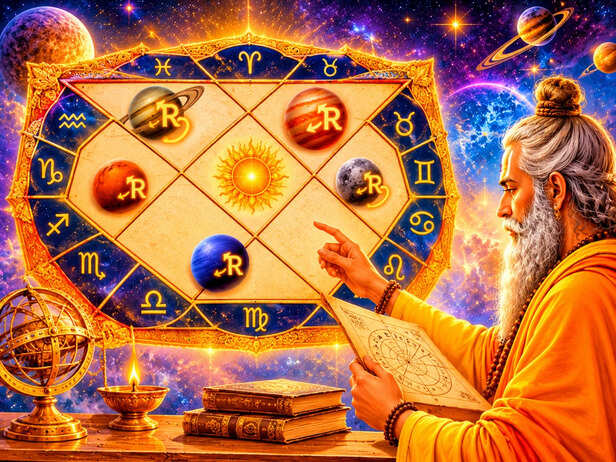
![the planets in your birth chart were moving in retrograde when you were born]()
the planets in your birth chart were moving in retrograde when you were born
Image credit : CHATGPT(AI)
In classical astrology, each of the twelve signs is assigned one of four elements, fire, earth, water, or air, and the element is understood to describe how that sign fundamentally processes experience. It is not a personality test in the modern sense. It is closer to a description of the medium through which a sign is said to operate.
Fire signs, Aries, Leo, and Sagittarius, are described in the tradition as active, outward-moving, and oriented toward expression and initiation. They are said to generate rather than conserve. Air signs, Gemini, Libra, and Aquarius, are described as relational and conceptual, oriented toward exchange, connection, and the movement of ideas between people. The tradition holds that air does not originate a flame but carries it further and keeps it alive.
The Feeding Relationship Between Fire and Air
![Understanding Retrograde Planets in Astrology]()
Understanding Retrograde Planets in Astrology
The compatibility logic in classical elemental theory borrows from a simple physical observation: fire needs air to sustain itself, and air given a source of heat becomes visible as movement. Astrology takes this as a symbolic framework rather than a scientific claim, but the framework is internally consistent.
Fire signs, in the tradition's description, tend toward directness and momentum. They are said to act on instinct and move toward what interests them without extensive deliberation. Air signs are described as responsive to ideas and energised by exchange, they are said to think out loud, to need a counterpart, to find energy in dialogue rather than in solitude. The tradition holds that when these two meet, the fire sign provides the direction and the air sign provides the circulation, neither quality cancels the other out.
This is the core of why astrology describes them as easy company: the elements are said to be complementary rather than competing. Earth and water are both described as inward-moving and consolidating. Two inward-moving energies in the same room are said to settle into quiet, which suits them but does not generate the kind of exchange that fire and air are described as needing.
How This Shows Up Across the Six Signs
The tradition does not treat all fire-air pairings as identical. Each sign carries a modality, cardinal, fixed, or mutable, that shapes how its element expresses itself, and this adds texture to the compatibility picture.
Cardinal signs (Aries, Libra) are described as initiating. A pairing of Aries and Libra, for instance, is said in the tradition to create a natural polarity, one pushes outward, the other balances, and the tension is considered generative rather than conflicting. Fixed signs (Leo, Aquarius) are described as sustaining. Leo is said to hold a position with warmth and conviction; Aquarius is said to hold an idea with equal stubbornness but from a more detached vantage. The tradition describes this pairing as one where both parties know where they stand, which it considers a foundation for ease. Mutable signs (Sagittarius, Gemini) are described as adaptable and curious. This pairing is often cited in astrological texts as the most conversationally fluid of the fire-air combinations, both signs are said to follow an idea wherever it goes, without needing it to arrive at a conclusion.
What the Tradition Does Not Say
Elemental compatibility in astrology is a broad description, not a verdict on any two specific people. The tradition itself is careful about this, even if popular astrology sometimes is not. A full chart comparison in Vedic astrology, the ashta kuta system, for instance, weighs nakshatra compatibility, moon sign, and several other factors alongside the sun sign element. The element is one layer of a layered picture.
The tradition also does not say that fire and air signs are universally easy with each other, or that they cannot find ease with earth and water signs. What it says, more precisely, is that the elemental dynamic between fire and air does not require either party to work against their nature. That is a narrower claim, and a more honest one.
Why the Description Has Stayed Consistent Across Traditions
Both Vedic and Western astrology inherited their elemental frameworks from classical Greek thought, which organised the natural world around the four elements as fundamental qualities. Vedic astrology uses the same four, fire, earth, water, air, mapped onto the same twelve signs in the same sequence, with the same relational logic between them. The consistency across two very different astrological traditions is not coincidental; it reflects a shared source, not independent discovery of the same truth.
What this means practically is that when a Vedic practitioner and a Western practitioner both describe fire and air as compatible, they are drawing on the same classical root. The description has stayed stable because it is part of the foundational grammar of both systems, not because it has been tested and confirmed in any empirical sense. Understanding that distinction is part of understanding what astrology is actually doing when it makes these claims.
The elemental framework in astrology is a symbolic language, and like any symbolic language, it works best when you understand the rules it is playing by. Fire and air are described as easy company not because the tradition promises they will always get along, but because the qualities each element is said to carry happen to move in directions that do not obstruct each other. That is a quieter claim than most popular astrology makes, and a more interesting one.
Facing repeated career and financial challenges? Your name energy may be influencing it. Check here. Unlock insightful tips and inspiration on personal growth, productivity, and well-being. Stay motivated and updated with the latest at
My Life XP.