Who Is More Powerful: Rahu or Ketu? The Answer Will Surprise You
Noopur Kumari | Jun 19, 2026, 11:00 IST
Rahu and Ketu are not merely astrological entities. They symbolize two powerful forces operating within every human being. Rahu represents desire, ambition, obsession, and worldly success. Ketu represents detachment, wisdom, liberation, and spiritual awakening. Their eternal contrast raises a timeless question: is true power found in conquering the world, or in conquering oneself?

What if the greatest battle in the universe is not between good and evil? What if it is between desire and detachment? For centuries, Rahu and Ketu have fascinated astrologers, spiritual seekers, and devotees alike. Born from the same being yet separated forever, they represent two completely opposite forces. One runs endlessly after the world. The other turns away from it. But here is the real mystery: if both possess immense cosmic power, who is actually stronger? The answer is far deeper than most people imagine.
![The Separation of Rahu and Ketu]()
The story begins during the Samudra Manthan, when the asura Svarbhanu secretly drank the nectar of immortality. Before the nectar could fully spread through his body, Lord Vishnu severed him into two parts. The head became Rahu, and the body became Ketu. Though separated, both remained immortal. Yet their destinies moved in opposite directions. Rahu became the force of endless desire and ambition. Ketu became the symbol of renunciation and spiritual freedom. Together, they represent the eternal conflict between wanting more and learning to let go.
![Rahu Chasing the Sun and Moon]()
Rahu is often associated with ambition, fame, power, wealth, and worldly achievements. No matter how much he gains, he always wants more. This is why mythology describes Rahu chasing the Sun and Moon. Symbolically, Rahu reflects the restless human mind. We achieve one goal, then immediately seek another. We gain success but still feel incomplete. Rahu's energy can create kings, innovators, and leaders. However, when unchecked, it can also lead to obsession, anxiety, and endless dissatisfaction. His power lies in making people move forward relentlessly.
![Ketu in Deep Meditation]()
Unlike Rahu, Ketu seeks nothing. He represents detachment, wisdom, spirituality, and inner realization. Ketu teaches that happiness does not come from acquiring more but from needing less. While Rahu pulls attention outward, Ketu turns it inward. His energy often leads people toward self-discovery, meditation, and spiritual growth. At first glance, Ketu may seem weaker because he does not chase power or recognition. Yet many spiritual traditions consider him immensely powerful because he helps individuals transcend fear, ego, and attachment the roots of human suffering.
The fascinating truth is that Rahu and Ketu do not exist only in mythology. They exist within every human being. When you dream of success, recognition, or achievement, Rahu is active. When you seek peace, simplicity, and inner contentment, Ketu is speaking. Most people spend their lives moving between these two forces. One pushes them toward the world, while the other invites them beyond it. The struggle between ambition and peace is not a cosmic battle happening somewhere else. It is a battle taking place within us every day.
Many successful individuals carry strong Rahu-like qualities. They take risks, pursue opportunities, and refuse to settle for ordinary lives. Rahu inspires innovation, leadership, and extraordinary achievements. Without desire, civilization itself might not advance. Yet Rahu's gifts come with challenges. The same ambition that creates success can create stress and dissatisfaction. Many people achieve everything they once dreamed of, only to discover that external success alone cannot provide lasting fulfillment. Rahu can give the world, but not necessarily peace.
Ketu's path is very different. Instead of building kingdoms, he builds wisdom. Instead of accumulating possessions, he encourages release. History's greatest saints, mystics, and spiritual teachers often embodied Ketu's energy. Their power came not from controlling others but from mastering themselves. Ketu teaches that true freedom begins when a person is no longer controlled by desires. This does not mean rejecting life. It means living fully without becoming attached to outcomes. In many ways, Ketu's strength is invisible but profoundly transformative.
The answer is not simple because Rahu and Ketu serve different purposes. If your goal is worldly achievement, influence, and material success, Rahu appears more powerful. If your goal is inner peace, spiritual awakening, and liberation, Ketu becomes unmatched. Rahu can make a person a king. Ketu can make a person free. One helps conquer the world. The other helps conquer oneself. Perhaps the greatest wisdom lies not in choosing one over the other but in understanding when each force is needed in life's journey.
Unlock insightful tips and inspiration on personal growth, productivity, and well-being. Stay motivated and updated with the latest at My Life XP.
1. Who are Rahu and Ketu in Hindu mythology?
Rahu and Ketu are shadow planets in Vedic astrology, formed when the asura Svarbhanu was divided into two immortal parts.
2. What does Rahu symbolize?
Rahu represents desire, ambition, worldly success, fame, and material pursuits.
3. What does Ketu symbolize?
Ketu represents detachment, spirituality, wisdom, enlightenment, and liberation.
4. Why do Rahu and Ketu cause eclipses?
According to mythology, Rahu periodically swallows the Sun and Moon in revenge, creating eclipses.
5. Is Rahu considered bad?
Not necessarily. Rahu can bring success and innovation, but excessive desire may create imbalance.
Born From One Destiny
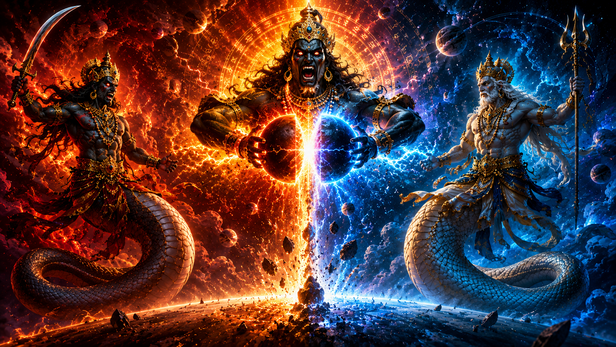
The Separation of Rahu and Ketu
The story begins during the Samudra Manthan, when the asura Svarbhanu secretly drank the nectar of immortality. Before the nectar could fully spread through his body, Lord Vishnu severed him into two parts. The head became Rahu, and the body became Ketu. Though separated, both remained immortal. Yet their destinies moved in opposite directions. Rahu became the force of endless desire and ambition. Ketu became the symbol of renunciation and spiritual freedom. Together, they represent the eternal conflict between wanting more and learning to let go.
Rahu's Endless Hunger
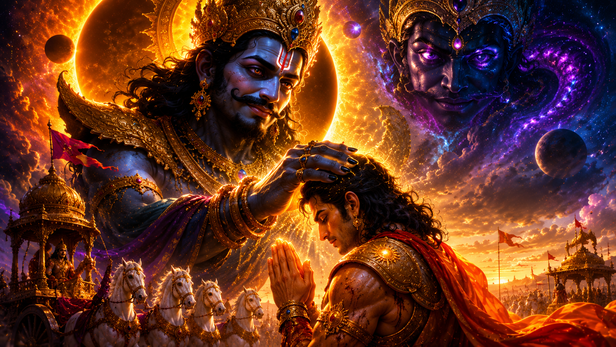
Rahu Chasing the Sun and Moon
Rahu is often associated with ambition, fame, power, wealth, and worldly achievements. No matter how much he gains, he always wants more. This is why mythology describes Rahu chasing the Sun and Moon. Symbolically, Rahu reflects the restless human mind. We achieve one goal, then immediately seek another. We gain success but still feel incomplete. Rahu's energy can create kings, innovators, and leaders. However, when unchecked, it can also lead to obsession, anxiety, and endless dissatisfaction. His power lies in making people move forward relentlessly.
Ketu's Silent Strength
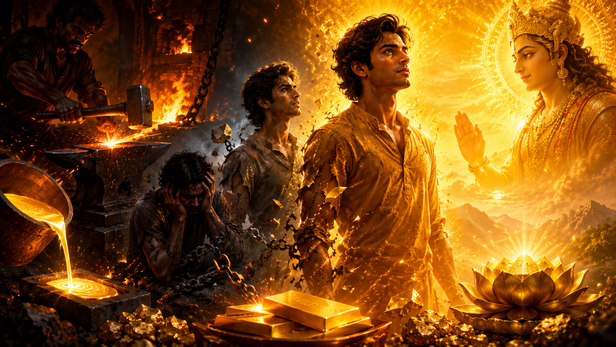
Ketu in Deep Meditation
Unlike Rahu, Ketu seeks nothing. He represents detachment, wisdom, spirituality, and inner realization. Ketu teaches that happiness does not come from acquiring more but from needing less. While Rahu pulls attention outward, Ketu turns it inward. His energy often leads people toward self-discovery, meditation, and spiritual growth. At first glance, Ketu may seem weaker because he does not chase power or recognition. Yet many spiritual traditions consider him immensely powerful because he helps individuals transcend fear, ego, and attachment the roots of human suffering.
The Battle Inside Every Human
Why Rahu Creates Kings
Why Ketu Creates Sages
So Who Is More Powerful?
Unlock insightful tips and inspiration on personal growth, productivity, and well-being. Stay motivated and updated with the latest at My Life XP.
Frequently Asked Questions (FAQs)
Rahu and Ketu are shadow planets in Vedic astrology, formed when the asura Svarbhanu was divided into two immortal parts.
2. What does Rahu symbolize?
Rahu represents desire, ambition, worldly success, fame, and material pursuits.
3. What does Ketu symbolize?
Ketu represents detachment, spirituality, wisdom, enlightenment, and liberation.
4. Why do Rahu and Ketu cause eclipses?
According to mythology, Rahu periodically swallows the Sun and Moon in revenge, creating eclipses.
5. Is Rahu considered bad?
Not necessarily. Rahu can bring success and innovation, but excessive desire may create imbalance.