There is a version of a bad hair day that happens entirely in the shower. You condition thoroughly, rinse, and step out to hair that feels heavy at the crown, greasy by afternoon, and somehow still dry at the ends. The problem is usually not the product. It is where the product went.
Hair is not one uniform surface from root to tip. The scalp is skin. The strand is a protein filament that has been growing, bending, and weathering since it left the follicle. Conditioner is built for one of those two things, and not for the other.
What Conditioner Is Actually Made to Do
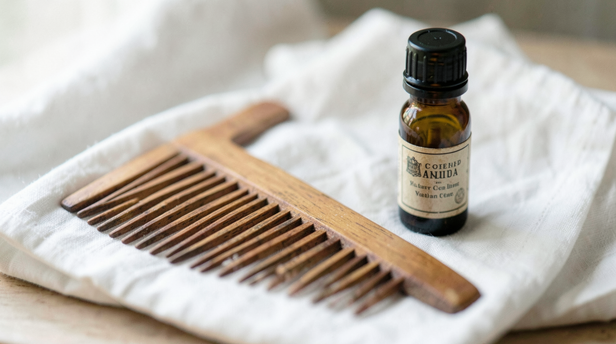
![Natural Hair Care Essentials]()
Natural Hair Care Essentials
Image credit : MyLifeXP Bureau
The main job of a conditioner is to deposit a thin film of ingredients, typically cationic surfactants, fatty alcohols, and oils, onto the hair shaft. That film smooths the cuticle, the overlapping scale-like layer on the outside of each strand, so strands slide past each other instead of catching. It also replaces some of the lipid coating that shampoo strips away during cleansing.
The cuticle is most disrupted at the mid-lengths and ends, for a simple reason: those sections are older. The hair closest to your scalp emerged from the follicle most recently. The hair at your ends may be two, three, or four years old, depending on how long you grow it. Every wash, every brush stroke, every hour in the sun adds wear. By the time a strand reaches its tip, the cuticle is rougher, more porous, and more likely to tangle. That is exactly where the conditioning film does its work.
Why the Scalp Does Not Need It
The scalp produces sebum, the skin's own oil, from sebaceous glands attached to each follicle. Sebum travels down the hair shaft naturally, coating the root section with the same kind of lipid layer that conditioner tries to restore further down. At the scalp, that coating is already present. Adding conditioner on top of it does not condition, it layers a product film over a surface that was not stripped to begin with.
The result is buildup. Cationic surfactants in conditioner carry a positive charge, which is what makes them cling to the negatively charged hair shaft. At the scalp, that same charge makes them cling to skin. Over time, the accumulation weighs the roots down, makes the scalp feel coated, and can interfere with the follicle environment, not by causing any dramatic harm, but by creating the kind of congestion that makes hair look flat and feel unwashed faster than it should.
For people with a naturally oily scalp, this cycle is familiar: the scalp feels greasy by the end of the day, so they wash more frequently, which strips more oil, which triggers more sebum production. Conditioner at the root makes the cycle worse without the person realising the conditioner is part of the problem.
Where the Line Actually Falls
![Water Drop's Gentle Impact]()
Water Drop's Gentle Impact
Image credit : MyLifeXP Bureau
The practical boundary is roughly the ear. From the ear down to the ends is where conditioner belongs. Some people with very fine hair or a sensitive scalp find they do better starting even lower, at the jaw, or from the collarbone down, because fine strands pick up product weight quickly and the scalp's sebum travels further on finer hair.
Curly and coily textures are a partial exception. Sebum does not travel easily down a curved strand, so the mid-lengths of tightly coiled hair are often genuinely dry in a way that straight hair at the same length is not. People with these textures sometimes find that a small amount of conditioner applied closer to the root, not on the scalp itself, but on the first few centimetres of the strand, addresses dryness that would otherwise go unmet. The scalp itself still does not need it.
How to Apply It So It Actually Works
Squeeze most of the water out of your hair before applying conditioner. Water sitting on the strand dilutes the product and pushes it off the surface before it has time to deposit. Damp hair, not dripping, holds conditioner better.
Apply to the mid-lengths first, then work toward the ends. Use your fingers or a wide-tooth comb to distribute it through the sections that feel roughest, usually the last few centimetres, where the cuticle damage is greatest. Leave it for two to three minutes rather than rinsing immediately; the fatty alcohols need a small amount of time to soften the cuticle before they rinse clean.
Rinse with cool water where you can manage it. Warm water lifts the cuticle slightly, which means some of the deposited ingredients rinse away with it. Cool water closes the cuticle back down and leaves more of the conditioning film in place. The difference is subtle on one wash and noticeable over several.
When the Roots Still Feel Dry
A scalp that feels tight or dry after shampooing is not asking for conditioner, it is asking for a gentler shampoo. Standard shampoos use anionic surfactants that are highly effective at removing oil and debris but can strip the scalp's own lipid barrier if used too frequently or in too high a concentration. Switching to a lower-sulphate or sulphate-free formula addresses scalp dryness at its source rather than compensating for it with a product that was never designed for skin.
If the scalp genuinely needs moisture, in very dry climates, or after chemical treatments that affect the skin as well as the strand, a scalp-specific treatment, a light oil applied to the skin before washing, or simply washing less often will help more than conditioner applied to the roots.
The ends and the scalp are both part of the same strand, but they have different histories and different needs. Conditioner applied where it belongs, on the lengths, from the ear down, does its job cleanly. Applied everywhere out of habit, it does half the job twice and the other half not at all.
Unlock insightful tips and inspiration on personal growth, productivity, and well-being. Stay motivated and updated with the latest at
My Life XP.