Hair removal creams promise a clean result with no blade and no pain, and they deliver on both. What the packaging rarely explains is the mechanism behind that promise, and the mechanism has consequences worth knowing before you make depilatory creams a regular part of your routine.
The Chemistry That Dissolves Hair
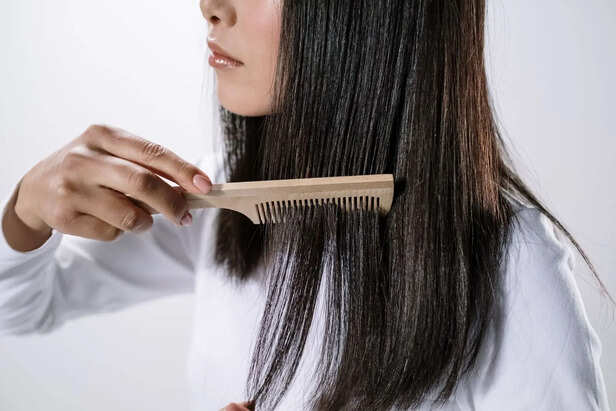
![Simple and Healthy Hair Care Routine]()
Simple and Healthy Hair Care Routine
Image credit : Pexels
The active ingredient in almost every hair removal cream is a salt called thioglycolate, most often calcium thioglycolate or potassium thioglycolate. It works by targeting the disulfide bonds that hold keratin protein chains together. Keratin is the structural protein that gives hair its strength and shape. Disulfide bonds are the cross-links that keep those protein chains locked in their twisted, fibrous arrangement. When thioglycolate breaks those bonds, the protein structure collapses. The hair shaft loses its integrity and turns soft enough to wipe away with a cloth.
The reaction is pH-dependent. Thioglycolate only breaks disulfide bonds efficiently in a strongly alkaline environment, which is why depilatory creams carry a pH of around 11 to 12.5. For context, healthy skin sits at a pH of roughly 4.5 to 5.5. The cream has to be significantly more alkaline than the skin to work at all.
Why the Skin Beneath Is Not a Bystander
Hair follicles sit inside the skin, not on top of it. The hair shaft that the cream dissolves is continuous with the follicle below the surface. Thioglycolate does not know where the hair ends and the surrounding tissue begins. The same alkaline chemistry that breaks bonds in the hair shaft also acts on the keratin in the outermost layer of the skin, the stratum corneum.
The stratum corneum is not inert. It is the skin's primary barrier against water loss and against environmental irritants. It is made largely of keratin-rich dead cells held together by lipids arranged in a layered structure. An alkaline thioglycolate solution disrupts both the protein component and the lipid arrangement. The result is a temporary but measurable weakening of the barrier. Transepidermal water loss, the rate at which moisture escapes through the skin, rises after depilatory use. The skin becomes more permeable to irritants and more prone to sensitivity until the barrier rebuilds itself.
The rebuilding takes time. Skin barrier recovery after chemical disruption is not measured in hours. Depending on baseline skin health, it can take several days for barrier function to return to its starting point.
What the Redness and Stinging Are Telling You
The immediate redness that follows depilatory use is not an allergic reaction in most cases. It is a direct chemical response to sustained alkaline contact. The skin's acid mantle, the thin, slightly acidic film on the surface that supports barrier function and keeps microbial balance, is temporarily neutralised. The skin responds with mild inflammation as it attempts to restore equilibrium.
Stinging during application is a signal that the product is contacting skin that has minor abrasions, thin skin, or a barrier that was already compromised. The inner thigh, the bikini line, and the face are areas where the skin is thinner and the follicles are closer to the surface. Thioglycolate penetrates more readily in these areas, and the inflammatory response is proportionally stronger.
Fragrance is a secondary problem. Most depilatory creams contain fragrance to mask the sulphurous smell of thioglycolate. Fragrance is one of the most common contact allergens, and applying it to a skin barrier that has just been chemically disrupted increases the likelihood of sensitisation. A sensitisation reaction is different from a simple irritation: once it develops, the immune system recognises the allergen and responds to it on every subsequent exposure, often more strongly each time.
The Timing Question Most Labels Get Wrong
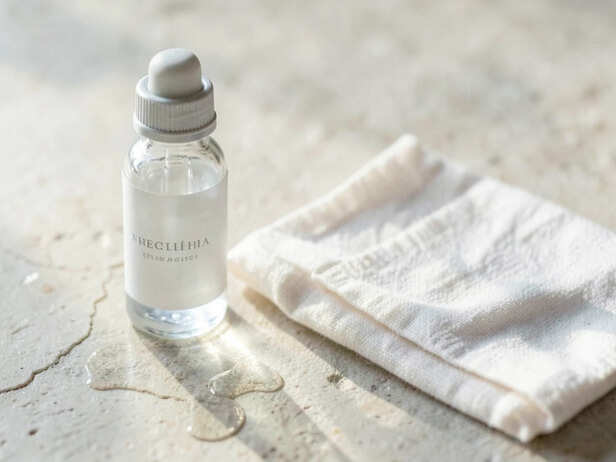
![Clear Liquid Dropper Still Life]()
Clear Liquid Dropper Still Life
Image credit : MyLifeXP Bureau
Depilatory instructions typically give a window of three to ten minutes. Leaving the cream on longer than the upper limit does not improve hair removal, the hair is already dissolved. What it does is extend the period of alkaline contact with the skin. The damage to barrier function is dose-dependent in both concentration and time. Following the minimum effective time for your hair type, rather than the maximum allowed, is the single most practical way to reduce the cost to the skin beneath.
Applying a depilatory to skin that has been recently exfoliated, waxed, or shaved removes the buffer that the stratum corneum provides. The chemical meets a thinner, more vulnerable surface and the irritation risk rises accordingly. A gap of at least 24 hours between any prior exfoliation and depilatory use is worth keeping.
Who Should Think Twice
People with eczema, psoriasis, or rosacea have a baseline barrier that is already compromised. Thioglycolate on already-disrupted skin is more likely to trigger a significant flare than a mild redness. A patch test 24 hours before full application is standard advice, but for these skin types, a conversation with a dermatologist before regular use is worth more than any patch test.
Retinoids, whether prescription or the lower-strength versions available over the counter, thin the stratum corneum as part of how they work. Using a depilatory on skin that is on an active retinoid routine increases the depth of chemical penetration and the severity of the response. The same applies to areas recently treated with any acid-based exfoliant.
Skin that has been exposed to strong sun recently is more vulnerable. The UV exposure alone degrades barrier lipids; adding an alkaline depilatory to that surface compounds the disruption.
What to Do in the Window After Removal
The period immediately after wiping off a depilatory cream is when the skin is most permeable and most reactive. This is not the moment for actives, acids, or anything with fragrance. A plain, unfragranced emollient applied while the skin is still slightly damp helps limit the transepidermal water loss that follows barrier disruption. Ceramide-containing formulas support the lipid structure the stratum corneum is trying to rebuild.
Sun protection matters more than usual in the days following depilatory use, particularly on areas like the face or décolletage. A disrupted barrier allows UV to act on skin that is less defended than normal.
Avoiding tight clothing over freshly treated areas reduces friction on skin that is already inflamed. Sweat and occlusion in that window extend the irritation window unnecessarily.
The chemistry of hair removal creams is straightforward: break the bonds that hold keratin together, and the hair loses its structure. The skin's keratin is subject to the same chemistry, and the barrier it forms takes longer to recover than the hair takes to dissolve. Using a depilatory carefully, minimum contact time, no compromised skin, plain aftercare, does not eliminate that cost, but it keeps it proportionate.
Unlock insightful tips and inspiration on personal growth, productivity, and well-being. Stay motivated and updated with the latest at
My Life XP.