Think Your Skincare Routine Is Right? These Mistakes Says Otherwise
Palak Khanna | Aug 05, 2026, 22:16 IST
You can spend a small fortune on serums, moisturizers and treatments, but if you are applying them in the wrong order, your skincare routine may not be working as well as it should. From putting sunscreen on too early to layering incompatible products, the sequence matters more than many people realize. Here is the simple skincare order experts recommend, plus the common mistakes that could be quietly sabotaging your routine.

Are You Applying Skincare Wrong?<br>
Image credit : Chatgpt (AI)
You know that feeling when you have finally built the skincare routine of your dreams? Cleanser, toner, serum, moisturizer, sunscreen, maybe even a fancy little treatment that cost more than you would like to admit. And yet, your skin is still acting like it never got the memo. Before buying another serum, check something much simpler: the order you are applying everything. Skincare is not necessarily a case of “more products, better skin.” The way products are layered can affect how they spread, absorb and work with everything else on your face. And one surprisingly common mistake can leave even your most expensive products doing less than you expect. Here is how to get the order right.
The first step is almost always the least glamorous: cleansing. A cleanser removes sweat, excess oil, makeup, sunscreen and everyday grime so that subsequent products can sit on freshly cleansed skin. But there is a catch. “Squeaky clean” is not the goal. Over-cleansing or using an overly harsh cleanser can strip the skin barrier, leaving skin feeling tight, dry or irritated. That can make an otherwise sensible routine feel like it is suddenly attacking your face. For most routines, think simple: cleanser first, then treatments and hydration.
![The Right Order Matters]()
Here is the rule that makes skincare layering much easier: generally go from thinner textures to thicker ones. A lightweight, watery product usually goes before a thicker cream or moisturizer. The idea is to avoid putting a heavy layer down first and then expecting lighter products to spread and interact with the skin in the same way. A basic morning sequence might look like:
Cleanser → treatment or serum → moisturizer → sunscreen
At night, sunscreen obviously disappears from the equation, and treatment products can take its place depending on your routine. It is not about following a complicated 12-step ritual. It is about giving each product its best chance to do its job.
![The Step That Comes Last]()
This is one step worth getting particularly right. Sunscreen generally belongs after your other skincare products in the morning, rather than underneath them. Why? Because sunscreen is intended to form a protective layer over the skin. Slathering moisturizer or another product over it afterward can interfere with that layer. And yes, this includes those mornings when the weather is cloudy or you are mostly indoors. UV exposure can still happen through everyday activities, and dermatologists consistently emphasize sun protection as one of the most important parts of a skincare routine. If you are spending money on brightening serums and other treatments, skipping or mishandling sunscreen can be particularly frustrating because sun exposure can work against many of the cosmetic improvements you are trying to achieve.
![More Serums, More Problems?]()
This is where skincare can become a little too much of a hobby. You spot a vitamin C serum. Then a niacinamide serum. Then an exfoliating acid. Then a retinoid. Suddenly your bathroom shelf looks like a tiny laboratory. But layering several active ingredients at once can increase the chance of irritation, especially if your skin is sensitive or you are new to them. The smarter approach is to know what each active ingredient is intended to do and introduce new products gradually. Also, remember that not every product needs to be used twice a day. Some treatments are specifically designed for nighttime use, while others may be better tolerated when used only a few times a week. Your skin does not get bonus points for surviving a 14-step routine.
There is another mistake that has nothing to do with bottles and everything to do with patience. People often change their skincare routine every few days because they do not see immediate results. But many skincare concerns take time to improve, and constantly switching products can make it harder to figure out what is actually helping or irritating your skin. A better strategy is to keep the basics consistent: gentle cleansing, appropriate moisturizing and daily sun protection. Then introduce targeted products one at a time. If your skin suddenly becomes red, itchy, unusually dry or uncomfortable, that is a signal to stop and reassess rather than adding another product to fix the problem.
Skincare can make you feel like you are always one serum away from finally having perfect skin. But sometimes the answer is sitting right there on your bathroom shelf. The products you already own may work perfectly well when used in a sensible order. Start with clean skin. Apply lighter products before heavier ones. Keep sunscreen as the final morning skincare step. Be careful with active ingredients, and give your routine enough time to show what it can actually do. Because before spending another ₹2,000 on a new bottle, it might be worth asking a much cheaper question: Am I even using the products I already bought correctly?
Unlock insightful tips and inspiration on personal growth, productivity, and well-being. Stay motivated and updated with the latest atMy Life XP.
Start With a Clean Canvas, Not a Shelf Full of Serums
The Biggest Mistake? Applying Products in a Random Order
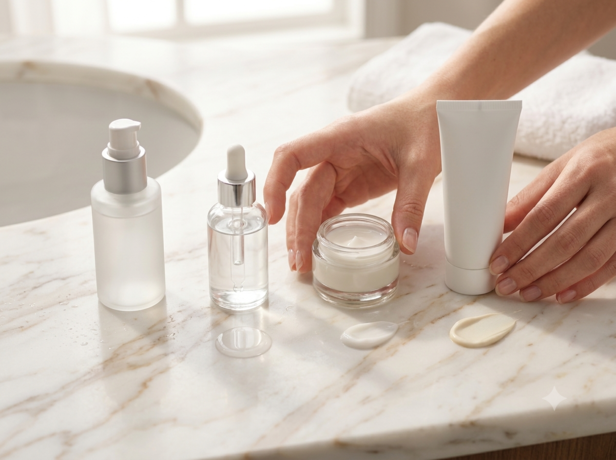
The Right Order Matters
Image credit : gemini (AI)
Here is the rule that makes skincare layering much easier: generally go from thinner textures to thicker ones. A lightweight, watery product usually goes before a thicker cream or moisturizer. The idea is to avoid putting a heavy layer down first and then expecting lighter products to spread and interact with the skin in the same way. A basic morning sequence might look like:
Cleanser → treatment or serum → moisturizer → sunscreen
At night, sunscreen obviously disappears from the equation, and treatment products can take its place depending on your routine. It is not about following a complicated 12-step ritual. It is about giving each product its best chance to do its job.
Your Sunscreen Should Be the Finishing Touch in the Morning

The Step That Comes Last
Image credit : Gemini (AI)
This is one step worth getting particularly right. Sunscreen generally belongs after your other skincare products in the morning, rather than underneath them. Why? Because sunscreen is intended to form a protective layer over the skin. Slathering moisturizer or another product over it afterward can interfere with that layer. And yes, this includes those mornings when the weather is cloudy or you are mostly indoors. UV exposure can still happen through everyday activities, and dermatologists consistently emphasize sun protection as one of the most important parts of a skincare routine. If you are spending money on brightening serums and other treatments, skipping or mishandling sunscreen can be particularly frustrating because sun exposure can work against many of the cosmetic improvements you are trying to achieve.
More Serums Do Not Automatically Mean Better Skin

More Serums, More Problems?
Image credit : gemini (AI)
This is where skincare can become a little too much of a hobby. You spot a vitamin C serum. Then a niacinamide serum. Then an exfoliating acid. Then a retinoid. Suddenly your bathroom shelf looks like a tiny laboratory. But layering several active ingredients at once can increase the chance of irritation, especially if your skin is sensitive or you are new to them. The smarter approach is to know what each active ingredient is intended to do and introduce new products gradually. Also, remember that not every product needs to be used twice a day. Some treatments are specifically designed for nighttime use, while others may be better tolerated when used only a few times a week. Your skin does not get bonus points for surviving a 14-step routine.
Give Your Routine Time Before You Blame the Products
Your Routine May Not Need More, Just Better
Unlock insightful tips and inspiration on personal growth, productivity, and well-being. Stay motivated and updated with the latest atMy Life XP.