You towel-dry your hair, get on with your morning, and an hour later the ends are still cold and wet. Meanwhile someone with hair roughly the same length as yours is out the door in half the time. The variable people rarely think about is porosity, the structural quality that decides how water gets into the hair shaft and, more importantly, how fast it gets back out.
What Porosity Actually Means
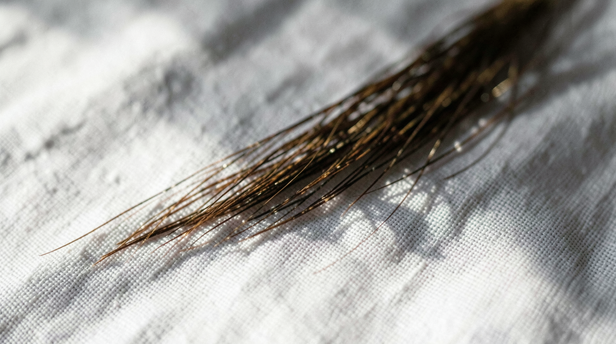
![Hair Strand Texture Revealed]()
Hair Strand Texture Revealed
Image credit : AI
The outer layer of each hair strand is made of overlapping scales called the cuticle, arranged a little like roof tiles or fish scales. Porosity describes how tightly or loosely those scales sit. When they lie flat and close together, water has a harder time getting in, and once a little does get in, it has a harder time escaping. When the scales are raised or uneven, water moves in and out freely. This is not a flaw in either direction; it is just the structure you were born with, sometimes modified by what you have done to your hair since.
Low Porosity Hair and Why It Stays Wet
Low porosity hair has a tightly packed cuticle. Water sits on the surface for a while before it penetrates, which is why low porosity hair can feel resistant when you wet it, it takes a moment for the strand to actually absorb. Once water is inside, though, it is also slow to leave. The same tight cuticle that made entry difficult makes exit difficult too. This is the hair that is still damp at the roots two hours after a wash, even when the rest of you dried off long ago. It is also the hair where products tend to sit on top rather than absorb, leaving a coating that builds up over time.
High Porosity Hair and the Opposite Problem
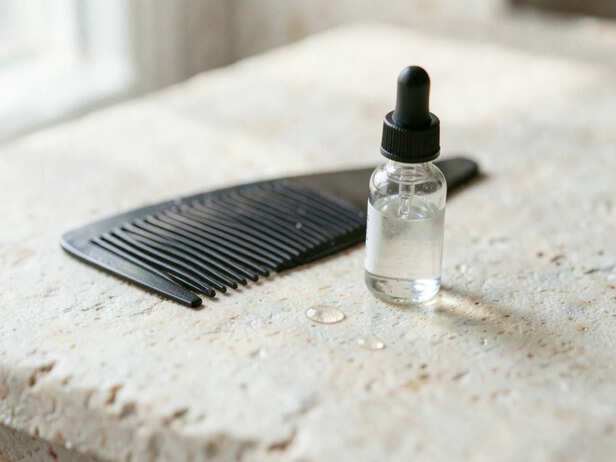
![Morning Ritual Essentials]()
Morning Ritual Essentials
Image credit : MyLifeXP Bureau
High porosity hair has a raised or uneven cuticle, which means water gets in fast. It also means water gets out fast. Hair that is highly porous often feels wet immediately when you step into the shower, absorbs conditioner quickly, and then dries in what seems like no time, but also loses moisture quickly once dry, which is why it can feel rough or brittle even after conditioning. Chemical processing, heat styling over time, and sun exposure all raise the cuticle and push hair toward higher porosity. Some people are born with naturally higher porosity, but it is also something that accumulates with use.
Medium Porosity and What It Looks Like in Practice
Hair with medium porosity sits between the two. The cuticle is raised just enough to let water in and out at a moderate pace. It absorbs products reasonably well, holds moisture for a useful amount of time, and dries in a predictable window. Most hair care advice is written with this porosity in mind, which is part of why it does not always translate for people at either end of the scale.
How to Get a Rough Sense of Your Own Porosity
A strand of clean, product-free hair dropped into a glass of room-temperature water gives a rough indication. Hair that floats for a while before slowly sinking tends toward low porosity. Hair that sinks quickly tends toward high porosity. Hair that sits in the middle of the glass after a minute or two is closer to medium. This is not a clinical test, it is affected by whether the hair is truly clean, whether it has product on it, and how the strand was handled, but it gives a starting point. A more reliable signal is simply paying attention to how your hair behaves: how long it takes to wet through, how long it takes to dry, whether products absorb or sit on top.
What This Changes About How You Handle Your Hair
For low porosity hair, gentle heat while conditioning helps the cuticle open enough for moisture to enter, sitting with a conditioning mask under a warm towel is more useful than leaving it on cold hair for an extra hour. Lightweight products that do not add to surface build-up work better than heavy butters or oils. For high porosity hair, the goal is to help the cuticle close down after washing: cooler water for a final rinse, leave-in conditioners that coat the strand and slow moisture loss, and avoiding additional heat where possible. Drying time is not just a patience problem, it is information about what the strand needs.
Porosity does not change dramatically once it is established, though repeated chemical processing or heat use can push it higher over time. The more useful shift is treating it as a fixed characteristic to work with rather than a problem to fix. Hair that takes two hours to dry is not broken. It is just built in a way that asks for a slightly different approach, and once you know that, you stop fighting it.
Unlock insightful tips and inspiration on personal growth, productivity, and well-being. Stay motivated and updated with the latest at
My Life XP.