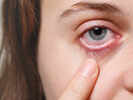
5 Retina Changes That May Reveal Your Heart Risk
Noopur Kumari | Sept 18, 2026, 10:06 IST
Your eyes may offer doctors a surprisingly close view of your blood vessels. But can a simple retinal scan really tell you that your heart is in trouble? The science is becoming more interesting, especially as researchers use OCT, OCTA and artificial intelligence to study tiny vascular changes that may be connected to cardiovascular risk.

Retina Changes That May Reveal Your Heart Risk
Image credit : Freepik
What if a doctor could spot clues about your heart without looking directly at your heart? The answer may be sitting at the back of your eye. The retina contains a dense network of tiny blood vessels, and researchers are studying whether changes in these vessels can reveal signs linked to cardiovascular disease. Retinal imaging is already useful for detecting conditions such as diabetic retinopathy and vascular changes related to high blood pressure. Newer research is going further, exploring whether retinal images can also help estimate heart disease and stroke risk. But there is an important catch: an eye scan is not yet a stand-alone heart disease test.
![Close-up retinal blood vessels during an eye examination]()
The retina is unusual because its tiny blood vessels can be viewed directly through the eye. That gives doctors and researchers a non-invasive way to study the body's microvascular system. Changes such as narrower arteries or wider veins have been associated with cardiovascular risk factors in research. Retinal imaging can also show vascular damage linked with conditions such as hypertension and diabetes. These findings do not mean that every unusual retinal vessel indicates heart disease. Instead, they may provide another piece of information about a person's overall vascular health.
![Retinal examination showing tiny blood vessels]()
One of the clearest connections between the retina and cardiovascular health involves blood pressure. Long-term high blood pressure can damage small blood vessels throughout the body, including those inside the eye. An eye examination may therefore reveal changes that prompt a doctor to look more closely at a person's blood pressure and other risk factors. This does not mean an eye scan replaces a blood-pressure measurement. It simply shows why the retina can act as a useful window into vascular health. Researchers are also studying whether these retinal changes can help identify people at higher future cardiovascular risk.
The research has now moved beyond blood pressure and diabetes. Studies have linked certain retinal biomarkers with conditions including coronary artery disease, stroke, atrial fibrillation and heart failure. Researchers are examining vessel density, vessel shape, branching patterns and other features visible through retinal imaging. OCT and OCTA can provide more detailed information about retinal layers and microvascular networks than a basic photograph. However, these findings are mainly being studied as risk markers or biomarkers, not as definitive proof that someone has heart disease. Clinical adoption still requires standardised imaging, stronger validation and prospective studies.
Here is where the story gets more surprising. Artificial intelligence can analyse thousands of tiny features in a retinal image, including patterns that may be difficult for the human eye to measure consistently. Recent studies have explored AI models that estimate cardiovascular risk or identify patterns associated with coronary disease. A 2025 review found promising results across retinal AI research, but also noted major limitations, including limited external validation and differences between study populations and imaging methods. So an AI-generated risk signal should not be confused with a confirmed diagnosis. The technology is promising, but it is still developing.
This is the part patients should remember. Seeing an abnormality on a retinal scan does not automatically mean a person has blocked arteries, heart failure or another heart condition. Retinal changes can have several causes, and cardiovascular risk depends on many factors, including blood pressure, cholesterol, diabetes, smoking, age and family history. Current research describes retinal imaging as a potential complement to existing cardiovascular risk assessment rather than a replacement for established tests. If an eye specialist notices a concerning vascular finding, the appropriate next step may be further medical evaluation rather than assuming the worst.
Suppose an eye examination reveals unusual blood-vessel changes. Instead of panicking, use the information as a reason to check the bigger picture. Ask whether your blood pressure and blood sugar have been checked recently. Discuss cholesterol, smoking, family history and other cardiovascular risk factors with your doctor. If your eye specialist recommends a cardiology consultation, follow that advice. Do not wait for another eye scan if you already have symptoms such as chest pressure, severe breathlessness or fainting. Retinal imaging can provide useful clues, but a complete cardiovascular assessment still depends on the person's symptoms, history and appropriate medical tests.
The retina may eventually become an important source of cardiovascular information because it gives researchers direct access to the body's tiny blood vessels. New imaging techniques and AI are making that window even more detailed. Yet the science has not reached the point where an ordinary eye scan can independently diagnose heart disease. For now, the most useful message is simple: your eyes can reveal clues about your vascular health, but those clues need context. A retinal finding should start a conversation with a healthcare professional, not create a diagnosis by itself.
Experiencing frequent stress, fatigue, or health challenges? Your name energy may be worth exploring. Check it here.
Unlock insightful tips and inspiration on personal growth, productivity, and well-being. Stay motivated and updated with the latest at My Life XP
The Retina Gives Doctors a Vascular View
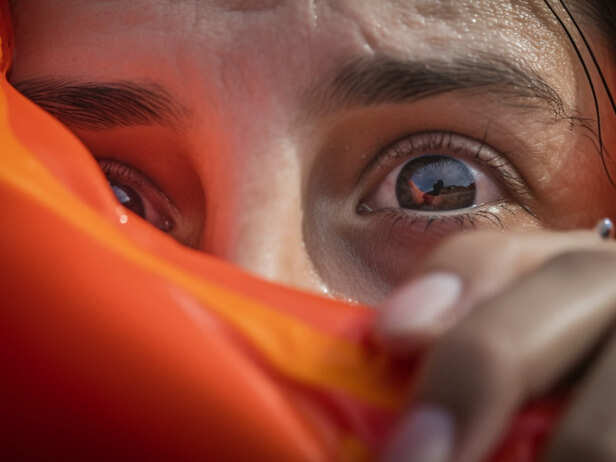
Close-up retinal blood vessels during an eye examination
Image credit : Freepik
The retina is unusual because its tiny blood vessels can be viewed directly through the eye. That gives doctors and researchers a non-invasive way to study the body's microvascular system. Changes such as narrower arteries or wider veins have been associated with cardiovascular risk factors in research. Retinal imaging can also show vascular damage linked with conditions such as hypertension and diabetes. These findings do not mean that every unusual retinal vessel indicates heart disease. Instead, they may provide another piece of information about a person's overall vascular health.
Blood Pressure Can Leave Eye Clues
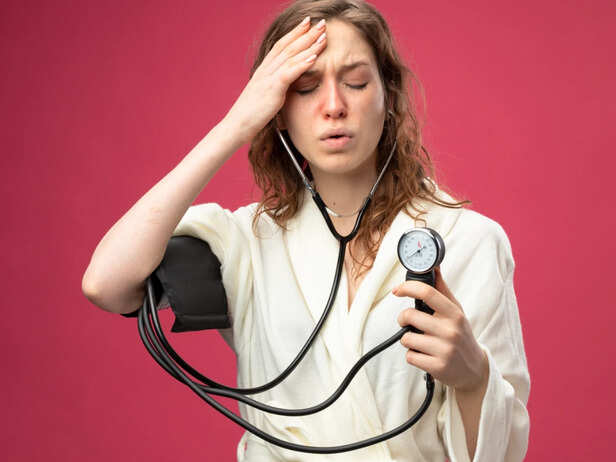
Retinal examination showing tiny blood vessels
Image credit : Freepik
One of the clearest connections between the retina and cardiovascular health involves blood pressure. Long-term high blood pressure can damage small blood vessels throughout the body, including those inside the eye. An eye examination may therefore reveal changes that prompt a doctor to look more closely at a person's blood pressure and other risk factors. This does not mean an eye scan replaces a blood-pressure measurement. It simply shows why the retina can act as a useful window into vascular health. Researchers are also studying whether these retinal changes can help identify people at higher future cardiovascular risk.
The Heart Connection Goes Beyond Blood Pressure
AI Is Making the Scan More Interesting
A Retina Finding Is Not a Heart Diagnosis
What Should You Do With an Eye Warning?
Your Eyes May Offer a Clue, Not a Verdict
Experiencing frequent stress, fatigue, or health challenges? Your name energy may be worth exploring. Check it here.
Unlock insightful tips and inspiration on personal growth, productivity, and well-being. Stay motivated and updated with the latest at My Life XP