The eight-glasses rule is one of those pieces of advice that arrived so early in life it stopped feeling like advice and started feeling like biology. But the body does not distinguish between water sipped from a glass and water that arrived inside a slice of cucumber. It absorbs both the same way, through the same lining, into the same bloodstream.
What changes is where the water comes from, and that source is far more varied than most people account for when they worry about whether they have drunk enough today.
The Body's Water Budget, and Where It Comes From
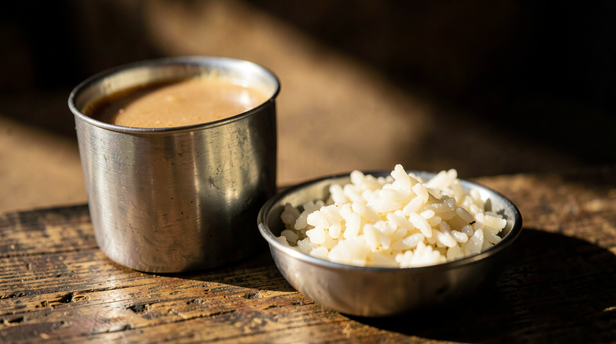
![Morning Chai and Rice]()
Morning Chai and Rice
Image credit : MyLifeXP Bureau
The body loses water continuously: through breath, through sweat, through urine, through the skin even when you are sitting still. A rough daily loss for an adult doing ordinary indoor work is somewhere between 2 and 2.5 litres, though heat, exercise, and illness push that figure up sharply.
Of that replacement, plain water from a glass or bottle accounts for roughly half to two-thirds in most people. The rest arrives through two other channels: beverages that are not plain water, and food.
Food's contribution is the one that surprises people. Across a typical day of eating, food provides somewhere between 20 and 30 percent of total water intake. For someone eating a diet heavy in cooked vegetables, fruit, dal, and curd, which describes a large share of everyday Indian eating, that figure sits at the higher end.
What Indian Food Actually Carries
Curd is almost entirely water. A 100-gram serving of plain curd is roughly 85 to 88 percent water by weight. It also delivers protein and beneficial bacteria, but from a hydration standpoint it functions almost like a glass of liquid. Raita, lassi, and chaas amplify this further.
Cooked dal, whether toor, moong, or masoor, runs between 70 and 80 percent water after cooking, depending on how thick it is made. A katori of dal with a meal is contributing meaningfully to the body's water supply, not just its protein intake.
Rice, once cooked, absorbs a large volume of water during cooking and retains it. Cooked white rice is roughly 68 to 72 percent water. A cup of rice at lunch is delivering more water than most people realise.
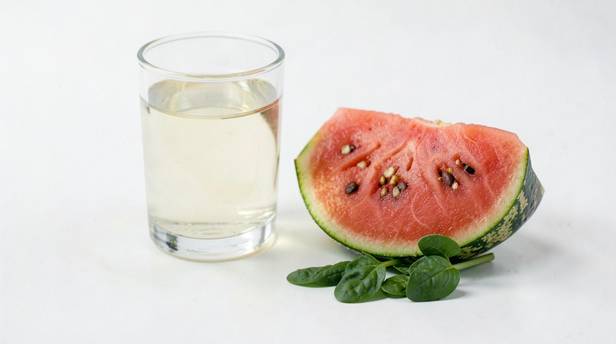
Fruits vary widely. Watermelon and cucumber sit above 95 percent water. A banana is closer to 75 percent. An apple is around 85 percent. These are not trivial contributions when eaten regularly.
Vegetables follow a similar pattern. Tomatoes, spinach, bottle gourd, and ridge gourd are all above 90 percent water. Cooking concentrates some and dilutes others, but the water does not disappear, it moves into the cooking liquid, which is why finishing the sabzi gravy or drinking the soup matters more than people think.
Where Tea and Coffee Actually Sit
![Refreshing Hydration Still Life]()
Refreshing Hydration Still Life
Image credit : MyLifeXP Bureau
Tea is roughly 99 percent water. Coffee is similar. The caffeine in both has a mild diuretic effect, it prompts the kidneys to produce slightly more urine, but the volume of fluid consumed far exceeds what is lost through that effect. A cup of tea adds to hydration, not away from it, for most people drinking ordinary quantities.
The diuretic concern applies at genuinely high caffeine doses: several strong cups in close succession on an empty stomach. At the level most people drink, two or three cups of chai across a day, the net effect is hydrating.
Milk, which is the base of most Indian chai, is itself about 87 percent water and carries electrolytes that support fluid retention. A cup of milky tea is a more complex hydration event than plain water, but it is not a dehydrating one.
What This Means for the Eight-Glasses Rule
The eight-glasses figure, roughly two litres of plain water, was never a precise scientific finding. It circulated as a guideline and hardened into a rule through repetition. The actual recommendation from most nutrition bodies is for total water intake from all sources, not plain water alone, and that total varies by body size, activity, climate, and diet.
Someone eating a diet rich in curd, cooked vegetables, dal, and fruit, and drinking two or three cups of tea, may be meeting a substantial portion of their daily water need before they pick up a glass. Someone eating mostly dry, processed food, crackers, packaged snacks, bread without a vegetable side, is getting far less from food and needs to compensate with plain water.
Thirst remains the most reliable real-time signal the body has. Urine colour is a reasonable secondary check: pale yellow indicates adequate hydration; dark yellow or amber suggests the body wants more fluid. Neither signal requires counting glasses.
When Plain Water Still Matters Most
Food and tea cannot substitute for plain water in every situation. During illness with fever, vomiting, or diarrhoea, the body loses fluid faster than food can replace it, and plain water, or an oral rehydration solution, is what the body needs. During sustained physical activity in heat, sweat losses outpace what a meal can supply.
Kidney function benefits from adequate plain water intake specifically, because water is what carries waste products through the kidneys and out in urine. A diet high in protein or salt increases the kidney's filtration load, and plain water supports that process in a way that water-in-food does not fully replicate.
Older adults often have a reduced thirst response, which means they may not feel thirsty even when the body is running low. For this group, actively drinking plain water through the day, rather than relying on thirst or food, is worth building as a habit.
The body's water supply is assembled from many sources across the day. Plain water is the most efficient of them, but it is working alongside every cup of chai, every bowl of dal, and every piece of fruit the body processes. Counting only glasses misses most of the picture, and for someone eating a varied, vegetable-forward diet, the picture is already more complete than the count suggests.
Experiencing frequent stress, fatigue, or health challenges? Your name energy may be worth exploring. Check it here. Unlock insightful tips and inspiration on personal growth, productivity, and well-being. Stay motivated and updated with the latest at
My Life XP.