The ear canal is one of the few places on the body that cleans itself. Skin cells in the canal grow outward, slowly carrying old wax toward the opening, where it dries and falls away. Most people never need to do anything. The ones who do need to clean their ears are usually the ones whose cleaning habits created the problem in the first place.
What Earwax Actually Does
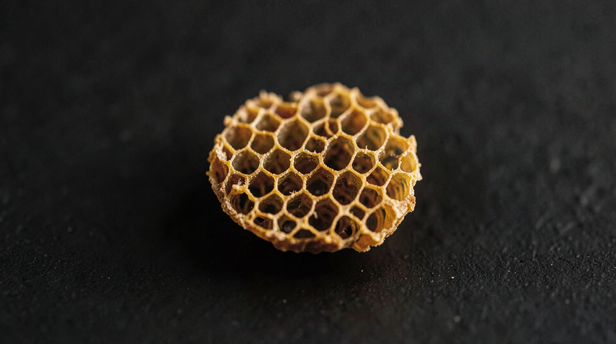
![Honeycomb Macro Detail]()
Honeycomb Macro Detail
Image credit : MyLifeXP Bureau
Wax is not dirt. It is a mixture of secretions from two types of glands in the outer third of the ear canal, combined with shed skin cells and fine hairs. Its job is to trap dust and small particles before they reach the eardrum, and to keep the canal lightly moisturised. A completely wax-free canal is a dry, itchy, more infection-prone canal. The goal is not elimination, it is not letting wax accumulate past the point the canal can manage on its own.
Why Cotton Swabs Make Things Worse
The canal is shaped like a gentle S-curve. The outer third, where wax is produced, is cartilage. The inner two-thirds, closer to the eardrum, is bone. When a cotton swab goes in, it rarely pulls wax out. It compresses it. The soft tip pushes the wax past the cartilage section and into the bony section, where the canal narrows and the self-cleaning mechanism does not reach. Over time, this creates an impaction, a plug of compressed wax sitting close to the eardrum that the ear cannot move on its own. The swab also strips the thin layer of wax that lines the outer canal, which the canal then overproduces to compensate. Regular swab users often find they need to use them more and more often. That is the compensation cycle, not proof that their ears are especially dirty.
Who Actually Builds Up Wax and Why
![Golden Oil Dropper Still Life]()
Golden Oil Dropper Still Life
Image credit : MyLifeXP Bureau
Wax consistency varies by genetics. Dry, flaky wax is common in East Asian populations; wet, honey-coloured wax is more common in South Asian and African populations. Neither type is a problem on its own. Wax buildup tends to happen in people who wear in-ear headphones or hearing aids for long stretches, because the device blocks the outward migration path. It also happens in people with narrow or curved canals, older adults whose wax becomes drier and stickier with age, and, as above, people who clean their ears frequently and push the wax back in while doing so. Cotton swabs, ear candling, and small objects all belong in the same category: they interfere with the outward movement the canal is trying to complete.
What Safe Ear Cleaning Actually Looks Like
For most people, the outer ear, the visible part, the bowl-shaped structure and the entrance to the canal, is all that needs attention. A damp cloth on a finger, wiped gently around the entrance, is enough. Nothing goes inside the canal. If wax is visibly at the opening, the same cloth can lift it away. It arrived there because the canal moved it there. That is the system working.
When wax has genuinely accumulated inside the canal, signalled by a feeling of fullness, muffled hearing, or a low hum that comes and goes, softening drops can help the canal complete its job. Warmed olive oil, mineral oil, or a commercial carbamide peroxide drop placed in the ear for a few minutes softens the wax so it can continue moving outward. This works with the canal's mechanism rather than against it. It does not work on an impaction, and it is not appropriate if there is any chance the eardrum has a perforation, that is a conversation for a doctor before anything goes in the canal.
When to See a Doctor Instead
A blocked feeling that does not clear in a few days, pain inside the canal, ringing, or any sudden change in hearing is worth a doctor's appointment rather than a home remedy. A GP or ENT can look directly at the canal with an otoscope, confirm whether there is an impaction, and remove it safely, usually with irrigation or suction, neither of which involves pushing anything inward. Ear candling, despite its long presence in wellness spaces, has no mechanism by which it could remove wax from the canal and carries a real risk of burns and wax drips from the candle itself entering the ear. It is not a safe alternative.
The ear is doing something deliberate when it moves wax toward the opening. The only thing most people need to do is let it finish.
Experiencing frequent stress, fatigue, or health challenges? Your name energy may be worth exploring. Check it here. Unlock insightful tips and inspiration on personal growth, productivity, and well-being. Stay motivated and updated with the latest at
My Life XP.