Your foot is the first thing that meets the ground, and every structure above it, ankle, shin, knee, hip, lower back, adjusts in real time to what the foot reports. When a shoe fits well, that chain of adjustments is small and efficient. When it does not, the adjustments compound with every step, and the body finds workarounds that work for a while before they stop working quietly.
What "Fit" Actually Means Beyond Length
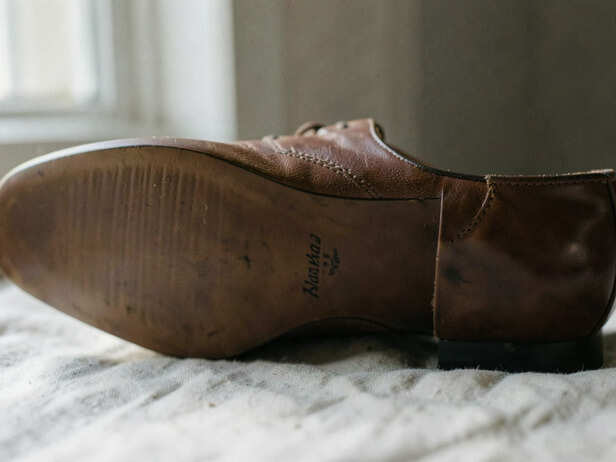
![Leather Shoe Interior Detail]()
Leather Shoe Interior Detail
Image credit : MyLifeXP Bureau
Most people size a shoe by length alone. But fit has three dimensions: length, width, and depth through the toe box. A shoe that is the right length but too narrow compresses the forefoot, which pushes the toes together and prevents the foot from spreading naturally at push-off. A shoe with too shallow a toe box presses down on the tops of the toes and changes how the toes flex. Width at the heel matters separately from width at the ball of the foot, a heel that is too loose allows the foot to slip slightly with each step, which the ankle corrects by gripping inward. Each of these is a different mechanical problem with a different place in the leg where the compensation shows up.
The Ankle Is Where Misfit First Registers
A well-fitted shoe holds the heel firmly and allows the ankle to move through its natural arc, rolling slightly inward as the foot lands, then pushing off through the big toe. When the heel slips, the ankle overcorrects to keep the foot under the body. When the shoe is too rigid across the forefoot, the ankle cannot complete its natural roll and the push-off happens through the outer edge of the foot instead. Both patterns change the angle at which force travels up the leg. The ankle does not usually hurt first. The knee does, or the shin does, because the ankle's compensation is invisible until something further up the chain accumulates enough load to notice.
How the Knee Reads What the Foot Is Doing
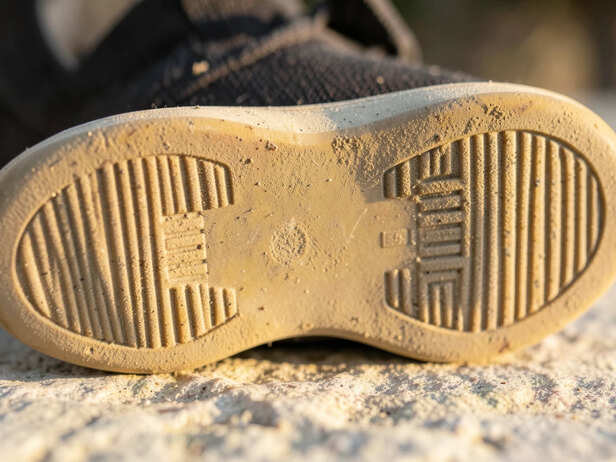
![Worn Shoe Sole Detail]()
Worn Shoe Sole Detail
Image credit : MyLifeXP Bureau
The knee is a hinge, and it is happiest when the force coming up from the foot arrives roughly through the centre of the joint. When the foot rolls inward more than usual, a pattern called overpronation, which is often made worse by shoes that are too narrow or too soft at the arch, the shin rotates inward with it, and the knee tracks slightly to the inside of the foot rather than over it. Over many steps, this puts uneven pressure on the cartilage on one side of the knee. The reverse happens when a shoe is too stiff or too high at the outer edge, pushing the foot into supination: the force arrives at the outer knee instead. Neither pattern is dramatic in a single step. Across a day of walking, it adds up.
The Hip Compensates for What the Knee Cannot Absorb
When the knee is absorbing force at an angle it was not designed for, the hip tilts to redistribute the load. This is not a conscious adjustment, it happens below the level of awareness, in the same way you shift your weight without deciding to. A slight outward tilt of the hip on one side changes how the gluteal muscles fire, which changes the position of the pelvis, which can shift the curve of the lower back. People who develop lower back discomfort from walking long distances sometimes trace it back to footwear, not posture, because the posture is downstream of the shoe. Changing the shoe changes the chain from the bottom, which is usually more effective than trying to correct posture from the top.
Heel Height Is a Separate Variable From Fit
Heel height changes the angle of the whole foot relative to the ground, which changes where the body's weight sits. A raised heel shifts weight forward onto the ball of the foot and shortens the effective length of the calf muscle over time. This is true of any shoe with a significant heel drop, not only formal heels, but many running shoes and work boots with a built-up heel. A foot that spends most of its time in a raised-heel shoe adapts to that position, and the calf and Achilles tendon become less comfortable at the full stretch that a flat shoe requires. This is not a reason to avoid heel drop entirely, but it is a reason to vary it, and to understand that switching abruptly from a high-drop shoe to a flat one asks the calf and Achilles to work through a range they have not been using.
What to Check When You Try a Shoe On
Stand, do not sit. The foot spreads under load, and a shoe that fits seated may feel tight standing. Walk a few steps on a hard floor, not carpet, so you can hear and feel whether the heel lifts. Check that the widest part of the shoe, usually where the laces end, aligns with the widest part of your foot. Press the toe box: there should be roughly a thumb's width between the end of your longest toe and the end of the shoe, and the toes should be able to move without pressing against the top or sides. If any of these checks reveal a problem, it is a fit problem, not a breaking-in problem. Shoes do not reshape to feet in the way that is commonly assumed; the foot reshapes to the shoe, which is the opposite of what you want.
The foot, ankle, knee, and hip are not separate systems that happen to be near each other, they are one linked chain, and the shoe is where that chain begins. A fit that holds the heel, gives the toes room, and matches the width of the foot at its widest point is not a luxury consideration. It is the starting condition for everything above it to work the way it was designed to.
Experiencing frequent stress, fatigue, or health challenges? Your name energy may be worth exploring. Check it here. Unlock insightful tips and inspiration on personal growth, productivity, and well-being. Stay motivated and updated with the latest at
My Life XP.