Why Do You Forget Why You Walked Into a Room?
Palak Khanna | Jun 05, 2026, 19:00 IST
Almost everyone has experienced the strange moment of walking into a room only to suddenly forget why they went there. It can feel frustrating, funny, or even alarming. But science suggests this common mental slip is usually a normal part of how the brain processes information. Researchers call it the "doorway effect," a fascinating phenomenon that reveals how our minds organize memories, shift attention, and filter out unnecessary details.

You walk confidently into the kitchen, reach the middle of the room, and suddenly freeze. Why did I come here? A few seconds ago, you had a clear purpose. Now, it feels as though someone pressed the reset button inside your brain. Many people joke that walking through a doorway causes temporary amnesia, but surprisingly, modern psychology says there is some truth behind that idea. For decades, scientists have studied why our minds occasionally lose track of simple intentions. The answer is not usually stress, aging, or poor memory. Instead, it often comes down to the way our brains naturally organize experiences into separate chapters.
One of the most famous explanations is known as the "doorway effect." Researchers found that moving from one physical space to another acts like turning the page of a book. Your brain quietly closes one mental event and prepares for the next. The information that was active a moment ago gets pushed into the background to make room for new surroundings. Imagine carrying groceries from your car into your house. As soon as you cross the front door, your mind begins processing the living room, the bags in your hands, and what needs to be done next. The original thought, like grabbing your phone charger, can easily fade away. This mental filing system actually helps us stay organized, even if it occasionally makes us forget small tasks.
![Every Doorway Resets Your Mind]()
Every second, your senses collect enormous amounts of data. You hear sounds, notice colors, feel temperatures, and process conversations all at once. If your brain tried to consciously remember every tiny detail, daily life would become overwhelming. Instead, it prioritizes information that seems most important at the moment. Walking into a new room introduces fresh visual and sensory cues. These new signals compete with the thought you were already holding. Sometimes the incoming information wins, leaving your original intention temporarily hidden. Interestingly, the memory is often not gone. Returning to the previous room frequently triggers it again because the old environment recreates the original mental context.
![Your Mind Ignores More Than You Think]()
Many people blame forgetfulness on age, but distraction is often the bigger culprit. Think about how often you check your phone while walking, planning dinner, answering a text, or thinking about tomorrow's meeting. The brain does not truly multitask as efficiently as we like to believe. It rapidly switches attention between different activities. Every switch slightly increases the chance of losing track of your original goal. Modern life constantly pulls our attention in multiple directions. Notifications, social media, and endless information streams create more opportunities for these tiny memory lapses. Ironically, the busier your mind is, the easier it becomes to forget something simple.
![Too Many Thoughts, One Lost Memory]()
It sounds strange, but forgetting can be healthy. Scientists believe memory is designed not only to store information but also to discard what appears unimportant. This process prevents our minds from becoming cluttered with unnecessary details. Imagine remembering every single face you passed on the street or every random object you glanced at during the day. Your brain would struggle to focus on what truly matters. Small memory failures often show that your mind is sorting and prioritizing information effectively. Unless forgetfulness becomes severe or interferes with daily life, these moments are generally considered normal. In fact, almost everyone experiences them, regardless of intelligence.
Although this phenomenon is normal, there are ways to reduce it. One helpful strategy is to say your intention out loud. For example, "I am going to the bedroom to get my glasses." Speaking the task creates an additional memory cue. Visualization also works well. Picture yourself completing the action before you move. Reducing distractions can make a big difference too. Put your phone away while doing small tasks and try to finish one thing before starting another. If you still forget after entering a room, simply walk back to where you started. The original surroundings often reactivate the memory surprisingly quickly. These techniques work because memory is closely linked to context and attention.
The next time you stand in a room wondering why you walked there, there is no need to panic. You are likely experiencing the doorway effect, a natural result of how the brain organizes experiences and manages attention. Far from being a sign that something is wrong, this tiny mental glitch reflects an incredibly complex system working behind the scenes. Our minds constantly decide what to remember, what to ignore, and when to shift focus. Occasionally, that process leaves us staring into the kitchen wondering why we came. And oddly enough, that little moment of confusion is proof that your brain is doing exactly what it was designed to do.
Unlock insightful tips and inspiration on personal growth, productivity, and well-being. Stay motivated and updated with the latest atMy Life XP.
The Brain Treats Doorways Like New Chapters
Your Brain Is Constantly Filtering Information

Every Doorway Resets Your Mind
Every second, your senses collect enormous amounts of data. You hear sounds, notice colors, feel temperatures, and process conversations all at once. If your brain tried to consciously remember every tiny detail, daily life would become overwhelming. Instead, it prioritizes information that seems most important at the moment. Walking into a new room introduces fresh visual and sensory cues. These new signals compete with the thought you were already holding. Sometimes the incoming information wins, leaving your original intention temporarily hidden. Interestingly, the memory is often not gone. Returning to the previous room frequently triggers it again because the old environment recreates the original mental context.
Multitasking Makes the Problem Worse

Your Mind Ignores More Than You Think
Many people blame forgetfulness on age, but distraction is often the bigger culprit. Think about how often you check your phone while walking, planning dinner, answering a text, or thinking about tomorrow's meeting. The brain does not truly multitask as efficiently as we like to believe. It rapidly switches attention between different activities. Every switch slightly increases the chance of losing track of your original goal. Modern life constantly pulls our attention in multiple directions. Notifications, social media, and endless information streams create more opportunities for these tiny memory lapses. Ironically, the busier your mind is, the easier it becomes to forget something simple.
Forgetting Is Actually a Sign of an Efficient Brain
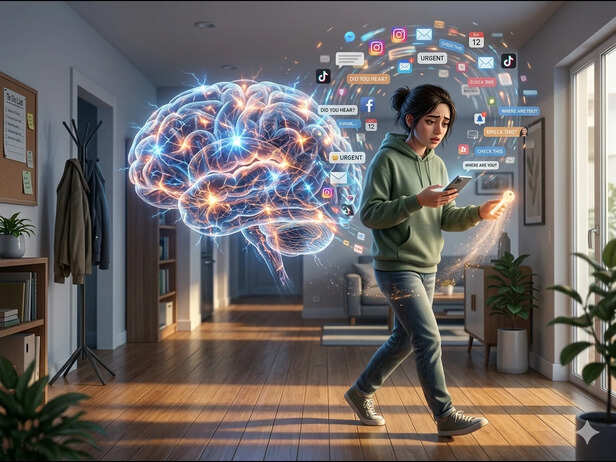
Too Many Thoughts, One Lost Memory
It sounds strange, but forgetting can be healthy. Scientists believe memory is designed not only to store information but also to discard what appears unimportant. This process prevents our minds from becoming cluttered with unnecessary details. Imagine remembering every single face you passed on the street or every random object you glanced at during the day. Your brain would struggle to focus on what truly matters. Small memory failures often show that your mind is sorting and prioritizing information effectively. Unless forgetfulness becomes severe or interferes with daily life, these moments are generally considered normal. In fact, almost everyone experiences them, regardless of intelligence.
Simple Tricks to Outsmart the Doorway Effect
The Real Reason Your Mind Hits Pause
Unlock insightful tips and inspiration on personal growth, productivity, and well-being. Stay motivated and updated with the latest atMy Life XP.