Most people assume the second burn means their stomach could not handle the meal. It did not. The stomach processed the food just fine. What it could not do, and what no part of the digestive tract can do, is neutralise capsaicin, the compound in chillies that causes the sensation of heat. Capsaicin enters your mouth as a chemical and leaves your body as the same chemical, largely unchanged, because the human gut was never designed to break it down.
Capsaicin Is Not Actually Heat, It Just Feels Like It
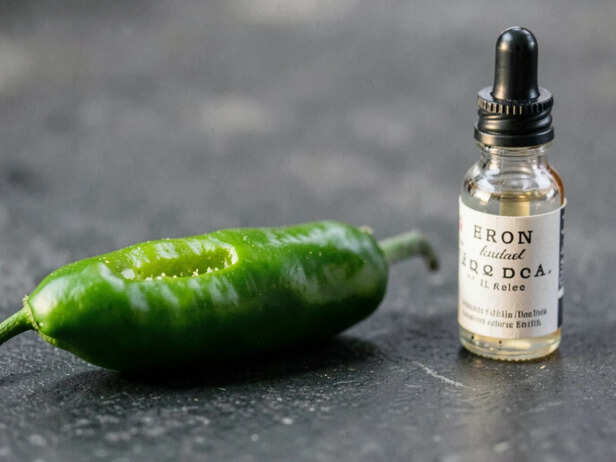
![Chilli and Dropper Still Life]()
Chilli and Dropper Still Life
Image credit : MyLifeXP Bureau
Capsaicin does not raise the temperature of your mouth or your gut. It binds to a receptor called TRPV1, which is the body's sensor for genuine heat, the kind that signals danger, like touching something above 43 degrees Celsius. When capsaicin locks onto TRPV1, the receptor fires as if a hot object were present, even though nothing is burning. The brain receives the same signal it would from real heat and responds accordingly: blood rushes to the area, saliva increases, and you feel pain.
TRPV1 receptors are not exclusive to the mouth. They line the entire gastrointestinal tract, from the oesophagus to the rectum. Every section of that tract is capable of the same response. The first burn happens at the top because that is where capsaicin first makes contact. The second burn happens at the bottom for the same reason.
What Happens to Capsaicin Inside the Body
After you swallow, capsaicin moves through the stomach and small intestine. The stomach's acid does not degrade it. Digestive enzymes do not break it down. A small fraction is absorbed into the bloodstream through the small intestine, which is why some people feel a general warmth or flush after a very spicy meal. The rest continues moving through the large intestine, still chemically active, still capable of binding to TRPV1 receptors along the way.
By the time capsaicin reaches the rectum, it has spent several hours travelling through the gut. It has not been neutralised. The rectal lining is rich in TRPV1 receptors, and when concentrated capsaicin arrives there, those receptors fire in exactly the way they did in your mouth. The sensation is the same signal, read by the same receptor type, just at the other end of the same system.
Why Some People Feel It More Than Others
![Yoghurt and Chillies Still Life]()
Yoghurt and Chillies Still Life
Image credit : MyLifeXP Bureau
Regular exposure to capsaicin does something measurable to TRPV1 receptors: it desensitises them. When a receptor is activated repeatedly over time, it becomes less responsive to the same stimulus. People who eat chillies daily, which describes a large portion of the Indian population, often report little or no burning at either end, not because their digestive system is stronger, but because their TRPV1 receptors have been downregulated by consistent exposure.
Someone who rarely eats spicy food and then eats a very hot meal will feel both burns acutely. Their receptors are fully sensitive and respond to even moderate amounts of capsaicin. This is also why the same dish can feel mild to one person at the table and genuinely painful to another sitting next to them.
What the Burning Actually Tells You
The rectal burn is not a warning that your gut is inflamed or that the food harmed you. In most people with a healthy digestive system, it is a normal physiological response to an undigested chemical irritant passing through. It resolves on its own once capsaicin has cleared the system.
Where it is worth paying attention is if the burning is accompanied by cramping that lasts several hours, blood in the stool, or if it happens with foods that are not particularly spicy. Those symptoms belong to a different conversation, one with a doctor, not a home remedy. Capsaicin can aggravate conditions like irritable bowel syndrome or haemorrhoids, and if either is already present, a very spicy meal can make an existing problem more uncomfortable. That is irritation of a pre-existing condition, not damage caused by the food itself.
What Actually Helps (and What Does Not)
Water does almost nothing for the mouth burn because capsaicin is oil-soluble, not water-soluble. Water spreads it around rather than washing it away. Dairy works better, the fat in milk or yoghurt dissolves capsaicin and carries it away from the receptor surface. A spoonful of plain yoghurt after a very hot meal is a genuine intervention, not folklore.
For the exit burn, there is less you can do after the fact. Eating something fatty alongside a very spicy meal may reduce how much capsaicin reaches the lower gut in concentrated form, since fat slows gastric emptying and may bind some capsaicin in transit. Once the meal is digested, the capsaicin is already moving through.
The body is not malfunctioning when it burns twice. It is doing what any sensory system does: detecting a stimulus it was built to detect, at every point where that stimulus is present. Capsaicin does not care which end of the tube it is at. Neither does TRPV1.
Experiencing frequent stress, fatigue, or health challenges? Your name energy may be worth exploring. Check it here.Unlock insightful tips and inspiration on personal growth, productivity, and well-being. Stay motivated and updated with the latest at
My Life XP.