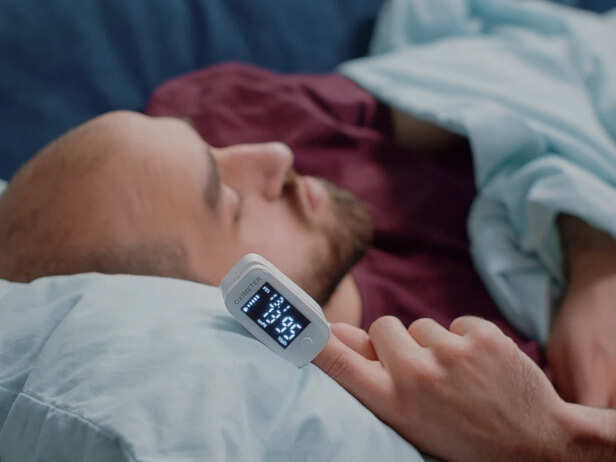
Most people who struggle with sleep focus on screens, stress, or the time they get into bed. The room itself rarely gets examined. But the body uses temperature as one of its primary signals for when to move into deep sleep and when to pull back out of it, and a room that is too warm or too cold can interrupt that process before it completes.
Your Core Temperature Has to Drop for Deep Sleep to Begin
![Blood Pressure Rise at Night]()
Blood Pressure Rise at Night
Image credit : Freepik
In the hour or two before sleep, your body begins shedding heat. Blood moves toward the surface of your skin, your hands and feet warm up, your core cools down. This drop in core temperature is not a side effect of falling asleep. It is a condition that sleep requires. The brain reads falling core temperature as a cue to begin releasing melatonin and to start the descent into the first slow-wave stages.
A room that is too warm makes this harder. When the air around you is already hot, the body cannot shed heat efficiently through the skin. Core temperature stays elevated. The brain's cue is delayed or weakened. You may still fall asleep, but the transition into deep slow-wave sleep takes longer, and the stages themselves tend to be shallower.
What Happens to Your Sleep Stages When the Room Is Wrong
Sleep moves in cycles of roughly 90 minutes. Each cycle contains light sleep, deep slow-wave sleep, and REM sleep. The slow-wave stages are where physical repair happens, the body rebuilds tissue, consolidates immune function, and clears metabolic waste from the brain. REM is where memory consolidation and emotional processing happen.
Both stages are temperature-sensitive. Slow-wave sleep is disrupted most by warmth: a body that cannot cool down tends to spend less time in the deepest stages and more time cycling through lighter sleep. REM is disrupted by cold: during REM, the body largely stops regulating its own temperature and relies on the environment, which means a very cold room can shorten or fragment REM periods.
The result is that a room that is either too warm or too cold tends to compress the stages you most need, without necessarily waking you fully. You sleep through the night and still feel unrested because the architecture of the sleep was wrong.
The Range Where Sleep Tends to Work Best
![Late Night Sleeping Effects]()
Late Night Sleeping Effects
Image credit : Freepik
The body's thermoregulation during sleep works most smoothly in a cool environment. Most sleep researchers place the useful range somewhere between 18°C and 22°C, though individual variation is real, people with higher baseline metabolic rates or those who run warm naturally may do better at the lower end, while older adults, who lose body heat more readily, may find the upper end more comfortable.
What matters more than hitting an exact number is avoiding the extremes. A room above 24°C consistently reduces time spent in slow-wave sleep. A room below 16°C can fragment REM. The range is wider than most people expect, which means the goal is not precision but keeping the environment from actively working against the body's own cooling process.
Why Humidity Matters as Much as Temperature
Temperature alone does not determine how well the body sheds heat. Humid air reduces the efficiency of evaporative cooling, sweat evaporates more slowly, and the body's ability to lose heat through the skin is blunted. This is why a night at 26°C in a dry climate can feel more manageable than a night at 23°C in high humidity: the actual heat the body can shed is different in each case.
In India's humid months, this compounds the problem. The air temperature may not feel extreme, but the body's cooling mechanism is working against resistance. A ceiling fan helps not by cooling the air but by moving it across the skin and improving evaporative cooling. An air conditioner lowers both temperature and humidity, which is why it tends to produce noticeably better sleep even when the temperature setting is modest.
What the Body Does With Your Feet and Hands
The skin's blood vessels, particularly in the hands and feet, are the body's primary radiators. When sleep begins, these vessels dilate, drawing warm blood to the surface and releasing heat into the surrounding air. This is why your feet often feel warmer just before you fall asleep, they are doing active work.
Cold feet slow this process. When the extremities are cold, the blood vessels constrict to conserve heat, and the body's ability to lower its core temperature is reduced. This is one reason that wearing socks to bed, a habit that reads as purely about comfort, can shorten the time it takes to fall asleep in a cold room. The socks keep the feet warm enough that the vessels stay dilated, the heat transfer continues, and the core temperature drops on schedule.
Small Adjustments That Work With the Body's Cooling Cycle
A cool bath or shower 60 to 90 minutes before bed accelerates the body's heat-shedding process. The warm water draws blood to the skin surface, and when you step out, the evaporation and the cooler air cause a rapid drop in skin temperature. Core temperature follows. The effect is not dramatic, but it consistently moves sleep onset earlier in people who try it.
Keeping the room cooler in the second half of the night matters more than most people realise. Core temperature naturally rises in the early morning hours as the body prepares to wake. A room that has warmed up overnight, because a window was closed, or because body heat accumulated under a heavy duvet, can pull the body out of its last REM period earlier than it would otherwise leave. Waking at 5 a.m. feeling alert but groggy is often this mechanism at work.
The sleep environment is not a passive backdrop. It is the medium the body's temperature system works in, and the depth of sleep available on any given night is partly determined by how well that medium lets the system do its job.
Experiencing frequent stress, fatigue, or health challenges? Your name energy may be worth exploring. Check it here.Unlock insightful tips and inspiration on personal growth, productivity, and well-being. Stay motivated and updated with the latest at
My Life XP.