The last message has been replied to. The kitchen is wiped down. The child asked for water twice after lights-out and then finally, genuinely, went quiet. The house makes its small settling sounds. And you are still awake.
Not because you have to be. Because you cannot quite make yourself stop.
There is a name for this in sleep research, revenge bedtime procrastination, but the name is less useful than the recognition. You are not disorganised or undisciplined. You are a person who had very little of the day to yourself, and you are collecting what is left of it before the alarm takes it away again.
Why the Night Feels Like Yours When the Day Wasn't
![Should Parents Read Their Child's Private Diary?]()
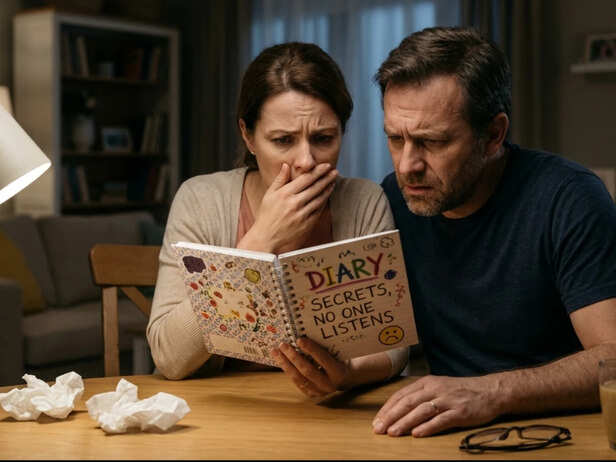
Should Parents Read Their Child's Private Diary?
Image credit : Freepik
The hours between a child's bedtime and your own are structurally different from every other hour in a parent's day. Nobody needs anything. Nobody is watching. The ambient pull of obligation, the half-finished lunchbox, the permission slip, the question you forgot to answer, goes quiet along with the house.
Psychologists who study autonomy describe a basic human need to feel like the author of your own time. When that need goes unmet across a long stretch, and the parenting years are a long stretch, the mind looks for the gap where it can finally be met. It finds the gap at midnight.
The scrolling, the television, the book you read three pages of before putting down, the podcast you half-listened to while doing nothing: these are not laziness. They are the mind refusing to end the day before it has had any of it.
What It Costs, Honestly
Sleep deprivation in parents is so common it has become a kind of dark humour, a badge worn alongside the school run and the packed schedule. But the costs are real and they accumulate in ways that do not always announce themselves.
The part of the brain that regulates emotional response, the prefrontal cortex, is among the first to be affected by shortened sleep. This is why the parent who stayed up until one in the morning is not simply tired the next day. She is more reactive. The ordinary friction of a child who will not put on shoes lands differently at seven in the morning after five hours than it would after eight. The patience she wanted to have, and genuinely meant to have, is harder to find not because of a failure of character but because of a biological one.
There is also a slower cost. Chronic mild sleep loss compounds. It does not feel dramatic from the inside because the body adapts to feeling this way, and the adapted state starts to feel normal. The tiredness stops feeling like tiredness and starts feeling like just how things are.
What It Offers, Also Honestly
![Quiet Evening Study Scene]()
Quiet Evening Study Scene
Image credit : MyLifeXP Bureau
The case against late nights is real. So is the case for them, and it deserves to be made without condescension.
Solitude is not a luxury for people who spend their days in close proximity to small humans who need things from them constantly. It is a genuine psychological requirement. A parent who never has an hour that belongs entirely to her is not resting between rounds, she is running a deficit that rest alone cannot repay, because rest is not the same as privacy.
The late-night hour does something that a nap cannot: it restores the sense of being a person with preferences, not just a person with responsibilities. The book, the show, the long shower, the meal eaten in silence, these are not indulgences. They are the activities through which a person remembers who she is outside the role.
This matters for children too, though not in the way productivity content would frame it. A parent who has had some time to herself is not simply more patient, though she often is. She is more present in the hours she is with her children, because she is not spending those hours grieving the hours she did not get.
The Negotiation Worth Having With Yourself
The question is not whether to take the evening back. The question is how much of it, and at what cost.
An hour of genuine solitude, reading, watching something you chose, sitting with a cup of tea without a purpose, is different from two hours of half-conscious scrolling that leaves you more wired than rested. The first replenishes something. The second delays sleep without giving you what you were actually looking for.
The body's wind-down is not a switch. It is a slope. Bright screens, particularly in the hour before sleep, signal to the brain that the day is still happening. The irony of revenge bedtime procrastination is that the very activities chosen to reclaim the evening, the phone, the laptop, the television, are among the ones that make sleep harder to reach when you finally decide to reach for it.
None of this is a prescription. It is a mechanism. Knowing that a screen at eleven makes sleep shallower does not mean you put the screen down. It means you make the choice with both sides of it visible.
What the Light Under the Door Actually Is
If you have ever walked past your child's room at an hour when they should have been asleep and seen the thin line of light under the door, the phone glow, the reading lamp, you may have felt the particular parental mix of exasperation and recognition. They are doing exactly what you do. They are refusing to end the day before they have had enough of it.
The light under your own door is the same thing. It is not a failure of routine or a gap in self-discipline. It is a person insisting, quietly and at some cost, that the day belonged to her too.
Understanding that does not resolve the tension between the hour you want and the sleep you need. But it changes the quality of the choice. You are not failing at bedtime. You are negotiating, as adults do, between two real things you need, with less time than you would like to fit them both.
Experiencing stress or misunderstandings in your relationship with your child? Your name energy may play a role. Check your name energy here. Unlock insightful tips and inspiration on personal growth, productivity, and well-being. Stay motivated and updated with the latest at
My Life XP.