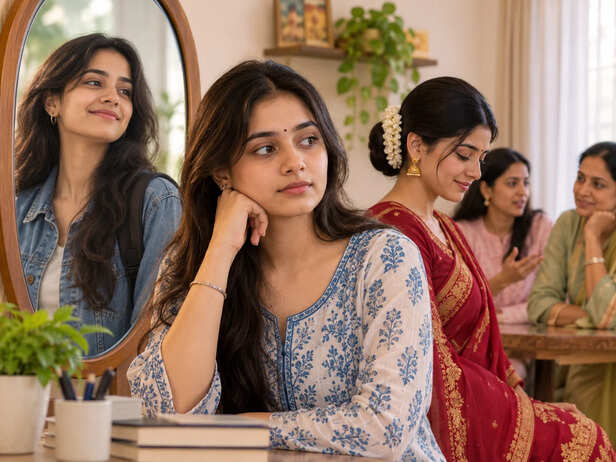
For many women, marriage means leaving behind the home where they grew up and entering a household with a different set of rules. Decisions about careers, clothing, friendships, household responsibilities and even visiting parents can become subjects of family discussions. In some homes, women are expected to adjust because that is considered their responsibility as daughters-in-law. Meanwhile, the same expectations are rarely placed on sons. The problem is not marriage itself, but a system in which one partner is expected to change almost everything while the other continues living much as before.
The Financial Burden Is Not the Whole Story
![A Woman's Life After Marriage]()
A Woman's Life After Marriage
Image credit : Freepik
Discussions about Indian marriages often focus on the financial pressure men face, including wedding expenses and the expectation that they should earn for the family. These pressures can be real, but they do not cancel out the inequalities women experience. In many households, women are expected to manage domestic responsibilities alongside paid employment, while their careers may take a back seat to family needs. When financial responsibility becomes an argument for giving men greater authority, an important question gets ignored: why should earning money give anyone more control over their partner's life?
The Dowry Reality Is Still Disturbing
![Alimony vs Dowry: Understanding the Difference]()
Alimony vs Dowry: Understanding the Difference
Image credit : CHATGPT(AI)
Despite laws prohibiting dowry, the practice continues to put women and their families under pressure. According to NCRB's Crime in India 2023 report, India recorded 6,156 dowry deaths during the year. That works out to nearly 17 deaths every day. The same report recorded 15,489 cases under the Dowry Prohibition Act. These figures represent reported cases and officially classified deaths, not every instance of harassment or domestic abuse. Still, they raise an uncomfortable question: why does a woman's marriage continue to become a matter of financial demands in so many families?
Domestic Violence Is More Than Physical Abuse
The problem does not end with dowry. According to NCRB, 1,33,676 cases of cruelty by husbands or their relatives were registered in 2023. The NFHS-5 survey (2019-21) also found that 29.3% of ever-married women aged 18-49 had experienced spousal violence. Abuse can involve physical harm, emotional humiliation, threats and financial control. Many women also struggle to report abuse because of family pressure, financial dependence or fear of social judgement. A marriage certificate should never become a reason to tolerate violence.
Who Gets to Make Decisions After Marriage?
One of the least discussed problems is the loss of personal decision-making power. Some women need permission to visit their parents, continue working, make financial choices or decide when to have children. In joint families, parents and in-laws may become deeply involved in decisions that should belong to the couple. Respecting elders is not the same as surrendering personal freedom. A healthy marriage should allow both partners to maintain relationships with their families, make independent choices and have an equal voice in decisions about their future.
Why Is Adjustment Expected Mostly From Women?
The idea that a good daughter-in-law must adjust is deeply rooted in many traditional households. Women are often expected to manage cooking, caregiving, family relationships and childcare, even when they have jobs of their own. Their unpaid work is treated as a natural duty rather than a contribution that deserves recognition. Men, too, face pressure to earn, provide and meet family expectations. But these struggles should not become a competition over who suffers more. The answer lies in sharing responsibilities instead of expecting women to carry an unequal burden silently.
What Should a Fair Marriage Look Like?
A fair marriage does not require a woman to choose between her parents and her husband, or between her career and her family. Both partners should have equal rights over financial decisions, household responsibilities, parenting and personal freedom. Families should stop treating dowry as a condition of marriage, and couples should establish boundaries with relatives before problems arise. Women must have access to education, employment and financial independence, while men should be encouraged to participate equally in domestic life. Marriage should create companionship, not dependence or control.
Are relationship issues affecting your peace of mind? Your name energy may be playing a role. Check your name energy here!Unlock insightful tips and inspiration on personal growth, productivity, and well-being. Stay motivated and updated with the latest at
My Life XP.