3 Ancient Debts That Can Change How You Live
Noopur Kumari | Aug 13, 2026, 16:00 IST
The traditional idea of the three debts offers a simple but powerful way to understand responsibility. Dev Rina is connected with gratitude towards the divine and respect for all living beings. Pitru Rina reminds us of our responsibility towards our parents and ancestors. Acharya Rina points towards the duty of honouring teachers by carrying their wisdom into the world. Together, they teach one important lesson: the best way to repay what life has given us is to make life better for others.

3 Debts Every Human Must Repay in Life
Image credit : ChatGPT(AI)
According to an ancient Hindu teaching, human life is not only about earning, achieving and building a comfortable future. It is also about recognising the responsibilities we inherit. Dev Rina, Pitru Rina and Acharya Rina, traditionally described as three sacred debts, remind us that we receive something from the divine, our parents and those who guide us. But the most beautiful part of this teaching is that these debts are not repaid simply with money or rituals. They are repaid through devotion, service, gratitude and the way we treat others.
![The Three Sacred Debts of Life]()
The word Rina means a debt or obligation. In this spiritual context, it does not simply mean something that must be paid back. It represents gratitude for everything that has helped shape our existence. We receive life, knowledge, protection, guidance and countless opportunities from others. The teaching asks us to recognise these gifts rather than taking them for granted. That makes the three debts deeply relevant even today. They encourage people to live with gratitude and responsibility instead of believing that every achievement is completely self-made.
![Devotion Beyond Rituals]()
Dev Rina refers to the traditional obligation towards the divine forces that sustain life. Worship, prayer and devotion are common ways of expressing this gratitude. But the deeper message goes beyond visiting a temple or performing rituals. If we believe the divine exists in all creation, then our behaviour towards other beings also becomes a form of devotion. Showing kindness to people, protecting nature and treating animals with compassion can become meaningful expressions of gratitude. In this view, spirituality is not limited to prayer. It is also visible in the way we live.
Pitru Rina is traditionally associated with parents and ancestors. We receive our physical existence, upbringing and many values through our family. The teaching therefore encourages gratitude and responsibility towards those who raised and supported us. Serving parents with respect is one traditional expression of this duty. But it can also mean preserving good family values, remembering ancestors and passing meaningful traditions to the next generation. The message is not about blindly following every custom. It is about recognising the people whose sacrifices helped create the foundation on which our lives stand.
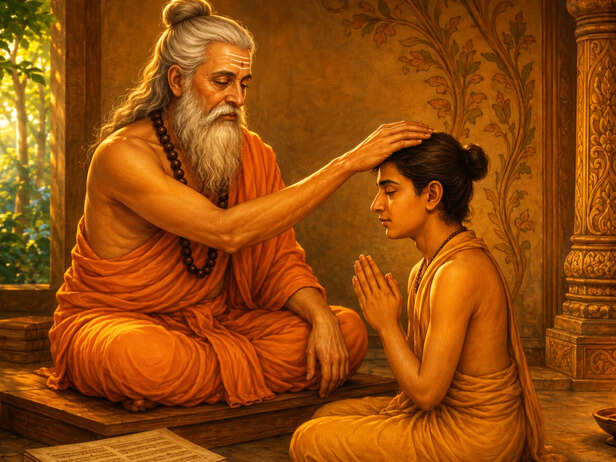
The third is Acharya Rina, the debt owed to teachers and those who guide us towards knowledge. But how can knowledge truly be repaid? The teaching offers a beautiful answer: through our actions. A student does not honour a teacher merely by offering gifts. The greater tribute is to use what was learned wisely. If a teacher taught compassion, spread compassion. If they taught courage, live courageously. If they taught wisdom, share it with others. In this way, knowledge does not stop with one person. It continues travelling from one life to another.
The most striking part of this teaching is that all three debts ultimately lead towards action. Pray with sincerity. Serve your parents with love. Respect your teachers by living their lessons. Help someone who needs support. Share knowledge instead of keeping it locked within yourself. Small actions can carry deep meaning when they come from gratitude. You do not need to perform something extraordinary every day. Sometimes listening patiently to a parent, helping a stranger or encouraging someone who has lost hope can be a powerful way of turning spiritual teachings into everyday life.
The traditional story behind this teaching gives Guru Dakshina a deeper meaning. Instead of asking for wealth or possessions, the guru asks the student to spread happiness, beauty and goodness through their conduct. The student is encouraged to remove hatred and plant seeds of love in other hearts. This transforms guru dakshina from a material offering into a lifelong responsibility. The lesson is especially powerful today. Knowledge becomes truly valuable when it improves the lives of others. A teacher’s greatest reward may be seeing their wisdom continue through the character and actions of their students.
The three debts are ultimately less about what we owe and more about what we can give back. Gratitude towards the divine can make us kinder. Gratitude towards parents can make us more compassionate. Gratitude towards teachers can inspire us to share what we have learned. This creates a beautiful cycle: we receive, we grow, and then we give. Perhaps that is the deeper purpose hidden in the ancient teaching. A meaningful life is not measured only by what we collect for ourselves, but also by the goodness we leave behind for others.
Unlock insightful tips and inspiration on personal growth, productivity, and well-being. Stay motivated and updated with the latest at My Life XP.
Why Are These Three Debts Important?
The Three Sacred Debts of Life
Image credit : ChatGPT(AI)
The word Rina means a debt or obligation. In this spiritual context, it does not simply mean something that must be paid back. It represents gratitude for everything that has helped shape our existence. We receive life, knowledge, protection, guidance and countless opportunities from others. The teaching asks us to recognise these gifts rather than taking them for granted. That makes the three debts deeply relevant even today. They encourage people to live with gratitude and responsibility instead of believing that every achievement is completely self-made.
Dev Rina Begins With Gratitude

Devotion Beyond Rituals
Image credit : ChatGPT(AI)
Dev Rina refers to the traditional obligation towards the divine forces that sustain life. Worship, prayer and devotion are common ways of expressing this gratitude. But the deeper message goes beyond visiting a temple or performing rituals. If we believe the divine exists in all creation, then our behaviour towards other beings also becomes a form of devotion. Showing kindness to people, protecting nature and treating animals with compassion can become meaningful expressions of gratitude. In this view, spirituality is not limited to prayer. It is also visible in the way we live.
Pitru Rina Is About Our Parents
Acharya Rina Is the Most Powerful Lesson
The Debt Is Repaid Through Your Actions
The Forgotten Meaning of Guru Dakshina
Your Life Can Become the Answer
Unlock insightful tips and inspiration on personal growth, productivity, and well-being. Stay motivated and updated with the latest at My Life XP.