Did a Childhood Mistake Change Sita’s Destiny Forever?
Noopur Kumari | Aug 28, 2026, 16:00 IST
A young Sita once captured a female parrot without knowing how deeply it would affect her future. The bird's final words became a curse, while its mate made a vow of his own. Years later, when Sita was pregnant, the consequences of that forgotten incident were said to return in an unexpected way.

The Shocking Curse Behind Sita’s Separation From Rama
Image credit : ChatGPT (ai)
Why did Sita, one of the most revered women in the Ramayana tradition, have to face another painful separation from Rama even after returning from Lanka?
One lesser-known narrative attempts to answer this question through an emotional story involving a pair of parrots, a childhood incident and a curse. According to a version associated with the Padma Purana, Sita encountered a pair of parrots when she was young. What appeared to be a harmless childhood act eventually became connected to a curse that returned years later.
The story is striking because it links Sita's later suffering to an incident from her childhood, raising a powerful question about karma, consequences and whether every action eventually returns to us.
![Young Sita Seeing the Parrot Couple]()
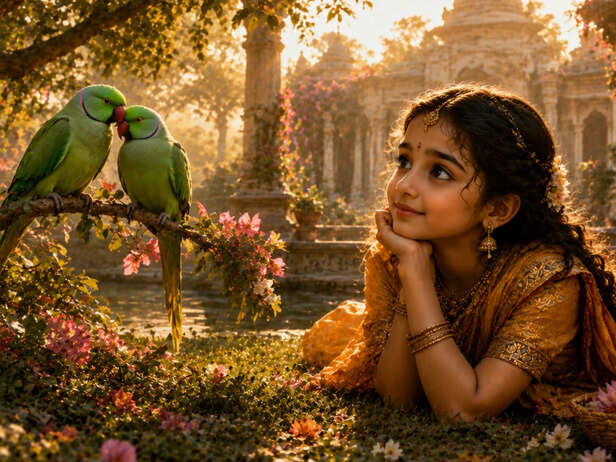
The story begins with young Sita encountering a male and female parrot. The birds were said to be speaking about Rama and Sita's future, which fascinated her. Curious to hear more, Sita caught the female parrot and kept her with her. At first, the incident appears innocent. But the situation soon became serious. The female parrot told Sita that she was pregnant and pleaded to be released so she could return to her mate. Sita, however, did not let her go. This decision became the first link in a chain of events that the story connects to Sita's later suffering.
![The Female Parrot Giving Sita a Curse]()
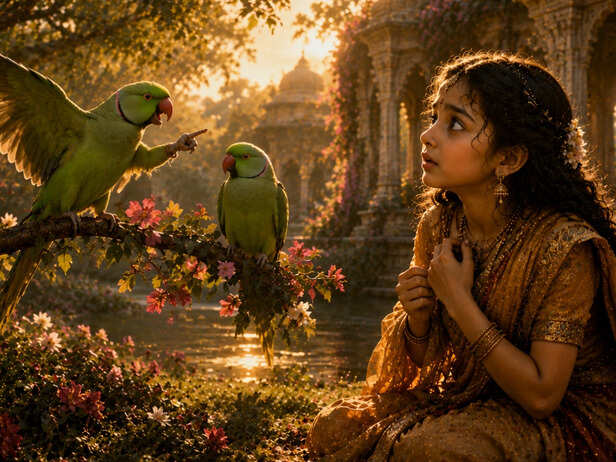
According to this version of the story, the pregnant female parrot eventually died because of the separation from her husband. Before her death, she cursed Sita, saying that just as she had been separated from her husband while pregnant, Sita too would experience separation from her husband during pregnancy. The curse transformed a small childhood incident into something much larger. Whether understood literally or symbolically, the episode highlights a recurring theme in Indian storytelling: actions can carry consequences far beyond what we initially imagine.
The tragedy did not end with the female parrot's death. The male parrot was also overcome by grief. According to the narrative, before giving up his life in the Ganga, he made a vow that he would become the reason for Sita's separation from Rama in another birth. This detail adds another layer to the story. The separation is no longer presented only as the result of one curse. It becomes connected to the unresolved grief and anger of the surviving parrot, creating a dramatic link between one generation and another.
Years passed, and Sita eventually returned to Ayodhya after the events of Lanka. Later, she became pregnant. According to the narrative tradition described in the story, the earlier curse now appeared to reach its fulfilment. Sita was separated from Rama while carrying his children. The contrast is what makes the tale so emotionally powerful. The incident that began with a young girl's curiosity had travelled across years and was now connected to one of the most painful moments in Sita's life.
The story naturally raises the idea of karma, but it should not be treated as proof that every painful event in life is punishment for a past mistake. Hindu traditions contain many different interpretations of karma, destiny and divine will. In this particular narrative, the parrot episode provides a moral framework for understanding Sita's suffering. It also encourages reflection on how our actions affect others. The deeper lesson is not simply that Sita was being punished. Instead, the story asks readers to think carefully about responsibility, compassion and the consequences of causing suffering.
Sita's separation from Rama is remembered across generations because it represents profound emotional pain, sacrifice and resilience. The parrot narrative gives that suffering an additional layer by connecting it to an earlier act. It suggests that even actions performed without harmful intentions can have consequences for others. At the same time, the story should be understood as a traditional religious narrative rather than a historical or scientific account. Its value lies in the questions it raises about compassion, choice, destiny and the way people understand justice.
What makes this story so surprising is its timing. Sita was only a child when the incident with the parrots supposedly happened. She could not have imagined that the encounter would later become connected with one of the greatest tragedies of her life. That is why the story continues to attract attention. It turns a forgotten childhood moment into a question about destiny. Can a small action create consequences years later? The narrative does not offer a simple answer, but it leaves readers thinking about how carefully we should treat every living being.
The most emotional part of the story is not the curse itself.
It is the separation.
A pregnant woman is separated from her husband.
A mother is separated from her children.
And a childhood incident is remembered years later as the beginning of that pain.
The story therefore carries a powerful message about compassion. Even when an action seems small, the feelings of another living being should not be ignored.
At the same time, different Hindu texts and traditions tell the story of Sita's life in different ways. The parrot episode is not part of the core Valmiki Ramayana narrative, so it is important to identify it as a later or alternate traditional account rather than presenting it as the only explanation for Sita's exile.
Unlock insightful tips and inspiration on personal growth, productivity, and well-being. Stay motivated and updated with the latest at My Life XP.
One lesser-known narrative attempts to answer this question through an emotional story involving a pair of parrots, a childhood incident and a curse. According to a version associated with the Padma Purana, Sita encountered a pair of parrots when she was young. What appeared to be a harmless childhood act eventually became connected to a curse that returned years later.
The story is striking because it links Sita's later suffering to an incident from her childhood, raising a powerful question about karma, consequences and whether every action eventually returns to us.
The Childhood Encounter
Young Sita Seeing the Parrot Couple
Image credit : ChatGPT(ai)
The story begins with young Sita encountering a male and female parrot. The birds were said to be speaking about Rama and Sita's future, which fascinated her. Curious to hear more, Sita caught the female parrot and kept her with her. At first, the incident appears innocent. But the situation soon became serious. The female parrot told Sita that she was pregnant and pleaded to be released so she could return to her mate. Sita, however, did not let her go. This decision became the first link in a chain of events that the story connects to Sita's later suffering.
The Parrot’s Painful Curse
The Female Parrot Giving Sita a Curse
Image credit : ChatGPT(ai)
According to this version of the story, the pregnant female parrot eventually died because of the separation from her husband. Before her death, she cursed Sita, saying that just as she had been separated from her husband while pregnant, Sita too would experience separation from her husband during pregnancy. The curse transformed a small childhood incident into something much larger. Whether understood literally or symbolically, the episode highlights a recurring theme in Indian storytelling: actions can carry consequences far beyond what we initially imagine.
The Male Parrot’s Vow
Years Later, the Past Returns
Was It Really About Karma?
The Deeper Meaning of the Story
Why This Story Still Surprises Readers
The Forgotten Incident With a Powerful Message
It is the separation.
A pregnant woman is separated from her husband.
A mother is separated from her children.
And a childhood incident is remembered years later as the beginning of that pain.
The story therefore carries a powerful message about compassion. Even when an action seems small, the feelings of another living being should not be ignored.
At the same time, different Hindu texts and traditions tell the story of Sita's life in different ways. The parrot episode is not part of the core Valmiki Ramayana narrative, so it is important to identify it as a later or alternate traditional account rather than presenting it as the only explanation for Sita's exile.
Unlock insightful tips and inspiration on personal growth, productivity, and well-being. Stay motivated and updated with the latest at My Life XP.