How a Divine Family Dispute Changed the Chandravansh
Noopur Kumari | Aug 27, 2026, 11:00 IST
The birth of Budha is not presented as an ordinary divine birth. It follows a chain of conflict, accusations, a devastating celestial war and a mysterious question of parentage. Different Hindu texts and later traditions narrate details of the Tara-Chandra episode differently, so the story has several versions. Yet the central theme remains powerful: a dispute among powerful celestial beings ultimately gives rise to Budha, a figure who becomes deeply connected with wisdom, intelligence and the Chandravansh. Here is how the fascinating story unfolds.

Budha Dev’s Birth Story
Image credit : chatgpt(ai)
What happens when a dispute between a guru, his wife and the Moon becomes so powerful that it threatens the balance of the three worlds?
According to Hindu mythological traditions, the story of Budha Dev, the deity associated with the planet Mercury, begins with exactly such a conflict. At the centre of the story are Brihaspati, Tara and Chandra, whose complicated relationship leads to the legendary Tarakāmaya war.
But the biggest mystery comes after the war. When Tara returns to Brihaspati, she is pregnant. Both Brihaspati and Chandra claim the unborn child as their own. The truth is eventually revealed, and a divine child named Budha is born. His story does not end there. Budha would later become one of the Navagrahas and play a crucial role in the origin of the Chandravansh.
![Tara and Brihaspati in Hindu Mythology]()
Brihaspati, the revered guru of the devas, was married to Tara. She is described in Hindu mythology as exceptionally beautiful and intelligent. According to the traditional narrative, Tara became closely associated with Chandra, the Moon deity. The situation soon created a serious dispute between Brihaspati and Chandra. Brihaspati demanded that Tara return, but Chandra refused. What began as a deeply personal conflict soon expanded beyond the household of two divine figures. Powerful beings from opposing sides became involved, turning the dispute into a major celestial confrontation.
![The Tarakamaya War Between Devas and Asuras]()
The conflict eventually became known as the Tarakāmaya war in traditional accounts. Brihaspati was supported by Indra and several devas, while Chandra received support from Shukracharya and forces associated with the asuras. The confrontation became so intense that the stability of the three worlds was threatened. The story reflects a recurring theme in Hindu mythology: when powerful celestial beings allow personal disputes to escalate, the consequences can spread far beyond the individuals involved. As the conflict continued, divine intervention became necessary to prevent the situation from becoming even more destructive.
When the war threatened cosmic balance, Lord Brahma intervened. He ordered that Tara be returned to Brihaspati, bringing the conflict toward an end. Tara eventually returned, but the dispute did not disappear. She was pregnant, and a new question immediately arose: Who was the father of the child? Brihaspati claimed the child as his own, while Chandra insisted that the child belonged to him. This disagreement created another dramatic moment in the story, turning the unborn child into the centre of a dispute between two powerful celestial figures.
According to the popular version of the legend, Brihaspati became angry and condemned the unborn child before the truth about his parentage had been established. Then came the extraordinary moment: the child himself spoke. He questioned the idea of punishing someone without knowing the truth. This moment gives the story an unusual moral dimension. The unborn child is not portrayed as helpless or silent. Instead, he demonstrates awareness and wisdom even before birth. Eventually, Brahma intervenes again and asks Tara to reveal the truth about the child's father.
Under Brahma's direction, Tara finally reveals the truth: Chandra is the father of her child. With the mystery resolved, the divine child is born and receives the name Budha. This revelation transforms the entire story. What began as a conflict involving Tara, Brihaspati and Chandra now becomes the origin story of a powerful celestial figure. In Hindu tradition, Budha is associated with the planet Mercury and is counted among the Navagrahas. He is also connected with qualities such as intelligence, communication, reasoning and learning.
Budha's importance extends far beyond the circumstances of his birth. In Hindu astrology and religious tradition, Budha represents Mercury, one of the Navagrahas. He is traditionally associated with intellect, speech, analytical ability, learning and communication. This creates an interesting contrast in his birth story. Budha emerges from a conflict filled with confusion, anger and competing claims, yet he becomes associated with intelligence and discernment. His story therefore carries a powerful symbolic message: difficult beginnings do not necessarily determine the significance of what comes afterward.
The story takes another major turn when Budha later marries Ila, according to the traditional accounts found in Hindu literature. Their son is Pururavas, who becomes an important figure in the lunar dynasty, or Chandravansh. This connects Budha's unusual birth directly with one of the great royal lineages of Hindu mythology. The dynasty is later associated with several famous figures and legendary kings. Thus, the story that began with Tara, Chandra and Brihaspati ultimately becomes part of a much larger genealogical tradition.
The story of Budha Dev is powerful because it is much more than a tale about divine parentage.
It begins with a personal dispute, grows into a celestial war, reaches Brahma's intervention and finally ends with the birth of a child whose identity becomes important across Hindu religious and mythological traditions.
There is also an important lesson hidden within the drama. Truth should be established before judgment is passed. The story itself places this idea at the heart of the conflict when the unborn Budha questions the injustice of being condemned without knowing the facts.
From a troubled beginning came Budha, associated with intelligence and wisdom, and his lineage later became connected with the Chandravansh.
That is what makes his birth story so fascinating: a celestial conflict gave rise to a legacy that would continue through generations.
Unlock insightful tips and inspiration on personal growth, productivity, and well-being. Stay motivated and updated with the latest at My Life XP
According to Hindu mythological traditions, the story of Budha Dev, the deity associated with the planet Mercury, begins with exactly such a conflict. At the centre of the story are Brihaspati, Tara and Chandra, whose complicated relationship leads to the legendary Tarakāmaya war.
But the biggest mystery comes after the war. When Tara returns to Brihaspati, she is pregnant. Both Brihaspati and Chandra claim the unborn child as their own. The truth is eventually revealed, and a divine child named Budha is born. His story does not end there. Budha would later become one of the Navagrahas and play a crucial role in the origin of the Chandravansh.
Tara Enters the Centre of the Conflict
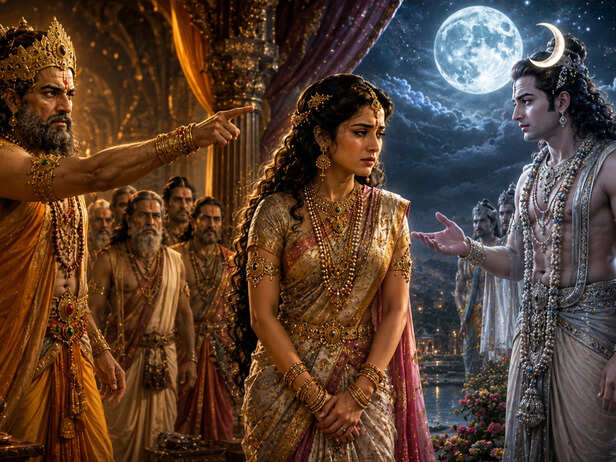
Tara and Brihaspati in Hindu Mythology
Image credit : ChatGPT(ai)
Brihaspati, the revered guru of the devas, was married to Tara. She is described in Hindu mythology as exceptionally beautiful and intelligent. According to the traditional narrative, Tara became closely associated with Chandra, the Moon deity. The situation soon created a serious dispute between Brihaspati and Chandra. Brihaspati demanded that Tara return, but Chandra refused. What began as a deeply personal conflict soon expanded beyond the household of two divine figures. Powerful beings from opposing sides became involved, turning the dispute into a major celestial confrontation.
The Dispute Becomes a Celestial War
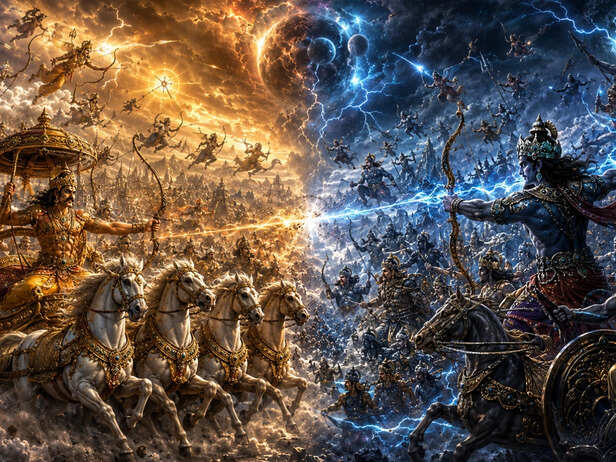
The Tarakamaya War Between Devas and Asuras
Image credit : ChatGPT(ai)
The conflict eventually became known as the Tarakāmaya war in traditional accounts. Brihaspati was supported by Indra and several devas, while Chandra received support from Shukracharya and forces associated with the asuras. The confrontation became so intense that the stability of the three worlds was threatened. The story reflects a recurring theme in Hindu mythology: when powerful celestial beings allow personal disputes to escalate, the consequences can spread far beyond the individuals involved. As the conflict continued, divine intervention became necessary to prevent the situation from becoming even more destructive.
Brahma Finally Intervenes
The Unborn Child Speaks
Tara Reveals Chandra as the Father
Budha Begins a New Chapter
The Birth That Shaped the Chandravansh
The Real Mystery Behind Budha’s Birth
It begins with a personal dispute, grows into a celestial war, reaches Brahma's intervention and finally ends with the birth of a child whose identity becomes important across Hindu religious and mythological traditions.
There is also an important lesson hidden within the drama. Truth should be established before judgment is passed. The story itself places this idea at the heart of the conflict when the unborn Budha questions the injustice of being condemned without knowing the facts.
From a troubled beginning came Budha, associated with intelligence and wisdom, and his lineage later became connected with the Chandravansh.
That is what makes his birth story so fascinating: a celestial conflict gave rise to a legacy that would continue through generations.
Unlock insightful tips and inspiration on personal growth, productivity, and well-being. Stay motivated and updated with the latest at My Life XP