Did Draupadi Really Hate Duryodhana? The Truth
Noopur Kumari | Sept 06, 2026, 11:00 IST
Was Draupadi really fair? Did she actually insult Duryodhana by calling him the son of a blind man? Did she vow to wash her hair in blood? And what about the popular claim that she secretly loved Karna? The answers are more complicated than many modern retellings suggest. Looking closely at the Mahabharata reveals a Draupadi who was far more complex, thoughtful and powerful than the simplified character often shown on screen.

Mention Draupadi and most people immediately remember the dice game,
Image credit : ChatGPT (ai)
Mention Draupadi and most people immediately remember the dice game, the humiliation in the royal court and Krishna’s protection. But that familiar image often leaves out another side of her character. Draupadi was not merely a woman caught in the events of the Mahabharata. She was intelligent, articulate, questioning and remarkably strong under pressure. Several popular stories about her have also been simplified through television, retellings and folklore. Some details are supported by the Sanskrit epic, while others come from later traditions. Here are five commonly repeated beliefs about Draupadi that deserve a closer look.
![Draupadi Krishnaa]()
One popular assumption is that Draupadi must have been fair because she is repeatedly described as exceptionally beautiful. But beauty and complexion are not the same thing. In the Mahabharata tradition, Draupadi is also called Krishnaa, a name associated with a dark or dusky complexion. This is an important detail because it challenges the modern habit of automatically connecting beauty with fairness. Draupadi’s character was celebrated for much more than physical appearance. Her intelligence, presence, courage and ability to question powerful men are central to why she remains one of the epic’s most memorable figures.
Myth 2: Draupadi Called
![The Maya Sabha]()
One of the most repeated stories claims that Draupadi laughed when Duryodhana fell into water and mocked him as the son of a blind father. But the popular version leaves out an important detail. In the critical Sanskrit tradition, Duryodhana’s humiliation in the Maya Sabha and Draupadi’s alleged presence are not presented as simply as many television adaptations suggest. The story has accumulated different retellings over time. This matters because a famous line can become accepted as historical fact simply because audiences hear it repeatedly. The Mahabharata deserves to be read beyond the most dramatic scenes created by later adaptations.
Another popular belief is that Draupadi alone made a dramatic vow to wash her hair in Duryodhana’s blood. The tradition is more complicated. After the dice-hall humiliation, Bhima publicly vowed to kill Dushasana and break Duryodhana’s thigh. There are also traditions describing Draupadi’s hair remaining unbound until the wrong was answered. So reducing the entire episode to “Draupadi wanted revenge” misses her deeper role. She demanded justice, questioned the assembly and refused to quietly accept the humiliation imposed upon her.
The idea that Draupadi secretly loved Karna has become popular in some modern stories, novels and adaptations. However, it should not be presented as an established fact of Vyasa’s Mahabharata. During the dice-hall episode, Karna is actually among those who speak harshly against Draupadi. The Sanskrit text records him using deeply insulting language toward her. That context makes the popular romantic version difficult to reconcile with the relationship shown in the epic itself. Fiction can explore alternative possibilities, but readers should distinguish those creative interpretations from what the primary epic actually describes.
Perhaps the biggest misconception is that Draupadi was simply a victim waiting for someone else to save her. Her actions in the dice hall tell a different story. She repeatedly questioned the elders about whether Yudhishthira had the right to stake her after losing himself. Her questions placed the entire assembly in an uncomfortable moral position. Even when surrounded by powerful men, she demanded an answer. Her intelligence was not expressed through weapons or physical strength. It appeared through her words, reasoning and refusal to accept injustice silently.
Stories become simplified when they pass from ancient texts into television, films, books and oral retellings. Dramatic scenes are easier to remember than complicated textual differences. A single dialogue can become part of popular culture even when its origin is uncertain or appears differently in various traditions. This does not mean every popular retelling has no value. It simply means readers should know when they are hearing the epic itself and when they are hearing a later interpretation. With Draupadi especially, separating the original narrative from later additions reveals a much richer character.
Draupadi’s story becomes far more powerful when we stop viewing her only through the moment of her humiliation. She was a queen, a wife, a daughter, a political figure and one of the strongest voices in the Mahabharata. Her questions challenged an entire royal assembly. Her words continued to influence the Pandavas long after the dice game ended. The real lesson is not that Draupadi was perfect or powerless. It is that she was complex. She could be emotional and rational, wounded and courageous, angry and deeply thoughtful at the same time. That complexity is precisely what makes her story endure.
The most interesting thing about Draupadi may be what happens when we look beyond the myths surrounding her. She does not need invented dialogues, fictional romances or exaggerated revenge stories to become a powerful character. The epic already gives her something more compelling: a voice that refuses to disappear when everyone else chooses silence.
That is why remembering Draupadi only for the dice game does her character an injustice. Her story is not simply about what happened to her. It is also about how she responded, questioned, endured and remained impossible to ignore.
Myth 1: Draupadi Was Fair
Draupadi Krishnaa
Image credit : ChatGPT(ai)
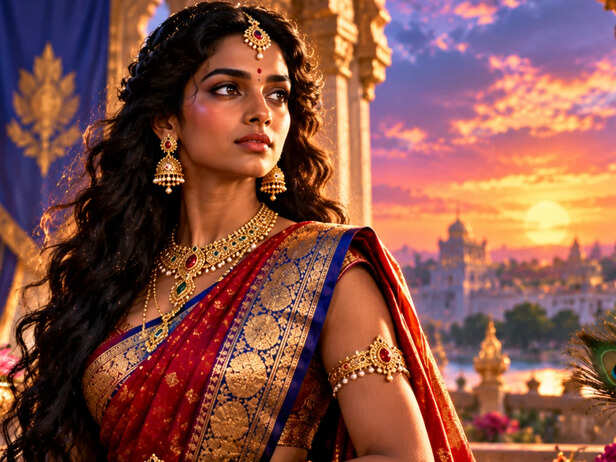
One popular assumption is that Draupadi must have been fair because she is repeatedly described as exceptionally beautiful. But beauty and complexion are not the same thing. In the Mahabharata tradition, Draupadi is also called Krishnaa, a name associated with a dark or dusky complexion. This is an important detail because it challenges the modern habit of automatically connecting beauty with fairness. Draupadi’s character was celebrated for much more than physical appearance. Her intelligence, presence, courage and ability to question powerful men are central to why she remains one of the epic’s most memorable figures.
Myth 2: Draupadi Called Duryodhana Blind
The Maya Sabha
Image credit : ChatGPT (ai)
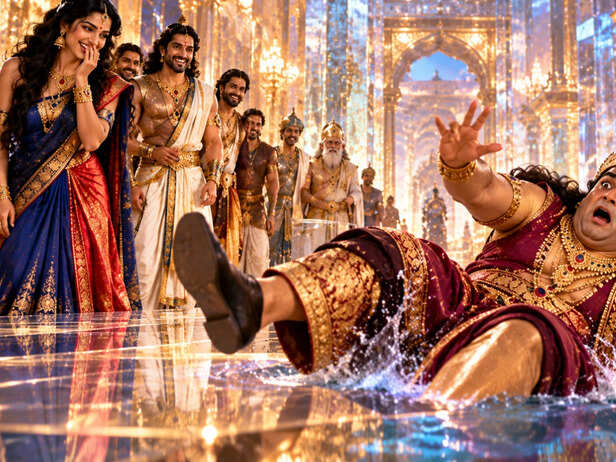
One of the most repeated stories claims that Draupadi laughed when Duryodhana fell into water and mocked him as the son of a blind father. But the popular version leaves out an important detail. In the critical Sanskrit tradition, Duryodhana’s humiliation in the Maya Sabha and Draupadi’s alleged presence are not presented as simply as many television adaptations suggest. The story has accumulated different retellings over time. This matters because a famous line can become accepted as historical fact simply because audiences hear it repeatedly. The Mahabharata deserves to be read beyond the most dramatic scenes created by later adaptations.
Myth 3: Draupadi Wanted Revenge
Myth 4: Draupadi Loved Karna
The Woman Behind the Myths
Why These Myths Survive
Draupadi Was More Than Her Humiliation
The Real Draupadi Is More Powerful
That is why remembering Draupadi only for the dice game does her character an injustice. Her story is not simply about what happened to her. It is also about how she responded, questioned, endured and remained impossible to ignore.